Artist: Antony Gray

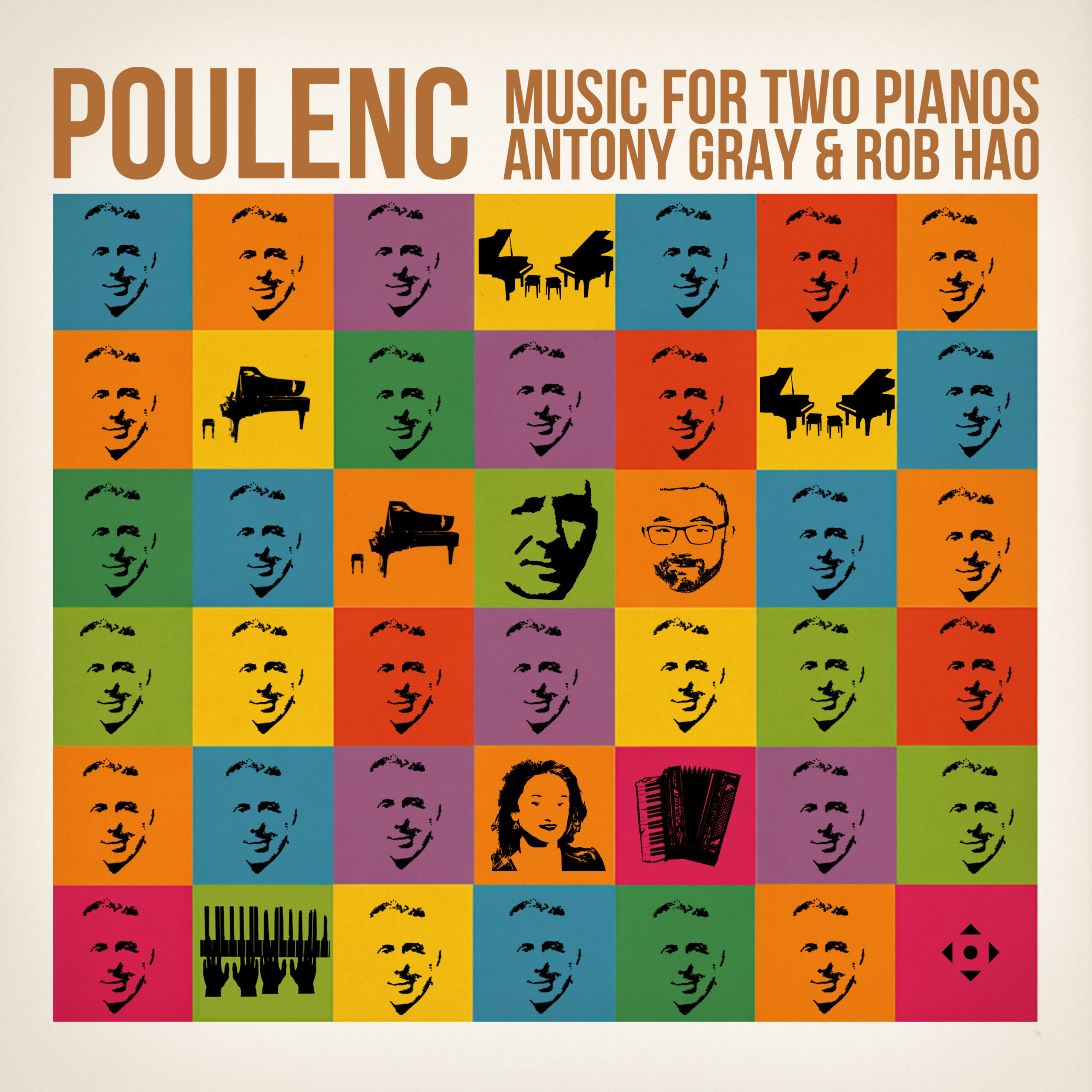
  • Poulenc: Music for Two Pianos

    Poulenc: Music for Two Pianos

    In June 2026 Divine Art is delighted to present Francis Poulenc: Music for Two Pianos performed by pianists Antony Gray and Rob Hao. Among the highlights of this superb new release are the first commercial audio recording of Antony Gray’s own transcription for two pianos of Poulenc’s score from the film Voyage en Amerique, the first recording of Poulenc’s two piano reduction of the Concert Champetre, plus the recently discovered Valse de musique de soie.

    A superb pianist as well as a composer, Poulenc’s works for piano are without exception charming, delightful and gratifyingly written. However, most of his piano music comes from the early part of his career, as Poulenc destroyed many of his later works, including a number for four hands/two pianos. The two-piano works on this album represent those later periods when he was at the height of his powers. The first comes from his delightful score, which was sadly lost, for the 1951 film about a couple from rural France on their first ever flight, Voyage en Amerique. Antony Gray tracked down a copy of the soundtrack, which was scored for two pianos, and transcribed it himself, realising this was the only way of recovering the score, and presents it here with Rob Hao in its first commercial standalone recording. To complete the transcription of the soundtrack, Gray also includes the song, Adieu Maison, with soprano Helen Miles, and a Valse, in which the two pianos are joined by an accordion, performed by Alise Silina. Gray and Hao also present a later version of this work entitled Embarquement pour Cythere, scored only for two pianos.

    The Sonata for two pianos, arguably Poulenc’s finest keyboard work, is emotionally dark and looks forward to the tenderness and anguish of the Dialogues des Carmelites. Very few works in the piano duo repertoire match this sonata in power and emotional force —aggressive dissonance is contrasted with passages of achingly beautiful material. One of his final keyboard works is the deeply emotional Elegie in which as with all Poulenc’s music for two pianos, the material throughout is passed equally between the two instruments. The Concert Champetre, originally written as a concerto for harpsichord and orchestra, was reworked for two pianos, and despite missing the rich orchestral palette it’s a strong work in its own right, and is given its first recording here.

    Poulenc’s other works for two pianos will be made available as bonus digital-only tracks accompanying the album. The first will feature Sonate pour piano á 4 mains, written in 1918 when Poulenc was only 19 years old. It was influenced by Satie and Stravinsky, as well as Chabrier, yet is already stylistically unique and a real achievement for such a young composer. The Capriccio for two pianos is a transcription by Poulenc of the Finale of his cantata Le Bal Masqué, with hilarious and surreal music, befitting the cantata text by Max Jacob. The album will be completed by the Valse de musique de soie for solo piano, performed by Antony Gray, a work only recently rediscovered in 2017.

    Antony Gray and Rob Hao, both pianists and composers, are from Australia. Antony Gray has long been regarded as one of the most interesting and communicative performers of his generation with many solo and chamber music performances around the world and many pieces written for and premiered by him. His recordings for Divine Art have included music by Malcolm Williamson, John Carmichael, and an acclaimed set of Saint-Saëns piano music. Rob Hao’s compositions and performances have taken him across Australia, the UK and continental Europe, and he has given regional and world premieres of over thirty works in both ensemble and solo settings. His debut solo recording ‘Palimpsest’ for Divine Art explores how music and styles from different times interact and inspire new ideas.
  • Malcolm Williamson: Chamber Music for Wind & Piano

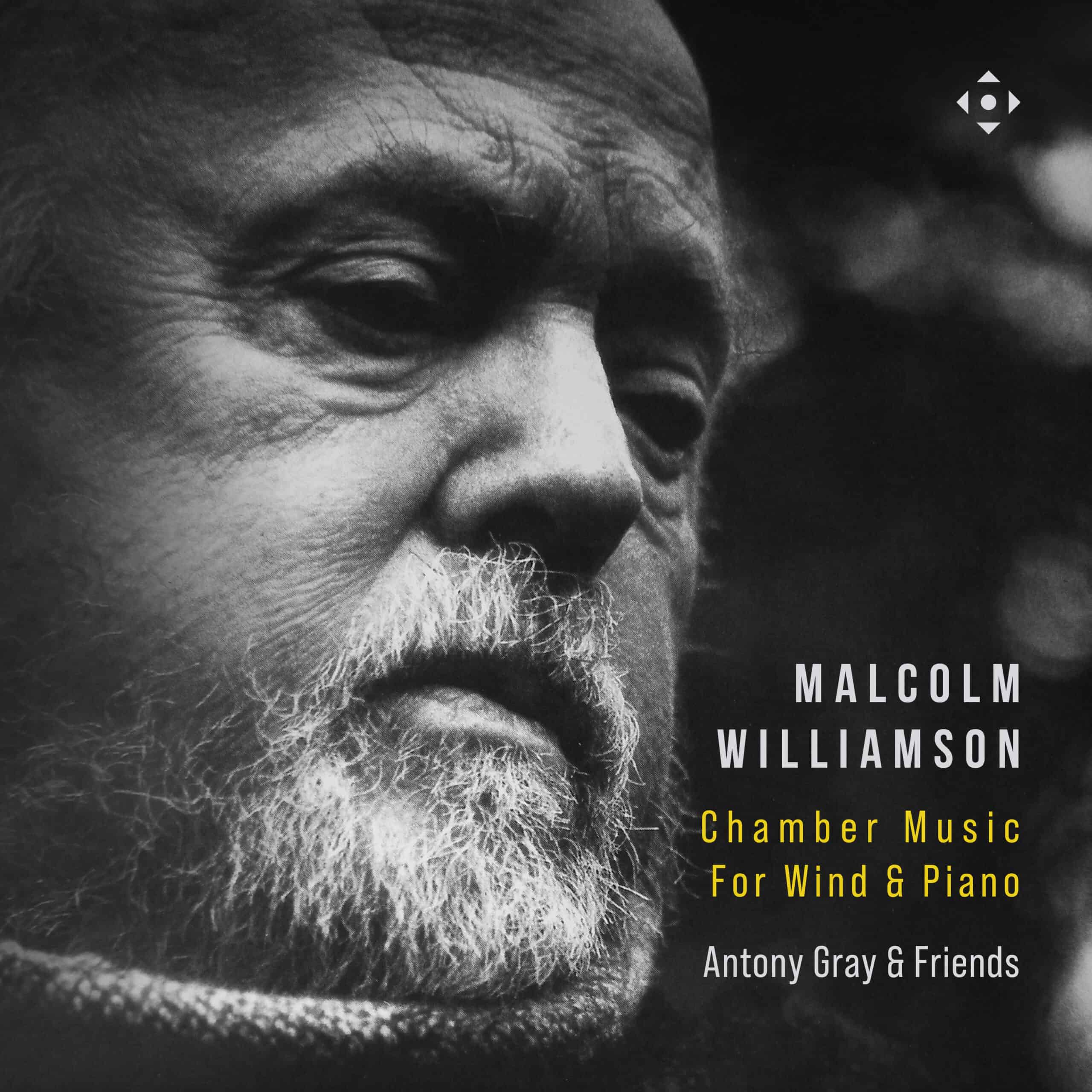
    Malcolm Williamson: Chamber Music for Wind & Piano

    MALCOLM WILLIAMSON: The uncompromising and divisive Master of the Queen’s Music

    Once one of the most widely performed composers of his generation, Malcolm Williamson’s music has since fallen into obscurity. This new recording – featuring 16 world premieres — seeks to redress that balance, offering a fresh perspective on a composer whose work defied easy categorization.

    Williamson’s output ranged from bold serial explorations to tuneful lyricism, often within the same piece. His music was lauded for its ingenuity yet suffered from the composer’s refusal to conform to prevailing academic tastes. As Master of the Queen’s Music, he occupied a prestigious position but remained a divisive figure—uncompromising in his artistic voice and unpredictable in both temperament and style.

    Drawn from recently uncovered archives, this collection spans nearly five decades of Williamson’s career, from early student works to some of his final compositions. The album includes the Clarinet Trio (1958), a strikingly assured work praised for its “forthright tunefulness” and loose application of serial technique, and the Concerto for Wind Quintet and Two Pianos, Eight Hands (1966), an intricate, often densely chromatic score performed by an extraordinary ensemble of composer-pianists. Other highlights include the ballet-inspired Pas de Quatre (1967), the haunting Pietà (1973) for mezzo-soprano and ensemble—setting texts by Swedish poet Pär Lagerkvist—and the enigmatic Gallery (1966), a set of miniature pieces likely composed for an unknown television project.

    These performances, led by pianist and producer Antony Gray, bring Williamson’s music vividly to life, illuminating its rhythmic dynamism, harmonic inventiveness, and sheer expressive range. With the discovery of the Williamson archive in 2023, this recording marks an important step in reintroducing a composer whose legacy deserves reappraisal.

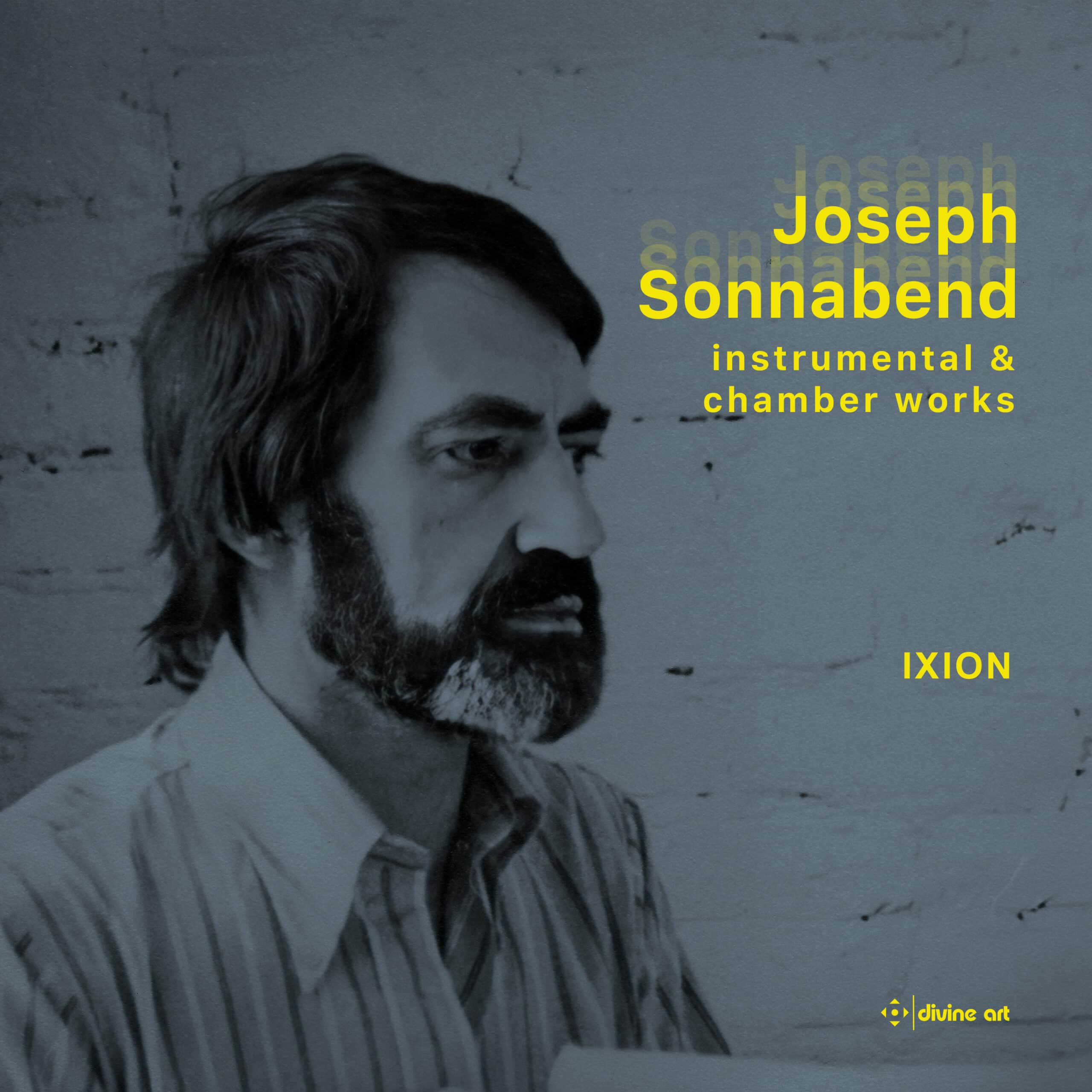
  • Joseph Sonnabend: Instrumental and Chamber Works

    Joseph Sonnabend: Instrumental and Chamber Works

    2025 Contemporary Music International Classical Music Award Nominee

    Dr. Joseph Sonnabend: A Musical Journey Reflecting a Life of Compassion and Innovation

    Renowned AIDS researcher and clinician Dr. Joseph Sonnabend, who was known for his groundbreaking work in HIV/AIDS research, had a hidden facet of his extraordinary life – as a composer. Despite his illustrious medical career, Joseph Sonnabend’s passion for composition remained largely concealed from the public eye. However, with this album, we are invited into his world of instrumental and chamber works, showcasing his exceptional talent and profound musical sensibility.

    The collection of pieces featured on offers a glimpse into Dr. Sonnabend’s rich musical landscape. From piano solos to chamber works, each composition bears the mark of his deep appreciation for chromatic melodies and harmony, influenced by composers such as Alban Berg and Arnold Schoenberg.

    Collaborator Dr Andrew Toovey, who played a pivotal role in bringing Dr. Sonnabend’s compositions to life, reflects on the process: “Working with Joseph on his compositions was certainly a fascinating journey for both of us.” Together, they meticulously curated a selection of works, refining unfinished pieces and even commissioning new ones, resulting in a cohesive representation of the Sonnabend soundworld.

    Listeners can expect to be delighted by the diverse range of compositions, each offering a unique musical experience. Highlights include the Piano Trio, which weaves a chromatic melodic line throughout its entirety, and “Fluctuations,” a mesmerizing solo violin piece that oscillates between reflective and virtuosic passages.

    In addition to instrumental works, the album features poignant vocal pieces such as the Three Songs for soprano and piano accompaniment, which set a collection of haiku poetry to melodic and emotive music, creating a deeply resonant listening experience.

    Reflecting on his late-in-life debut as a composer, Dr. Sonnabend’s journey comes full circle, encompassing a lifetime of compassion, innovation, and artistic expression. His compositions serve not only as a testament to his musical talent but also as a poignant reminder of his profound response to the HIV/AIDS pandemic, which he tirelessly battled throughout his career.

    This album is not only a celebration of Dr. Sonnabend’s musical legacy but also a tribute to his unwavering commitment to humanity. As listeners embark on discovering this music, they are invited to experience the depth of emotion and the enduring legacy of a remarkable individual.

    Dr. Joseph Sonnabend (1933-2021) was a pioneering AIDS researcher and clinician, widely respected for his compassionate approach to patient care and his groundbreaking contributions to HIV/AIDS research. In addition to his medical career, Dr. Sonnabend was a prolific composer, whose debut album, “Thoughts and Programme Notes,” offers a glimpse into his remarkable musical talent and creative vision.

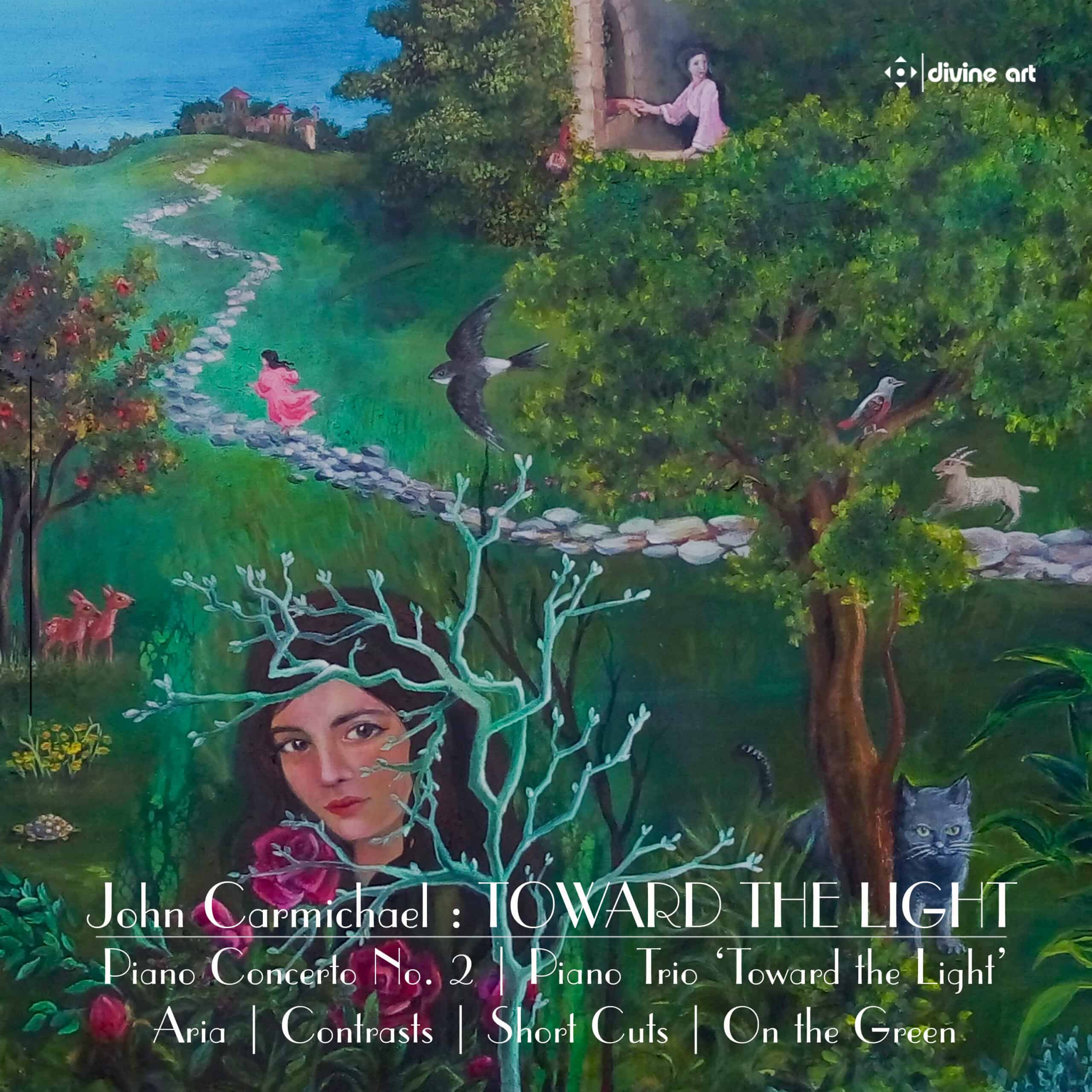
  • John Carmichael: Toward the Light

    John Carmichael: Toward the Light

    Divine Art presents the enchanting compositions of Australian maestro John Carmichael in this extraordinary collection. Carmichael’s distinctive neo-Romantic style, an exquisite fusion of originality with echoes of Rachmaninov, offers a lush musical journey that will resonate with a broad audience, particularly those less inclined towards avant-garde new music.

    This album boasts a diverse selection of duos, solos, and a Piano Concerto characterised by exuberant pianism harmoniously paired with a string orchestra, culminating in a Caribbean-flavoured final movement. Carmichael’s compositions extend to a Piano Trio, Towards the Light, spotlighting the viola in works designed to elevate this often-overlooked instrument. The collection is further enriched by a Divertimento for flute, oboe, clarinet, and piano, giving the listener a varied repertoire where melodic elements take centre stage.

    Collaborating with Carmichael are some of highly talented artists, including acclaimed pianist Antony Gray, whose recent Divine Art recordings of Saint-Saëns piano music have earned glowing praise, making them the label’s top sellers of 2022. Join us in this celebration of the potential in new orchestral and chamber music, where Carmichael’s melodic brilliance and the artistry of our distinguished performers converge to create a truly remarkable album.

    John Carmichael was born 1930 in Melbourne, Australia. He studied piano and composition at the University Conservatorium there, followed by two years piano studies with Marcel Ciampi at the Conservatoire National in Paris. Further composition studies followed with Arthur Benjamin and Anthony Milner in London while Carmichael joined the first group of musicians working for the newly established Council for Music Therapy, for whom he introduced music therapy programs at Stoke Mandeville Hospital and Netherden Mental Hospital, Surrey. In 1960 he became musical director of the Spanish Dance group Eduardo Y Navarra touring extensively with them both abroad and in Britain; foreign languages are one of his passions – the latest challenge being Chinese.

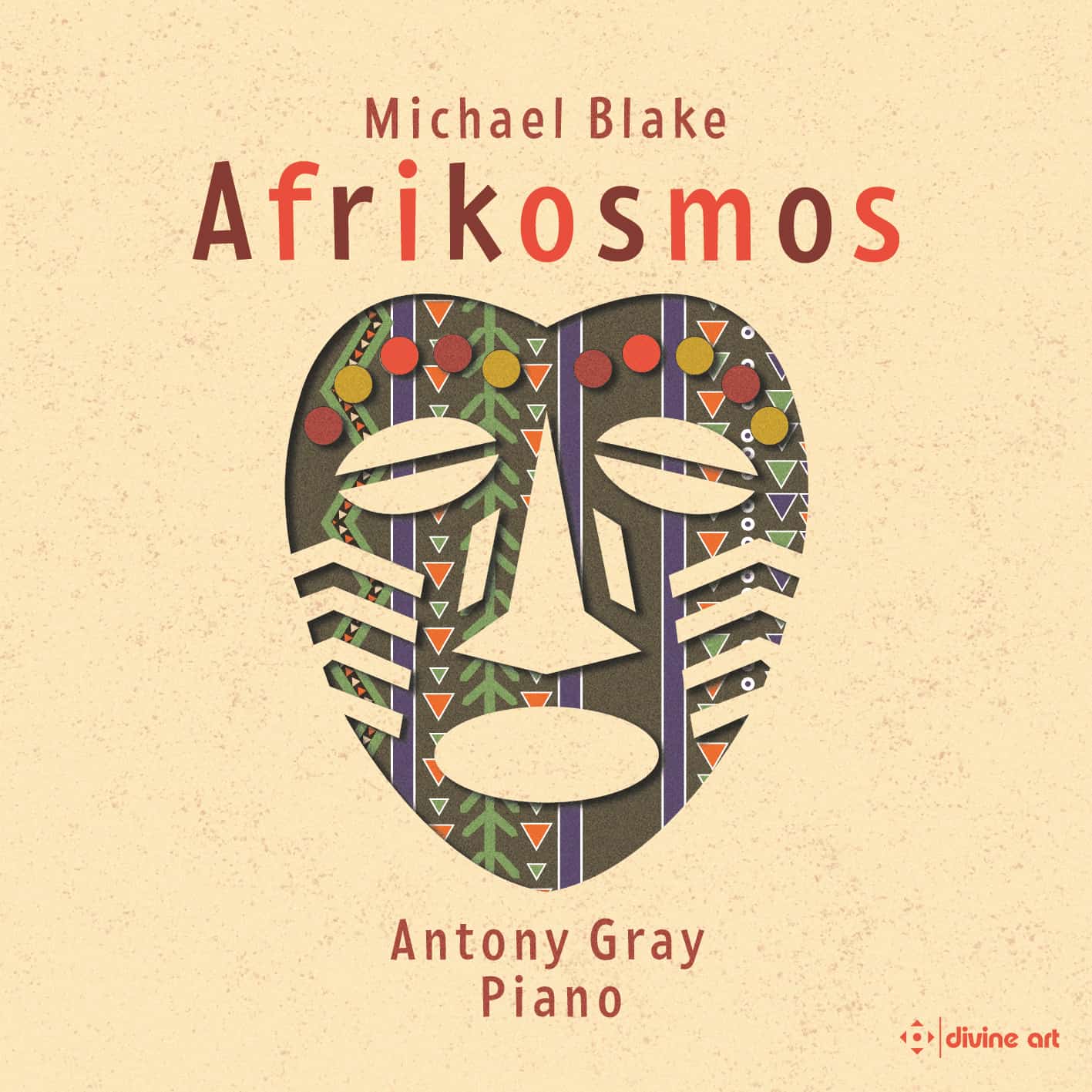
  • Michael Blake: Afrikosmos

    Michael Blake: Afrikosmos

    Inspired by Bartók’s’Mikrokosmos’ and by the indigenous music from various parts of Africa, South African composer Michael Blake created this magnum opus – like Bartók’s work, in varying degrees of difficulty for young players and experts alike. The recording was made in June 2021 at the Menuhin Hall, Cobham, Surrey by pianist Antony Gray, whose recent Divine Art albums of piano works by Saint-Saëns have met with great success and glowing reviews.

    Michael Blake is a South African-born composer and pianist based in London from 1977 and later returned to the “New South Africa”. He has been responsible for post-apartheid New Music initiatives such as joining the ISCM and setting up a new music festival and composers meeting. His musical language draws from African music, experimental film, and African weaving techniques. His works have been widely played around the world and appear on 15 CDs. He currently splits his time living in rural France and Cape Town where he is an honorary professor of experimental composition at Stellenbosch University.

    Australian pianist Antony Gray was educated in Victoria, Australia, where he graduated from the Victorian College of Arts and won several awards and prizes. He received a scholarship from the Astra foundation to continue his studies in London with Joyce Rathbone and Geoffrey Parsons. Based in London now, he is regarded as one of the most interesting and communicative performers of his generation, known for his solo and chamber music performances around the world, regular recordings for CD and radio, and his championing of contemporary and neglected composers such as George Enescu, Dussek, Martinů, Malcolm Williamson and John Carmichael. He has recorded 14 discs of solo piano music for ABC Classics, and featured on other recording projects for KNS Classical and other labels.

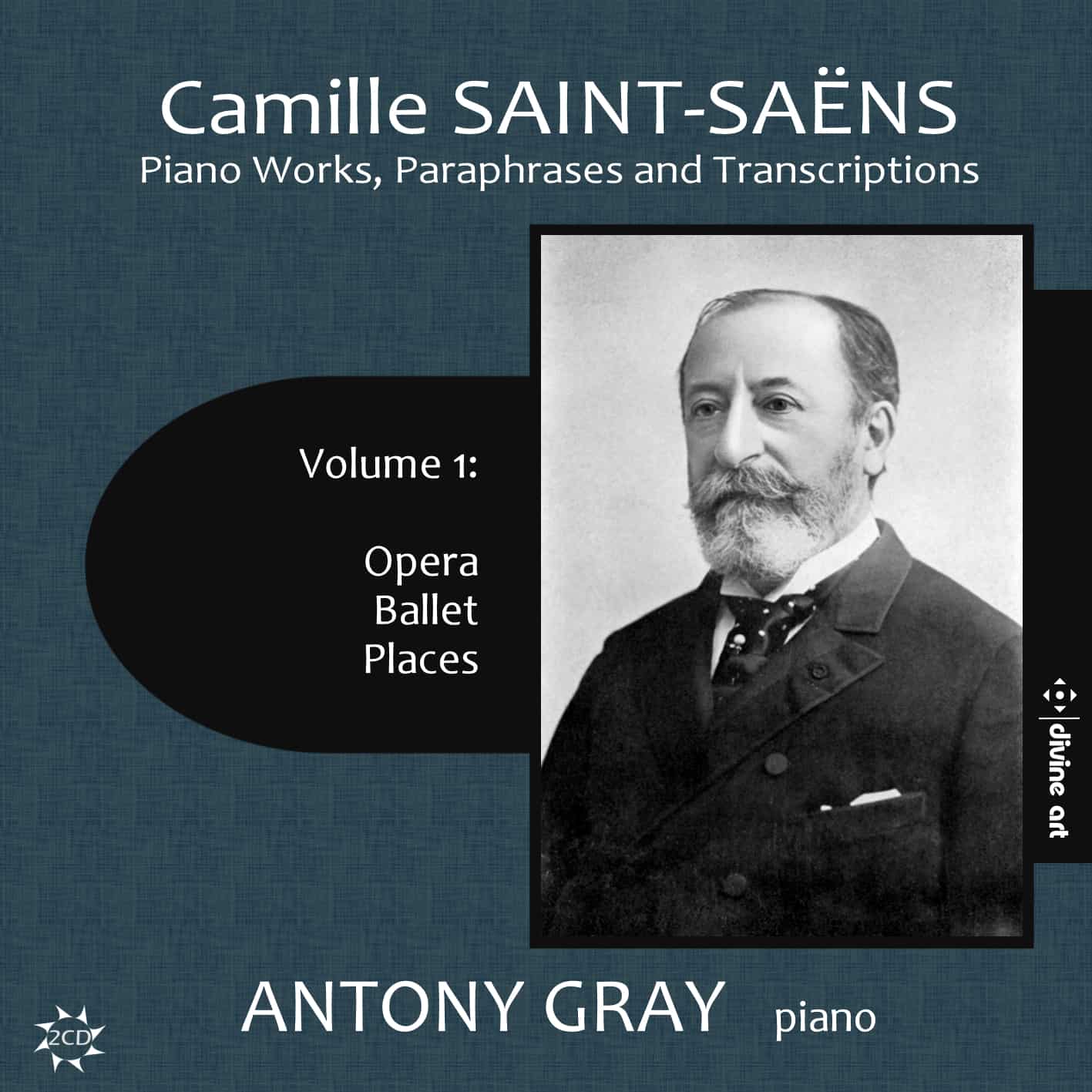
  • Camille Saint-Saëns: Piano Works, Paraphrases and Transcriptions, volume 1

    Camille Saint-Saëns: Piano Works, Paraphrases and Transcriptions, volume 1

    Saint-Saëns excelled as a composer, conductor, pianist and organist – his composition output is enormous, reaching over 160 titles of which many are substantial – operas, ballets, symphonies – yet today much of his work remains neglected and he is known by a few works only: the Organ Symphony, Samson et Dalila, Danse Macabre and Carnival of the Animals. His original piano pieces are generally light ‘salon’ works but are nonetheless delightful and well formed. His major contribution to the piano works is the equally neglected body of transcriptions (of his own works and those of others) where he was sadly eclipsed by the more outgoing and promotion-minded Franz Liszt. This album and its companion include a number of first recordings, introducing a large body of keyboard gems to a new audience. Volume 1 is divided into two sections: transcriptions from Opera and Ballet, and pieces inspired by specific places.

    Antony Gray is a London-based Australian pianist and teacher with numerous acclaimed recordings to his name on ABC and other labels including a 3CD set of Bach transcriptions and a 5-disc set containing the entire piano output of Poulenc. He has premiered many new pieces written for him and has often appeared on radio in the UK and Australia.

    Find volume 2 here

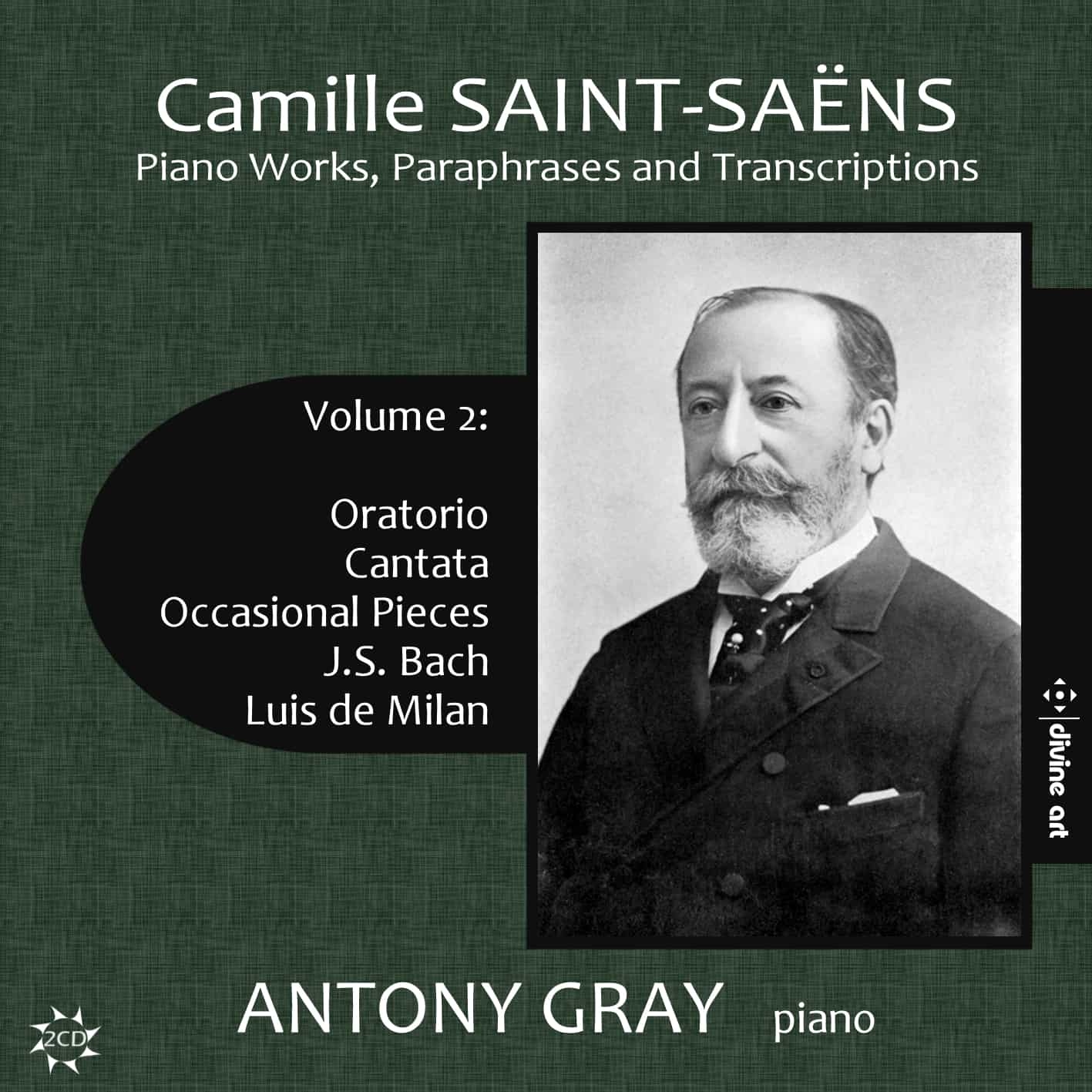
  • Camille Saint-Saëns: Piano Works, Paraphrases and Transcriptions, volume 2

    Camille Saint-Saëns: Piano Works, Paraphrases and Transcriptions, volume 2

    Saint-Saëns excelled as a composer, conductor, pianist and organist – his composition output is enormous, reaching over 160 titles of which many are substantial – operas, ballets, symphonies – yet today much of his work remains neglected and he is known by a few works only: the Organ Symphony, Samson et Dalila, Danse Macabre and Carnival of the Animals. His original piano pieces are generally light ‘salon’ works but are nonetheless delightful and well formed. His major contribution to the piano works is the equally neglected body of transcriptions (of his own works and those of others) where he was sadly eclipsed by the more outgoing and promotion-minded Franz Liszt. This album and its companion include a number of first recordings, introducing a large body of keyboard gems to a new audience. Volume 2 is divided into two sections: transcriptions from Cantata and Oratorio and original ‘occasional pieces’, transcriptions of two works by Luis de Milan and the Douze Transcriptions (of which there 13!) of works by J. S. Bach.

    Antony Gray is a London-based Australian pianist and teacher with numerous acclaimed recordings to his name on ABC and other labels including a 3CD set of Bach transcriptions and a 5-disc set containing the entire piano output of Poulenc. He has premiered many new pieces written for him and has often appeared on radio in the UK and Australia.

    Find volume 1 here

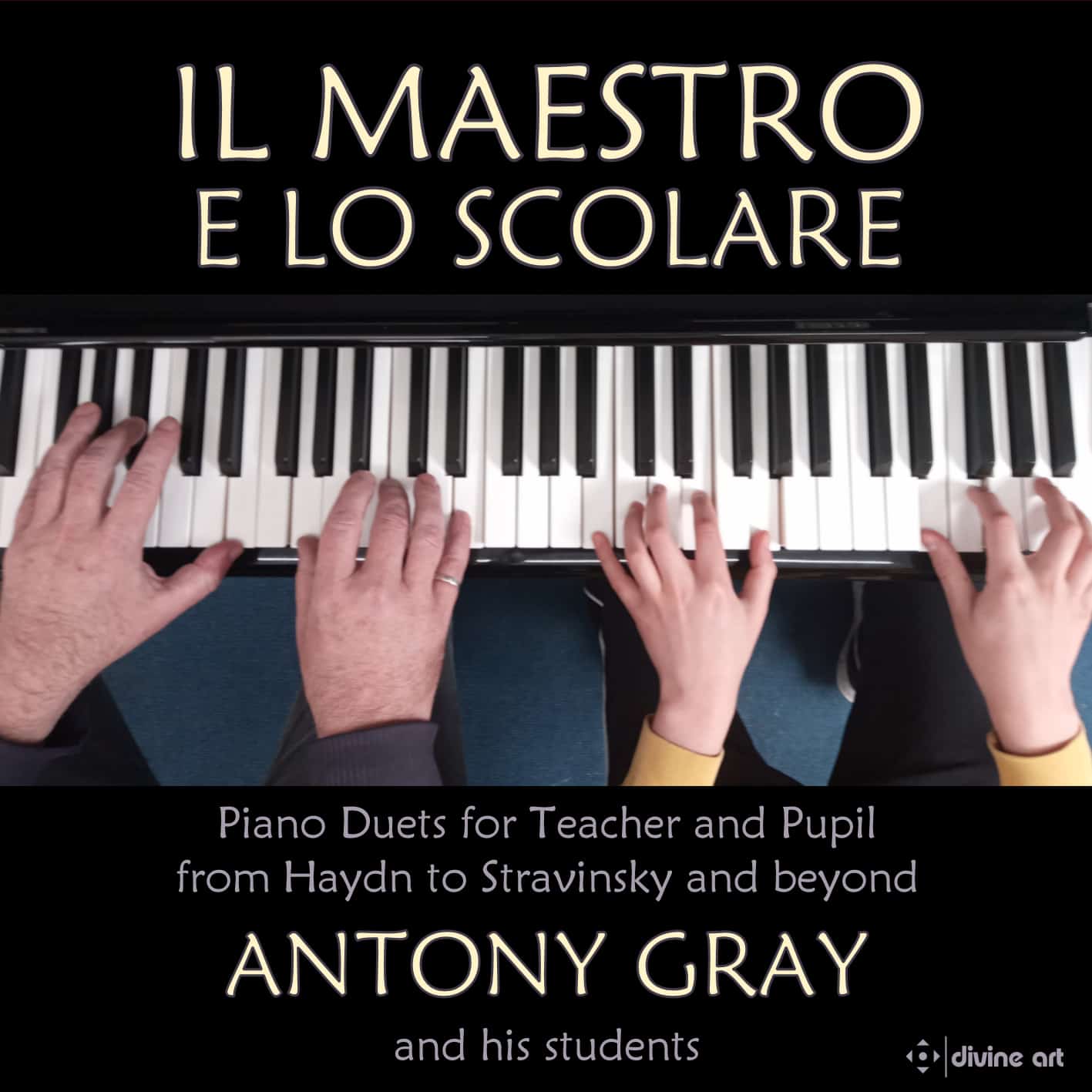
  • Il Maestro e lo Scolare

    Il Maestro e lo Scolare

    For the first time, here is an album full of piano duets written expressly for teacher and student, from the first in the genre, Haydn’s Il Maestro e lo Scolare, through many well known composers of the 19th and 20th centuries up to the current decade.

    Very few of these works have attained any sort of public awareness apart from Stravinsky’s Easy Pieces, but though written deliberately with one ‘easy’ part for the learner, the pieces are thoroughly delightful, tuneful and never simplistic: indeed they display all the hallmarks of Romantic, Impressionist (and in two cases jazz-inspired) music-making of high quality and all make for extremely entertaining and pleasant listening.

    Antony Gray is a London-based pianist and teacher with acclaimed recordings to his name. His work with students of all ages, those that wish to pursue advanced training and even those who do not, produces a wonderful rapport which shines through in these recordings. Over 50 of Gray’s students are represented on the album.