Catalogue Connection: 21110

  • The English Tenor Congleton Review

    This came out in September but it’s a nice autumn album, Shaw’s mostly downbeat, and at the least atmospheric, selection matching the current gloomy weather (though we suppose it would match the mood on sunny days, too). The sleeve notes say the album is pandemic-based, Shaw having daily voice lessons via Skype “to address several decades of bad vocal habits” and then being told he was “an English tenor,” a term he did not know but which led to this.

    It’s all nicely performed and we always think a tenor the best of voices, always melodic and never overpowering. Composers featured include Ivor Gurney, Benjamin Britten, Ralph Vaughan Williams, Gerald Finzi and Roger Quilter.

    “Five Elizabethan Songs” open, Gurney’s work composed in 1913/14 when he was still a student. At a stretch you could hear the portent of war in the slightly gloomy sound but track one has the words of Shakespeare’s “Orpheus” (he who charmed the Sirens, looked back at Eurydice as they left Hades, was killed by chopping up and later came to grief in a Nick Cave song) and track two is called “Tears,” so pretty gloomy anyway.

    The next section of songs from Vaughan Williams and is more thoughtfully pastoral than gloomy (“Lark” style violin in places, too). This section includes “Along the Field,” a lively piece with violin. “Four Songs, Opus 14” from Roger Quilter follows, more reflective, and musically perhaps the standout.

    Lyrically the most entertaining is “Folksong Arrangements for High Voice and Harp” by Benjamin Britten, from “Lord! I married me a wife! / She gave me trouble all my life! / Made me work in the cold rain and snow” to the good old traditional “The sheep’s in the meadows, the kye’s in the corn” (later in the album there’s even a “With a hey, and a ho, and a hey nonino”).

    The album closes on a second highlight, “Let Us Garlands Bring”, Opus 18 from Gerald Finzi — we like Finzi on no better basis than he was from Newbury and for many years we were printed there, and occasionally used to go on jollies to the place (including being refused entry to the roughest pub in the town on the grounds of sobriety) which is livelier and more melodic.

    An enjoyable and approachable album for fans of lighter opera, art songs and folk.

    It’s out on Divine Art, DDX 21110.

  • The English Tenor MusicWeb International Review

    The English Tenor in this recital was born in Australia and now lives in Germany. In his own booklet note, he emphasises that his musical education took place in England. After “a tilt at the windmill of opera” and a “deep dive into German Early Music”, he decided to almost start again at addressing “several decades of bad vocal habits”. He did it during Covid lockdowns with the help and uncompromising guidance of his friend and singing teacher Brett Goulding. Naturally enough, this involved taking a deep look at the repertoire most suitable for his voice. One day, his teacher told him that he was an “English Tenor”, classified as such by his voice type. Hence the title of the recital.

    The singer goes on to refer to several well-known names who have or had the same sort of voice: Peter Pears, Anthony Rolfe Johnson and Ian Partridge. I would add Ian Bostridge and John Mark Ainsley to the roll-call. This very distinguished list contains two names that I particularly respect: Partridge and Bostridge. The discs that feature these artists have given me hours of considerable pleasure. To be sure, such an explicit reference invites comparisons, and those may not always be to Scott Robert Shaw’s advantage.

    Firstly, his voice. The instant I heard him, several days before I read the booklet, I knew of suitable comparisons: singers I just mentioned. His light, reasonably powerful voice has a slight, rapid vibrato. It is not excessive and does not interfere with my appreciation of the singing. His voice is pure and does not spread under pressure.

    Secondly, I was particularly keen to listen because the programme includes Vaughan Williams’s eight-song cycle of Houseman settings Along The Field. This rarely recorded work is more-or-less contemporaneous with Flos Campi, the Concerto Accademico, the Piano Concerto and the 4th Symphony. The composer was establishing a facet to his style which was more austere and often, in its dissonance, more demanding of the listener. So it proves with this cycle. The solo violin accompaniment is unusual. The composer treats it very sparely, and often allows the voice to proceed without the violin.

    The cycle does not have the melodic effect of On Wenlock Edge, and the harmonies sound rather oblique. The tunes, however, most obviously given to the voice, are there for those willing to listen. Yet, the settings are austere, thus (I suppose) their relative unpopularity. Even so, I think it is unjustified, because the composer works miracles with limited resources. At least two of the songs are set in the wintry countryside. Even when winter does not add to the austerity, the melodic cast supported by the mourning violin expressively illustrate the general themes of life’s transience and love lost, so typical of Houseman’s poetry. I have just one other version, a 24-year-old recording on Hyperion CDA67168 in which John Mark Ainsley is accompanied by an unnamed soloist from The Nash Ensemble. For me, Ainsley achieves a far greater interpretive insight than Scott Robert Shaw. He employs a more careful gradation of tone, volume and expressive inflexion: a less uniform presentation, if you will.

    Of the other groups of songs here, those by Gurney and Finzi may be the best known. I enjoyed Shaw’s performances very much. Only Sleep from Gurney’s Five Elizabethan Songs disappointed, but then I was comparing it with Janet Baker’s early 1963 recording. A similar comment applies to Finzi’s Come Away, Come Away Death and It Was a Lover and His Lass.

    I much enjoyed the performance of Britten’s Eight Folksong Arrangements for High Voice and Harp, which I had not heard before. Thanks to the booklet note I am now aware that he arranged over a hundred traditional songs from many European countries. His other, greater works are far more in the public mind than these slight songs. They vary from the exuberant, such as The Bird Scarer’s Song, to the amusing Lord! I Married me a wife and the introspective David of the White Rock. The harp accompaniment adds a welcome variety to the programme.

    The booklet contains an introductory biography. It explains why Divine Art needed varied recording sessions under the lockdown rules declared by the German and Dutch governments, not to mention the singer’s Covid infection which disrupted the recording of Along the Field. Full song texts and descriptions are included. The biography also appears in German, as do the descriptions of the song cycles. The recordings are admirably clear, and the overall production standards are excellent.

  • InfoDad review of ‘The English Tenor’ DDX 21110

     The musical flavor is entirely British on a new Divine Art CD featuring tenor Scott Robert Shaw performing no fewer than 30 songs in five cycles, mostly folksong-inspired. Art song is always a specialty item, so it is no surprise that these works are not particularly well-known even though several of their composers certainly are. The disc opens, however, with some less-than-familiar material: Five Elizabethan Songs by Ivor Gurney (1890-1937). Shaw quickly establishes his bona fides with clear pronunciation, accurate accentuation, and warm expression that does not overdo vibrato – the straightforward declamation fits these settings well. The third and shortest song, Under the Greenwood Tree, with its bouncy piano introduction (played by Luba Podgayskaya), is especially pleasant. Each song cycle here gives Shaw a different accompanist. Gurney’s set is followed by Vaughan Williams’ Along the Field, which has eight parts, four of them lasting fewer than 90 seconds each; here the accompaniment is provided by violinist Eva de Vries. The voice-and-violin mixture produces an unusual sonority, and Vaughan Williams’ restraint in use of the instrument means that some of the songs are almost spoken, albeit with singsong delivery. The amount of dissonance in some songs, such as The Half-Moon Westers Low and The Sigh That Heaves the Grass, is somewhat surprising, although not out of keeping in works of this vintage (1927); and the use of the violin is quite nicely proportioned, from its near-absence in some songs to its importance in complementing the voice in Good-Bye and Fancy’s Knell. This cycle contrasts interestingly with Four Songs, Op. 14 by Roger Quilter (1877-1953). Here Shaw’s accompanist is pianist William Drakett, who is particularly sensitive to the scene-setting that is given over to his instrument. A kind of quiet melancholy pervades this cycle, and Shaw nicely conveys the sense of longing underlining the mood. Next on the disc is its most intriguing offering, Britten’s Eight Folksong Arrangements for High Voice and Harp, with Shaw accompanied by Emilie Bastens. Like Vaughan Williams in his voice-and-violin songs, Britten clearly intends the unusual instrumentation of this cycle to contribute significantly to its impact, and so it does: the gently lilting harp envelops the voice throughout without ever competing with it. The songs in which voice and harp seem to go in different directions (Lemady, Bird Scarer’s Song) are especially interesting, but those in which the harp plays an additive emotional role (I Was Lonely and Forlorn, David of the White Rock) are equally effective in a different way. The CD concludes with Let Us Garlands Bring, Op. 18 by Gerald Finzi (1901-1956); here the pianist is James Williams. The mood of these five songs is mostly on the dour side, although Who Is Sylvia and O Mistress Mine, the shortest song settings, offer at least a degree of bright contrast. There is enough similarity among most of the cycles to make this disc a treat for aficionados of folksong-based art song and interpretations in general, and 20th-century British music in particular. Listeners who enjoy the chance to be immersed in this nation’s folk material and this compositional time period will be more than pleased by the disc – and although that means the CD will have only limited appeal, it also indicates that it will be accepted enthusiastically by members of that specific audience.

  • Opera Today review of ‘The English Tenor’ DDX 21110

    The English Tenor might seem a rather odd title for a disc which is sung by a tenor who was born in Australia, trained at the Sydney Conservatorium of Music and the Royal Conservatory of the Hague, and who has worked extensively in Germany and the Netherlands.  But, as Scott Robert Shaw explains in his introduction to this ‘who’s who of English song’, released earlier this month by Divine Art Recordings, he is very much a product of the English church music tradition, having spent his formative years singing in the St George’s Cathedral Choir in Perth and later performing with the professional Choir of St James, King Street in Sydney and in London with the Holst Singers under Stephen Layton.  During these years, the music of Ralph Vaughan Williams, Benjamin Britten and Gerald Finzi – ‘culturally, musically, vocally and professionally’ – was his staple diet.  And, it is to this repertoire that he returns on The English Tenor, also presenting songs by Quilter and Gurney, and performing with five musical partners: pianists Luba Podgayskaya, William Drakett and James Williams; harpist Emilie Bastens; and violinist Eva de Vries.

    So, what is an ‘English’ tenor?  Well, all labels are to some extent stereotypes, but there’s a certain type of voice that emerges from the British choral system: light, lyric, with a fairly short upper range – all those anthems and services haven’t required them to belt out top Cs, after all – and not especially resonant, but characterised by a pure tone, the ability to ‘float’ at the top of the register and good diction and attention to textual meaning – and thus perfectly suited to the choral repertoire and English art song.  Peter Pears was probably the first singer recognisably in this mould, and other esteemed tenors have followed, among them Robert Tear, Ian Partridge, Philip Langridge, Anthony Rolfe-Johnson, Mark Padmore and Ian Bostridge.  

    The English Tenor opens with Ivor Gurney’s Five Elizabeth Songs (1913-14) which sets texts by John Fletcher and Thomas Nashe as well as two by Shakespeare, and which are generally considered some of the composer’s best work.  Shaw proves to have a very ‘natural’ tone and vocal manner; indeed, it sounds almost ‘untrained’ at times – and that’s not a criticism, rather a way of conveying the folk-like directness and simplicity that he brings to his interpretations of these songs.  There’s none of the occasional nasality that sometimes one associates with ‘English tenors’, nor the intensity of focus in the middle register, but Shaw’s shares their lyric lightness and articulates the text with gentleness and care.

    In the first song, ‘Orpheus’, Podgayskaya’s incessant semi-quavers trickle along nonchalantly, matched by Shaw’s lack of mannerisms.  The tenor doesn’t always negotiate Gurney’s long, dipping and arching phrases smoothly – there are a few awkward breaths that disrupt the flow – but the overall result is certainly pleasing to the ear.  The piano’s quiet rolling octave quavers establish a fittingly sombre mood at the start of ‘Tears’, and here the vocal phrases are more smoothly shaped, though one notices the absence of the sort of gentle vibrato that would heighten the repeated falling fifths and bring more nuance to the text.  Shaw copes well with the lower register of this song, however, and the final ppp falling repetition of “Sleeping” is tenderly placed.

    ‘Under the Greenwood Tree’ is less successful, I feel.  It’s very slow for one thing – Ian Partridge and Jennifer Partridge, and Ian Bostridge and Antonio Pappano come in 20 and 15 seconds shorter, in their respective recordings and their sprightlier tempi give lightness and lift to the short lyric.  They also sing with much more variety of colour and weight which creates drama and interest.  One would like Shaw to do more, for example, with the repetitions, “Come hither”, which invite variation and growth – indeed Gurney places an accent on the final “hither”.  ‘Sleep’, probably Gurney’s most well-known song, is shaped with more nuanced dynamics and the climax of the song is un-effortful and effective.  ‘Spring’ flows along but it doesn’t frolic (looking at other recordings some are 30 seconds shorter): one wants, too, to literally hear the calls of cuckoos and jug-jugs as if they are in the tree beside our window, and feel the rush of warmth as lovers meet and old wives smiling in the spring sunshine.

    Ralph Vaughan Williams’ Housman-cycle Along the Field (1927, rev. 1952) loosely unfolds a narrative of a young man who wanders alone in the countryside, lost in his thoughts of his deceased beloved, though along the way there is a celebration of local and rural activities too.  It is unusual in that the voice is accompanied by solo violin, and because Vaughan Williams’ writing is increasing complex harmonically, sometimes venturing into atonality.  The disorientating nature of the harmony creates a detached, alienated mood at times.

    The solo violin part is challenging but Eva de Vries grapples with its demands persuasively, from the rhapsodic elegance of the countermelody in ‘We’ll to the woods no more’, to the warm, droning double-stops of ‘Along the field’ and taxing thirds of ‘The Half-Moon Westers Low’.  She brings passion to the postlude of ‘In the Morning’ which adds considerably to the emotional ‘weight’ of the song.  Her bow drifting over the fingerboard, de Vries’ whispering quavers mournfully evoke the haunting breathes of ‘The sigh that heaves the grass’.  It’s a pity that the violin is rather distanced.  A nearer sound, creating better balance between the two lines, would have highlighted the interaction of voice and violin more emphatically.

    The texts are intricate and there is a prevailing musical austerity.  They require a fine singer who is also a fine interpreter.  There is an authenticity about Shaw’s delivery of the modal, folk-like ‘We’ll to the woods no more’ and ‘Along the field’.  There might be more heightening and rubato, but he embodies his story-telling role convincingly.  This gentle, reflective tone is not really appropriate for ‘The Half-Moon Westers Low’, however; here, the young man speaks directly to his dead beloved and this song needs to subtly but with impact convey his anguish.  Shaw is rather too dreamy.  In ‘The sigh that heaves the grass’ he observes the composer’s ‘senza espress.’ marking but his ‘sempre pp’ is quite forthright, especially against de Vries’ ghostly murmurs.  ‘Good-bye’ is brisk and rousing.  ‘Fancy’s Knell’ might skip along with a brisker step if it’s to capture the joy of Shropshire lads and girls dancing.  The short final song is ‘With Rue my Heart is Laden’: it’s a sad but beautiful song of remembrance, which Shaw sings with controlled expressiveness.

    William Drakett joins Shaw for Quilter’s Four Songs Op.14 (1910) and his introduction to ‘Autumn Evening’ immediately establishes a tone of quiet nostalgia.  The piano flows gently but mellifluously through the song, overlapping with the vocal phrases and creating an impression of movement as the persona of Arthur Maquarie’s poem goes to visit the grave of a loved one.  Shaw again sings with an apt lyrical poise, and if he might make more, in terms of vocal colour, of the change of mood in the second stanza when the poet-speaker’s thoughts turn to sweeter remembrances, then he shapes the ending of the song movingly, as the persona says farewell, “My love, my love, sleep on”.   

    The aphoristic ‘April’ might be crisper of diction and brighter of spirit, but in ‘A Last Year’s Rose’ which follows (text, W. E. Henley) Shaw and Drakett capture the magnitude of the text’s message, about the inevitable mortality of both man and nature, which is conveyed through such simple verbal imagery, without ever overwhelming the delicacy of the song.  The vocal rests gently on the major third at the end of the song, “Love is last year’s Rose”, the lack of finality intimating what is not directly said.  ‘The Song of the Blackbird’ also sets a text by Henley.  It makes for a sparkling, close celebrating not just the beauty of the bird’s song but the love of life that it exudes.

    Britten is represented by his 8 Folksongs arranged for high voice and harp (published 1976).  One of the challenges for any tenor who approaches Britten is the shadow of Peter Pears, but Shaw shares something of his ‘ethereal’ quality if not all of his colourist’s artistry.  Similarly, in these settings, Emilie Bastens has Osian Ellis’s act to follow.  No pressure then!  For the brief ‘Lord! I Married me a Wife!’, Shaw fittingly darkens and roughens his tone, but he doesn’t quite capture the almost despairing belligerence of the text, which laments the consequences of marriage, nor bring drama or variation to the punchy repetitions of the words, “life”, “wife” and “work” – though Bastens’ off-beat punctuations are firm and quite aggressive.  The tenor is more at home in the Newfoundland song ‘She’s like a swallow’, singing with tenderness and immediacy – though again, it would be nice if varying colours could highlight the changing emotions of the strophic texts.  Bastens’ harp accompaniment flows lullingly, until suddenly it is silent as the singer tells, “She laid her head down, no word did say,/ Until this fair maid’s heart did break”.  It’s a brilliant expressive touch by Britten, and very effectively executed here. 

    ‘Lemady’ has a sparer – but no less expressive – accompanying texture, and Shaw’s voice feels free and cheerful here, reflecting the poet-speaker’s joy in his love and in the natural world.  His diction is crisp, too, which aids the harsh realism of the Northumberland ‘Bonny at Morn’, with its rocking, unsettling accompaniment.  There are two Welsh songs, ‘Bugeilio’r Gwenith Gwyn’ (I was lonely and forlorn) and Dafydd y Garreg Wen (David of the White Rock), and one from Cecil Sharp’s English Folk Songs from the Southern Appalachians, ‘The False Knight Upon the Road’.  Shaw and Bastens build intensity through the latter’s seven verses, as the questioning of the child by the ‘false’ Knight becomes ever more threatening; the bluntness of the child’s clinching riposte is both wry and pointed.  The final song of the set is the Somerset ‘Bird Scarer’s Song’, in which the protagonist’s vivid cries, “Shoo arlo arlo”, are answered by the harp’s pictorial illustration of the response of his feathered foes.

    Finzi brings the disc to a close, with Let us Garlands Bring Op.18 (first performed 1942).  In these songs, Shaw seems to find more radiance and also makes expressive use of vibrato which not only allows him to phrase more tellingly but deepens the response to the text that he communicates.   A little more rubato would be the icing on the cake.

    In ‘Come away, come away death’, sung by Feste in Twelfth Night, Finzi uses large intervallic leaps to give power to the lament.  Such angularity doesn’t trouble Shaw, and neither does the extended melisma on ‘weep’ or the sometimes surprising harmonic twists.  ‘Who is Silvia?’ trips along, the 3/8 bars interjected into the regular 2/4 time signature neatly integrated.  And, though the sentiments of this ditty from Two Gentleman of Verona are light, Shaw brings authority to the declaration, “She excels each mortal thing/ Upon the dull earth dwelling”.

    There’s a distinct change of mood with ‘Fear no more the heat o’ the sun’ (Cymbeline), which depicts death as the great leveller.  Shaw sustains the ongoing phrases with intensity, which makes the quiet final verse with its limited melodic compass, and when the piano’s lilting rhythms are replaced by sustained chords, all the more poignant.  But, we end on a reassuring note, with songs which impress that we must grasp the joys of the present, returning to Twelfth Night for the ebullient ‘O Mistress Mine’ and then turning to As you like it for ‘It was a lover and his lass’, in which the persistent syncopation evokes a relaxed optimism.  James Williams’ postlude shines with excitement, and throughout the cycle the pianist plays with lucidity, shaping Finzi’s part-writing in the inner voices with discernment.

    This was a brave disc to curate and record.  The heritage and competition are considerable!  And, I’m not sure that I would describe Scott Robert Shaw as an ‘English tenor’, as the term is commonly understood.  He seems to me very much his own man – which is no bad thing.  His tenor has a distinctive and attractive tonal quality, and he sings with a directness and honesty that are by turns charming and moving.  More than enough reasons to buy this lovely disc.
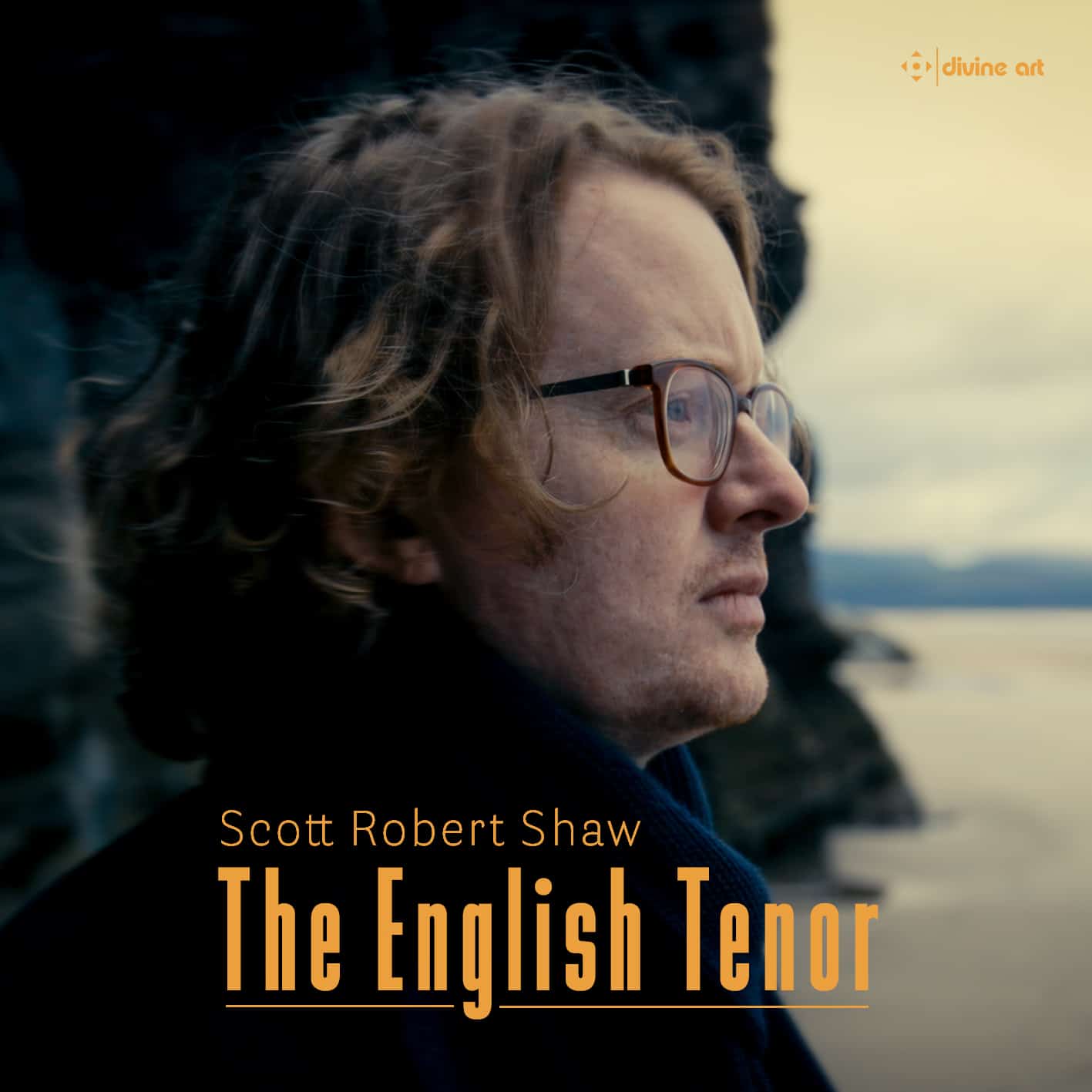
  • The English Tenor

    The English Tenor

    Scott Robert Shaw’s debut “The English Tenor” takes us on a beautifully performed journey through a who’s who of great English composers and their vocal works. The names Ivor Gurney, Benjamin Britten, Ralph Vaughan Williams, Gerald Finzi and Roger Quilter are synonymous with English Song, and a Golden Age of British music. The wide variety of accompanying instruments and artists, the broad range of text settings and the mix of cornerstone works of the repertoire alongside lesser-known cycles make “The English Tenor” a thrilling debut album.

    A product of the English church music tradition, Australian-born Scott Robert Shaw has been performing works in this oeuvre since childhood. Whether on the operatic or oratorio stage, as an ensemble singer or soloist, his deep cultural roots to the British music world are laid bare for all to see. This deeply personal album stands as testament to his background, and as a homecoming to his earliest steps as an artist.

    Beginning his career and training as a boy soprano at the St George’s Cathedral Perth Choir, Scott then attended the McDonald College of the Performing Arts in Sydney, studying music and acting in the Stanislawksy/Laban tradition, and was awarded a full scholarship for Excellence in Performance. He then attended the Sydney Conservatorium of Music, and was given the Most Exceptional Contribution to the Arts award from Wesley College, University of Sydney. In London he continued his studies with the English National Opera’s Baylis Programme for young performers and was regularly engaged to perform as a recitalist and operatic tenor in festivals and opera companies in both the United Kingdom and France. He then completed his studies at the Royal Conservatory in The Hague where he studied Early Music and Classical Singing, and now based in Düsseldorf, is regularly engaged as a soloist in The Netherlands and Germany, with a particular focus on Bach oratorios and Evangelist roles in the Passions.