Divine Art’s second CD featuring the organ at Cheltenham College Chapel with their organist, Alexander Ffinch, the first being DDA25193 Transformations.
Through Covid, and being able to record in that difficult period, Alexander widened many viewers’ musical knowledge with his online concerts, which continue. The 1897 Norman & Beard organ
in an impressive case was rebuilt and extended by Harrison & Harrison in 1930, having minor
alterations in 1976, with H&H’s most recent restoration in 2017: full details in the booklet.
The music begins with Thomas Trotter’s transcription of Gustav Holst’s Jupiter from The Planets,
Op.32. American composer Florence Price (1887-1953) seems to have been in the news quite a
bit recently: her Suite No.1 for Organ, four movements Fantasy, Fughetta, Air and Toccata follow. [6] is Alexander’s arrangement of Charles Martin (b.1977): Paradise from Coldplay – unusual! Elgar transcriptions feature at (7] Nimrod, [13] the Pomp and Circumstance March No.1 and [14] Chanson de Matin. Good to see more works by Dan Locklair: Rubrics (five movements, [ 8-12]. The brochure includes a printed conversation between Dan and Alexander giving the background to the composition.
The CD ends with Boëllmann’s Suite Gothique: Introduction/Choral, Menuet Gothique, Prière à Notre Dame and Toccata. 68 minutes of most enjoyable music. The Club was last here in 1997 – a long time ago. 5-star recording!
Catalogue Connection: 21112
-
Parallels Organ Club Journal Review
-
Parallels American Organist Review
Cheltenham College is not a college in the American sense of the word. It is, rather, a “day and boarding” school (meaning one can either live there or commute) serving what we would call nursery school through high school. Located in the beautiful Cotswolds region in Gloucestershire, the school was founded in 1841. Its Chapel of St. Mary and St. George boasts an 1897 Norman & Beard organ with several generations of subsequent work by Harrison & Harrison, most recently a major restoration in 2017.
This historic institution has for its organist Alexander Ffinch. A graduate of the Royal College of Music, he was a student of Thomas Trotter and organ scholar at Keble College, Oxford. His impressive career includes a stint as organist of Lancaster Town Hall (a stunning building whose Ashton Hall houses another Norman & Beard, currently under restoration). Parallels is the second album from this artist, the first being Transformations in 2019.
Perhaps the first thing to strike the listener—with the opening transcription of “Jupiter, the Bringer of Jollity”—is Ffinch’s sheer technical facility. The coruscating toccata figuration that opens this familiar piece, followed by the first theme in the lower voices and its seamless crescendo, is instantly arresting. The registrations are colorful, orchestral, completely suited to the letter and spirit of Holst’s original score. The phrasing and pacing are spot-on. In other words, the pleasure begins with technical facility but rapidly moves far beyond it, to serious and sound musical appreciation. The magnificent hymnic section, which we know as the hymn tune Thaxted, is delivered with the inimitable dignity of that tradition and style. I call this kind of piece a “spine stiffener.” Perhaps my old English Y chromosome, passed down through Massachusetts and New Hampshire, was activated. Perhaps it’s just my acquired tastes. In any case, the performance is magnificent.
The second offering on the CD is by the African American composer Florence Price, whose name has come more and more to the fore in recent years. The piece is her Suite No. 1 for Organ, a work in four movements. (MaryAnn Hamilton gave an interesting workshop on this piece at the 2014 AGO National Convention in Boston. Her handout is available for download at AGOBoston2014.org.) According to IMSLP.org, the publication date is no later than April 1942.
This is an engaging and very well-crafted work, and again, Ffinch brings to it effortless élan mixed with a deep grasp of the music’s architecture and purpose. The suite begins with dramatic chromaticism and rhythmic variety and ends with exuberant pentatonicism: a study in contrasts and textures. It’s well worth learning and performing, and this recording may be taken as the reference interpretation.
We come next to an arrangement of “Paradise” by Chris Martin of the band Coldplay, and as I am essentially a stranger to this musical universe, I will defer to the enthusiastic reviews of others. Another “spine stiffener” comes next: “Nimrod” from the Enigma Variations. We start with exquisite, butter-soft strings and flutes, gradually escalating to full organ and elegantly retreating therefrom. Another reference performance.
Dan Locklair’s Rubrics follows. Many of us remember the big impact of this five-movement piece, based on little quotations from the Book of Common Prayer, when it was published. I was very interested to read Ffinch’s interview of Locklair in the CD booklet. The first question is “What is it that makes Rubrics sound ‘American’?” (a question Locklair graciously re-proposes to his interlocutor). On listening to this suite yet again, I had an inkling of an answer. The third movement, “And Thanksgivings May Follow,” strongly evokes Gershwin with its driving, Broadway-like energy. The next movement, “The Peace May Be Exchanged,” takes an almost Ned Rorem–esque tone in its quiet diatonic mysticism. (Think “Elms” from Views from the Oldest House; think “A Farm Picture” by Walt Whitman or “To Make a Prairie” by Emily Dickinson.) A vision of earthly beauty, of a much-desired peaceable kingdom, comes dropping slow. The final movement, “The People Respond—Amen!” (our own Widor Toccata), returns to the mood of boundless confidence and exuberance.
The remaining works on the disc are “chestnuts,” but played magnificently and with a freshness and ardor that fully justify them. First are two pieces by Elgar, his Pomp and Circumstance No. 1 and Chanson de matin. The former builds up to a thunderous, gratifying full organ—I suspect with the 32′ Double Ophicleide, which was added in 2013. The latter brings out still more delightful solo voices. Finally, there is the Suite gothique of Boëllmann, where all the positive points again apply.
While a student could find no better recording to study by, a seasoned organist (or any lover of the instrument) may well find no better to bond with. In sum, the combination of works conceived for organ and arrangements, the blend of innovation and tradition, all rendered on that organ, in that space, by that truly superior organist, make this a recording not to be missed.
From The American Organist magazine (October 2024). © 2024 by the American Guild of Organists. Shared with permission.
-
Parallels American Record Guide Review
A program of oft recorded (save for the Price) transcriptions and organ favorites. Ffinch (J/F 2020) is College Organist at Cheltenham College in England. His playing is musical, well thought out, with rational tempos, making this a most enjoyable recording, especially of the popular Locklair and Boellman pieces.
He again plays on the robust 3-manual, 37-stop, 1892 Hill, Norman, and Beard (ren- ovated in 2017) in the Cheltenham College Chapel. The notes contain an extensive essay on Florence Price by Calvert Johnson, an interview with composer Dan Locklair, and informative notes by the performer on the other pieces
-
Parallels Fanfare Review
Back in 43:3 I gave a decidedly negative review to a previous recital disc by British organist Alexander Ffinch, saying that “the performances, while models of proficiency technically, are utterly antiseptic interpretatively.” Here, I am happy to say, the results are much improved interpretively, if not always ideal. If “Jupiter” could have a bit more spark in the faster outer sections and grandeur in the broader middle one, it still comes off fairly well. In issue 43:1 I wished that a disc featuring only two of the four movements of the Organ Suite No. 1 by Florence Price had presented the entire work, for those selections sounded promising. My intuition was not wrong, and Ffinch fully captures the delightful spirit of the piece. The brief (3:43) Paradise of Chris Martin, lead singer and songwriter for the rock band Coldplay, comes off well enough for the trifle that it is. The three Elgar pieces make their desired effect: The Pomp and Circumstance March No. 1 is merry and grand, “Nimrod” is stately and moving, Chanson de matin is quiet and delicate.
Rubrics (1988) by Dan Locklair (b. 1949) is the most “advanced” work here—still quite tonal, but with some adventurous harmonies. The work’s main title refers to rubrics for the conduct of the service of Holy Communion from the 1979 Book of Common Prayer of The Episcopal Church, with the subtitles for each of the five movements quoting a particular liturgical action or response: a shout of “Hallelujah!”, silence, giving of thanks, exchange of the Peace, and a response of “Amen.” As one might guess from these descriptions, the second and fourth movements are very quiet, and the other three quite extroverted, including some rambunctious jazz in the middle one. Once again Ffinch shows a total sympathy for American idioms. On the other hand, I find the performance here of the Boëllmann’s Suite gothique somewhat lacking in French lightness of touch, energy, and flair—it sounds rather Germanic instead. The booklet has notes taken from various sources—an essay on Florence Price by Calvert Johnson, an interview with Locklair regarding Rubrics—plus a group note for the transcriptions, but unfortunately no information on sources or identification of the author (Ffinch, I presume) for all of the other notes. The organ of Cheltenham College Chapel, restored by Harrison and Harrison in 2017, is well recorded, and specifications for it are provided, along with an artist bio. The recorded sound is clear. Overall this is an attractive recital; recommended
-
Parallels Choir and Organ Review
The Cheltenham College organ sounds on fine form in this clever compilation of both transcriptions and original organ works. Alongside the more traditional arrangements of Elgar and Holst’s Jupiter (in a fine transcription by Thomas Trotter) Ffinch has included his own arrangement of Coldplay’s Paradise. Most interesting is Florence Price’s Suite no 1 for Organ followed by Dan Locklair’s Rubrics. This shows a fascinating progression in American writing, both imbued in different ways with American spirituals, gospel and traces of jazz. My only complaint is why it was felt necessary to significantly increase the volume for softer tracks like the Prière à Notre Dame when the balance is so good elsewhere.
-
Parallels The Brazen Head Review
My father adored church organ music. At the weekend, I would often wake to the grand noise of Nôtre Dame, Rouen, or the three manual, 44 stop organ at Freiburg Cathedral (a particular favourite). I was constantly reminded of him as I listened to Parallels, a new CD by Alexander Ffinch.
Ffinch is the organist at Cheltenham College and oversaw a complete rebuild of the organ in 2017. There is an intimacy between player and instrument which is both rare and wonderful. There is also a refreshing boldness in the selection of compositions. Where else could one find Gustav Holst alongside Coldplay’s Chris Martin? As Ffinch explains in the sleevenotes:
Today, one of my daily duties is to play to 700 students at the start of their working day. I am facing a generation with the power to instantly access the music they want at any time and trust me, it’s not likely to be original organ music. So to capture their attention, I have enjoyed turning to classical some pop/rock arrangements to present music they hear elsewhere.
The Coldplay song ‘Paradise’ soars around the college chapel, stirring even the most indolent student.
There are other surprises on the recording – a Suite by Florence Price, an African-American composer who combines her classical training with Southern black American culture. Her ‘Symphony No 1 in E Minor’ was premiered at the Chicago World’s Fair by the Chicago Symphony Orchestra in 1933. The concert was the first performance of a composition by a black woman by a major orchestra in the US. The ‘Suite’ is jaunty, mellifluous and immediately engaging, with jazz phrasing and gospel singing inspiration.
There is a wonderfully atmospheric, gently-paced interpretation of Elgar’s ‘Nimrod,’ benefiting from the resonance of the chapel’s ancient stones.
Dan Locklair’s ‘Rubrics’ is another surprise, and requires Ffinch’s masterful dexterity. After a tumultuous first movement, we move to a gentle second movement using silence as a sort of leitmotif. As the composer explains in the excellent accompanying booklet: “To be sure, it is impossible to have true silence when music is sounded. But the illusion of silence can be suggested.”
The recording closes with Leon Boellman’s ‘Suite Gothique.’ It was early morning when I listened to the Suite and its third movement ‘Prière a Nôtre-Dame.’ My father was almost with me in the room as the melody floated and swirled. Nôtre Dame was his first port of call on any visit to Paris. From this embracing reverie we launch into the thunderous final movement, the Toccata. It awakened the household as Dad was prone to do. Time to put the kettle on.
-
Parallels MusicWeb International Review
According to the Divine Art website, this disc recorded in Cheltenham College Chapel is a “meticulously curated album that explores the organ’s remarkable breadth and sonority. Featuring three monumental organ works and delightful arrangements of English classics, the collection is a testament to the grandeur and versatility of the instrument.”
Florence Price’s Suite No.1 shows none of the modernist traits of that time, no traces of Olivier Messiaen, Marcel Dupré or Jean Langlais. What she does bring to the party is an enthusiasm for certain African-American musical tropes: spirituals, hymns, pentatonic scales, and jazz-inspired harmonies and rhythms. After an ageless Fantasy, a Reger-style Fughetta takes the spiritual Sometimes I feel like a motherless Child as the subject. Jazz seems to infuse the Air, but only to a limited extent; this is no Gershwin exploring the genre. Perhaps Percy Whitlock was the model here? The concluding Toccato [!] certainly shifts along. It uses a “juba base” (juba dance was one of Price’s devices), which creates movement and makes it swing. There is a touch of the theatre organ here.
The rock band Coldplay is not on my radar. In 2011, they had a hit: Paradise from their fifth studio album Mylo Xyloto. Ten years later, Alexander Ffinch transcribed the song. I listened to the original track as part of my prep for this review. I can only say that the realisation for the organ reflects its “slice of hug-warm ecstasy”. If I heard this piece at the conclusion of Evensong, I would never guess its genesis and its fusion of “electronica, ambient, pop, R&B, classical and progressive rock”.
Little need be said about the Holst and Elgar transcriptions, always a pleasure to hear. It is especially appropriate to have Jupiter from The Planets to celebrate the 150th anniversary of Holst’s birth. Elgar’s Pomp and Circumstance No.1 might be considered a bit non-PC these days, but there is nothing controversial about his Chanson de Matin in Herbert Brewer’s 1904 arrangement.
I have not heard Dan Locklair’s music, at least not consciously. Peter Hardwick notes in The Diapason magazine that Rubrics is “one of the most frequently played organ works by an American composer”. Extracts were played at the Washington National Cathedral funeral service for President Ronald Reagan in 2004, and in the January 2009 Martin Luther King Jr. service at the Inauguration of President Barack Obama.
A Rubric (or Rubrick) in the Anglican Book of Common Prayer and successive revisions means an instruction to the officiant or worshipers. Locklair gave five directions. The energetic “The ancient praise-shout, ‘Hallelujah,’ has been restored…” is followed by a “Silence may be kept” which is a “lyrical movement featuring the flute stops.” Then there is a vivacious trumpet tune section which suggests “…and thanksgivings may follow.” Another slow, expressive, movement reflects on the instruction that “The Peace may be exchanged”. Rubrics concludes with the challenging toccata “The people respond – Amen!”. Overall, this satisfying work is jazzy and sometimes minimalistic, but still in the great tradition of 20th-century organ music.
Leon Boëllmann wrote Suite Gothique for the commissioning of the new Jean-Baptiste Ghys organ at Notre-Dame de Dijon. That was a small two-manual instrument, so the piece is suitable for a wide range of organs. The powerful Introduction-Choral, which contrasts a loud theme and its quieter echo, seems to run into the vigorous Menuet Gothique. The Prière à Notre-Dame evokes the statue of the Notre-Dame de Bon-Espoir. The final movement is the ever-popular Toccata with its surging progress that suggests both light and darkness. The soubriquet Gothique may refer to the literary genre, or more likely to the architectural structure of the Dijon church, a masterpiece of 13th-century Burgundy Gothic. The Suite gets an exceptional performance here.
The present three-manual and pedal organ at the Cheltenham College Chapel was originally built in 1897 by Norman and Beard. It was rebuilt by Harrison and Harrison in 1930, with additions in 1976. In 2013, a 32-foot Double Ophicleide pedal stop was added. The latest cleaning, re-leathering of the wind system and the restoration of the console and a new piston system were concluded in 2017. There is a complete specification of the current instrument in the booklet.
The liner notes (from which I quoted amply, with thanks) are by various hands. They are helpful, even if not all dates of composition or arrangement are given. There is Calvert Johnson’s lengthy essay on Florence Price, a long-winded interview between Alexander Ffinch and Dan Locklair, and notes on the other numbers. There is a resume of the soloist.
This is an impressive recital that ’parallels’ old and new favourites. New to me were Coldplay’s Paradise, Locklair’s Rubrics and Price’s Suite. It was good to hear Leon Boëllmann’s Suite Gothique and four pot-boiler English transcriptions.
-
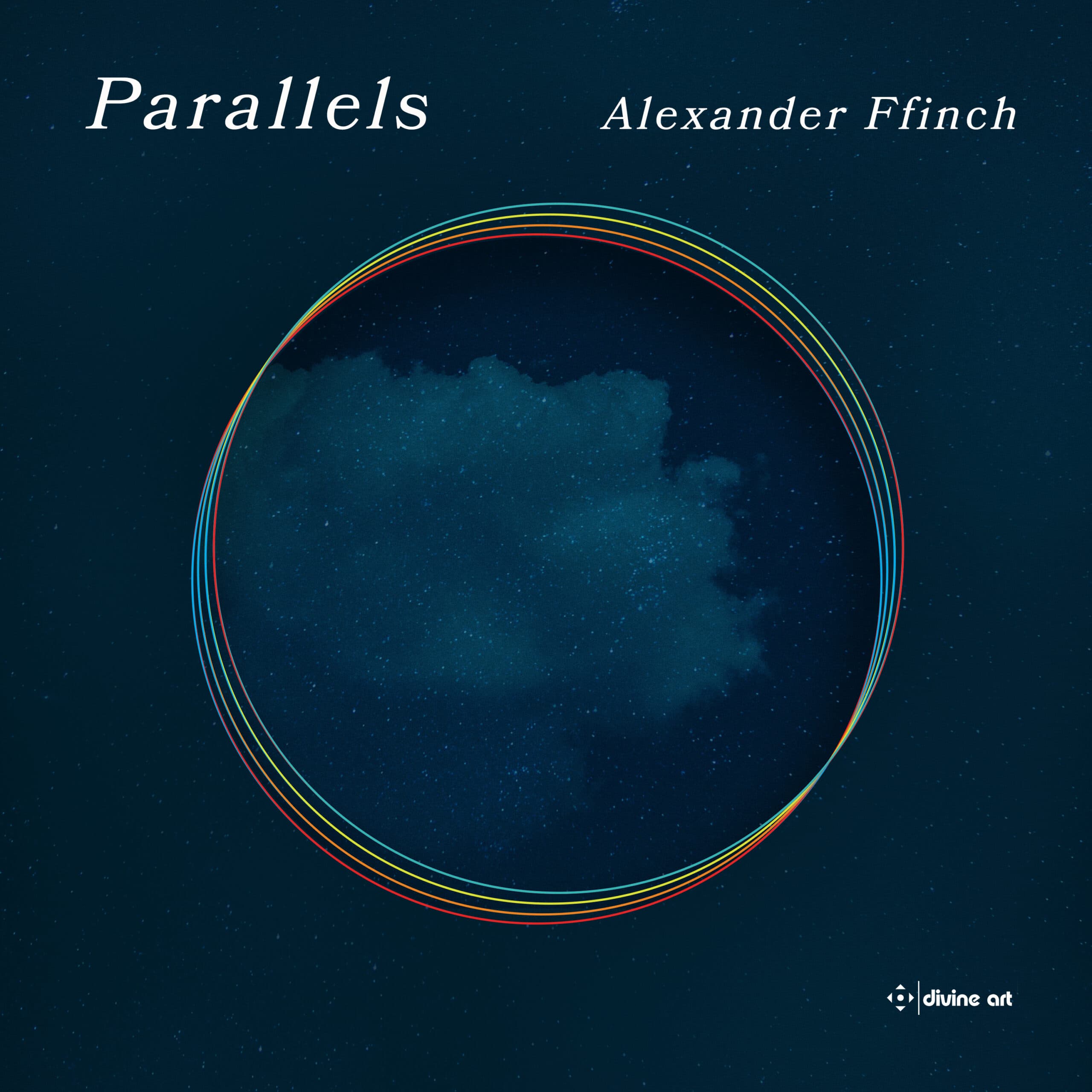
Parallels – music for organ
Parallels is meticulously curated album that explores the organ’s remarkable breadth and sonority. Featuring three monumental organ works and delightful arrangements of English classics, the collection is a testament to the grandeur and versatility of the instrument.
Florence Price’s Suite No. 1, makes its debut commercial recording. This substantial and captivating composition draws inspiration from spirituals, hymns, and pentatonic themes, showcasing a harmonious fusion of jazz influences. The rhythmic drive and themes in the final Toccato pay homage to the engaging Rubrics by Dan Locklair, creating a seamless connection between the featured works.
The album’s title, Parallels, reflects Florence Price’s artistic vision, aiming to convey a heritage through the past while being influenced by contemporary contacts. This intention is beautifully realised in Suite No. 1, where the chromatic harmony reminiscent of Suite Gothique meets the rhythmic vitality of Rubrics. As a nod to the present day, the album includes Alexander’s own arrangement of Coldplay’s hit single Paradise, seamlessly blending modernity with Price’s timeless compositions. Parallels is not just an album; it’s a transformative auditory experience that invites listeners to explore the intersections of tradition and innovation on the Harrison and Harrison organ. The past converges with the present in perfect harmony.
The surprise appearances of music not typically associated with the organ successfully adds an element of excitement and discovery. The album also features splendid organ arrangements of English staples like Elgar’s Chanson de Matin and Pomp and Circumstance, further showcasing the instrument’s versatility. “Parallels” is an invitation to discover the intersections of tradition and innovation, a celebration of timeless compositions, and a showcase of the capabilities of Cheltenham College Chapel’s Harrison and Harrison organ. This album also celebrates the 150th anniversary of Gustav Holst’s birth with the inclusion of Jupiter, the Bringer of Jollity fromThe Planets Op. 32 arranged by Thomas Trotter.
Alexander Ffinch has established himself as a renowned organist with performances spanning the UK, Europe, USA, and Asia. Notable for his role as the College Organist at Cheltenham College since 2004, Alexander oversees daily organ performances in the College Chapel and accompanies choirs while maintaining an active schedule as a recitalist, featuring prominently in events like the Cheltenham International Music Festival and BBC Radio 3 broadcasts. His 2019 album, Transformations (DDA 25193), received critical acclaim.