Catalogue Connection: 21113

  • Songs of our Times Planet Hugill Review

    A project initiated by poet Chinwe D. John, this disc presents two satisfyingly different contemporary settings of her work in intelligent performances

    This remarkable project features two song cycles, Stuart MacRae’s Kingdoms and Bernard Hughes’ Metropolis, both featuring the words of Nigerian-American poet (and practising medical doctor) Chinwe D. John. This disc, Songs for Our Times on the Divine Art label, includes MacRae’s cycle performed pianist Christopher Glynn and tenor Nick Pritchard, and Hughes’ cycle performed by Glynn and soprano Isabelle Haile.

    The project is very much Chinwe D John’s own. Feeling passionately about the need for classical music to expand its base, and also seeing the need to respond to the challenges facing UK-based musicians during the 2020, John was responsible for involving both composers and performers in creating the project. As a poet writing texts for songs John has a very clear, direct voice, with the ability to craft memorable, evocative phrases and use short bursts of lyricism. Rarely to her texts feel too wordy or two over-written, there is space for the music.

    Stuart MacRae’s Kingdoms consists of four songs whose texts seem to take different thoughts about life in adversity (though the CD booklet not only includes John’s texts, but her thoughts on their meanings), here performed by Nick Pritchard and Christopher Glynn. The first song, Kingdoms begins with a lovely major/minor contention in the piano which crops repeatedly up during the song. Lyrical yet rather affecting, there is a sense of rapture here and Nick Pritchard brings a lovely sense of shape and musical line to MacRae’s music. Despite the rapture, words are important and clear, yet the whole is musically expressive. Life Unfiltered is delicate and intimate, yet with moments of quiet rapture, whilst Tethered Ships moves from quiet and intense to vivid rapture. The quietly lyrical Primordial City is folk-ish with jazz-like elements. MacRae and John have created a very approachable, intelligently lyrical cycle, yet throughout MacCrae has brought out the rapturous element in the music that links back to the 20th century English pastoral tradition (yes, I know that Stuart MacRae is Scots, but I don’t think the phrase 20th century Scots pastoral tradition would mean the same thing at all).

    Bernard Hughes’ Metropolis consists of six songs which seem to explore aspects of living now, against a background of tradition. Here they are performed by Isabelle Haile and Christopher Glynn. The first song, The Shepherds is engagingly chatty with a hint of jazz in the rhythms. Haile sings with a lovely bright, focused soprano tone. Metropolis is rather intent, with a sense of stasis in the piano and incantations from Haile’s soprano over, then Call Home is engagingly jazzy. When Apart is rather conversational with an evocative piano behind. A Bedtime Tale has a recitative-like feel in the voice, complemented by rather rapturous piano accompaniment. The final song, The River’s Course is attractively jazzy, with a swing. In all the songs, Hughes brings out the poetically conversational nature of John’s texts, as if she is chatting to us, with Hughes giving us a series of imaginative takes on ways of expressing this musically.

    It is unusual for a project like this to arise with the poet, but here John’s fine words are giving shape by two rather different but equally talented composers. The result is a disc that is satisfying in many ways, from the composers’ imaginatively intelligent lyricism and ability to create songs both satisfying to sing and musically expressive, to the fine performances from all the artists involved.
  • Songs for our Times – British Music Society Review

    Why have I put the lyricist above the composers? Firstly because Chinwe D. John, a Nigerian-American poet and lyricist, is responsible for all 10 songs while the two composers are not. Then because it was she who sought out the composers, not as is frequently the case, the other way round. She made sure to choose composers who would make her words paramount, creating music for piano and voice that would make her often challenging words shine. That is exactly what they have done so successfully. Stuart MacRae is responsible for setting the four songs under the main title Kingdoms. Bernard Hughes has set the six songs of Metropolis. 

    Most of the songs of Kingdoms, also the title of the opening song, deal with abstract subjects. Chinwe begins ‘These are the days of turbulent living’ more true today than ever surely! How are we to find solutions to the world’s troubles? The chorus asks, ‘Where is the book of Wisdom?’. Chinwe refers to the burning of the Library of Alexandria in which so much of the ancient world’s wisdom was lost. 

    MacRae’s clean, quite delicate piano writing, performed with distinction by Christopher Glynn, supports a thoughtful melody line that delivers the words sung so clearly by tenor Nick Pritchard. The second song, Life Unfiltered opens with raindrop-like piano notes leading into the story of an old man who played an accordion below the hospital window of his ailing wife. Chinwe uses this song to consider the importance of love or companionship to life.

    Several of the songs in Metropolis are less abstract – more down to earth. The settings by Bernard Hughes reflects that. All six of these songs are sung by silver-bright soprano Isabelle Haile. Call Home reflecting the Nigerian side of Chinwe’s family background is set to happy sounding dance-like music. A Bedroom Tale suggests the feeling of a berceuse becoming more embellished as it proceeds. 

    The final song, The River’s Course, that river being the Niger, has exactly that free flowing music as the words reflect on possible futures for Africa and perhaps the rest of the world too. Here is music to enjoy but to make you think as well!

  • Songs for Our Times

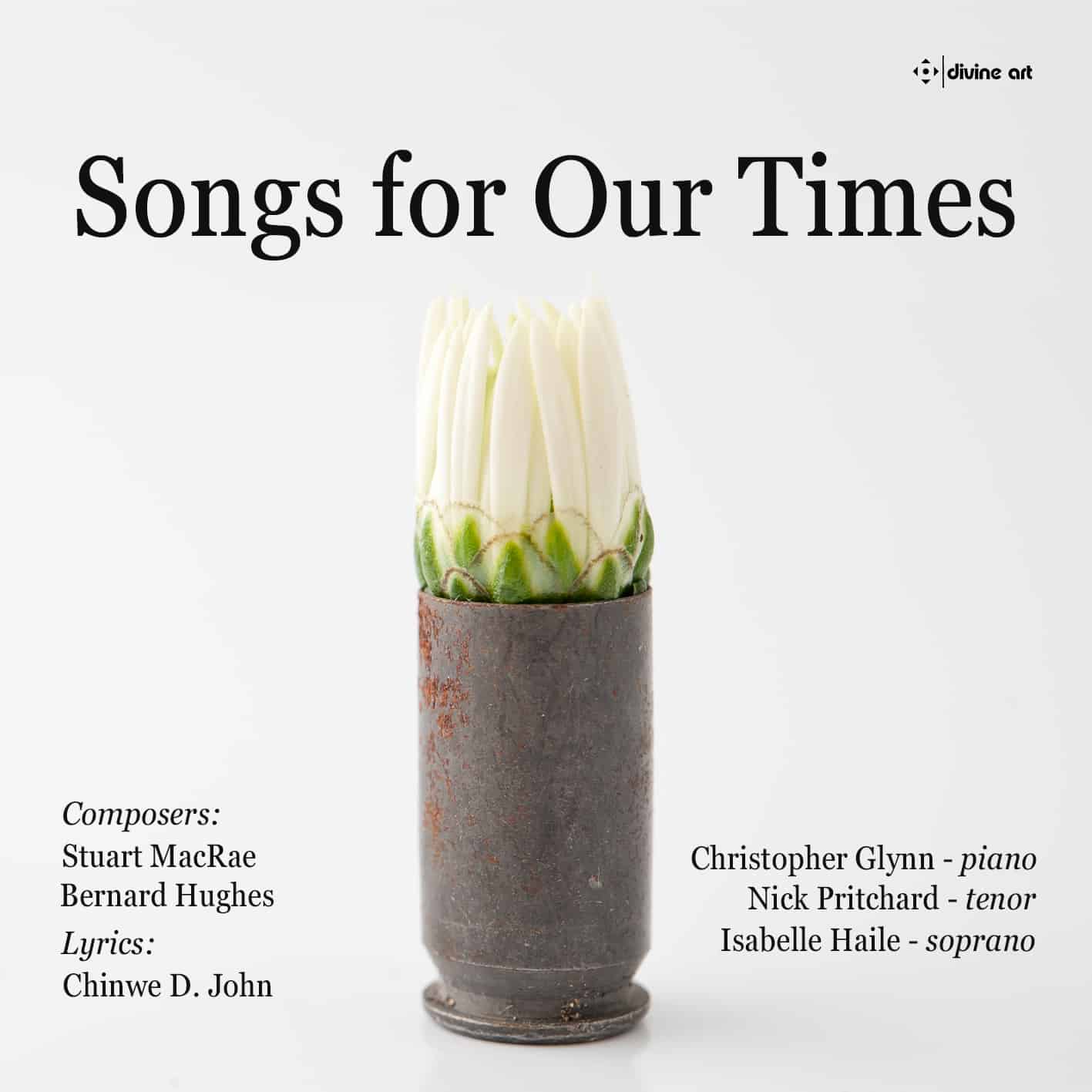
    Songs for Our Times

    In these two premiere recordings Kingdoms and Metropolis, the stories will be familiar to many with their universal subjects, including the need for wisdom within the halls of power; transcendent love; an immigrant’s homesickness; the search for inner peace; all flow through the album evoking the spirit of our day and age. Despite our current turmoil, the overall tone of the album is a hopeful one, making it a welcome balm during our turbulent times.

    Nigerian-American lyricist Chinwe D. John strongly feels that in order to keep classical music thriving and to bring in a new audience, the work of present day composers needs to be supported. Commissioning contemporary day composers, to set music to lyrics directly reflective of our current times, is one way of accomplishing this. It was John who went in search of composers who would share her vision and passion for creating works which could be appreciated and enjoyed, works which would connect an audience and perhaps even take on a cultural significance.

    It is the combined vision of John’s settings and the subsequent compositions by Bernard Hughes and Stuart MacRae which is so effectively brought to life in this recording by the musicians. Tenor Nick Pritchard, soprano Isabelle Haile and pianist Christopher Glynn give wonderful, intimate performances which further connect the listener to the stories presented in Chinwe D. John’s lyrics.

    The production of Songs for Our Times is a testament to collaboration and cooperation, practically reflecting the intent of the artists’ work.