Catalogue Connection: 21116

  • Reminiscence Chronicle Review Corner Review

    Kawamura plays beautifully on this collection of tunes, although it is perhaps a little too well mannered; it’s either for relaxing or zoning out to, not least because it’s often quiet. It’s not po-faced though; there is a fun version of “Peer Gynt’s” “Hall of the Mountain King”, which starts off with an air of playfulness before ending in a speed that is comically ridiculous, the piano equivalent of a rock guitarist shredding.

    The album opens with the nostalgic and reflective “October”, Op. 37a No. 10, from Tchaikovsky’s cycle “The Seasons”, a downbeat start. Sibelius’s “Etude”, Op. 76 No. 2, and Brahms’s “Hungarian Dance” are both livelier, the former very crisply played and pleasurable to listen to, the latter louder and more muscular.

    Six preludes from Chopin follow, offering a range of styles from dramatic to gentle. What might be side two includes one of Kawamura’s own pieces, “Variations”, one of the gentler pieces.

    The highlights are side two: “Clair du Lune”, the aforementioned “Mountain King” and a romantic take on “Ave Maria”.

  • Reminiscence Fanfare Review

    The theme of “reminiscence” seems to weigh heavily on the first item, Tchaikovsky’s “Autumn Song” from his cycle The Seasons (really The Months, of course). Japanese pianist Tomono Kawamura offers an atmospheric performance, setting the tone for the disc’s predominantly lyrical tone. The disc was recorded in 2016 (and boasts excellent piano sound, courtesy of recording engineer Kit Venables) but has had to wait eight years for release. The disc’s mix of familiar and unfamiliar is appealing, too: Sibelius’s piano music remains undervalued to this day, and the Étude (op. 76/2) is delightful, a study in staccato deliciously articulated by Kawamura. Kawamura adds a nice sense of rhythmic Schwung to Brahms’ Hungarian Dance, WoO 1/6, lilting and attractive while containing some muscularity; it is the darker contrasting section that impresses; however, the rubato in the outer sections can sound studied.

    The C-Minor Chopin Prélude ushers in representatives of this composer’s reflective side; the dynamics are well terraced here. This cedes to a daringly languorous E-Major Étude, op. 10/3; here, Kawamura seems a touch outside the music in the opening section. But the music’s ensuing animation goes some way to right matters (and Kawamura’s attention to detail in the faster section is superb). There is no getting away from the fact, though, that rubato in the outer sections sounds rather studied (no pun intended). Kawamura’s light touch enables the G♭-Major Étude, op. 10/12, to remain airborne, however.

    The C-Minor Étude, op. 10/12 is appropriately overshadowed by storm clouds, the finest performance of that group. Two more extended Chopin compositions follow. First, the posthumously published Nocturne in C♯ Minor is harmonically aware and sweet-toned here, the final treble roulades spun with silk; then comes the Third Ballade, full of beautiful touches, and here the rubato sounds more natural. There are some imaginative passages, too, that dispense with washes of sustaining pedal.

    Even more familiar is Brahms’s A♭-Major Waltz, tenderly presented here, and with a natural ebb and flow. Another “color” to the recital comes with a Scarlatti sonata, here muscular and unapologetically rendered on the modern concert grand piano. Kawamura’s touch is marvelous though, even and carefully toned. Perhaps the characteristic sudden bass notes are slightly apologetic, but this remains fine Scarlatti. Perhaps, too, there is something of the open textures of Scarlatti on the piano that transfers across to the opening of Kawamura’s own Variations. Amazingly, she wrote this at the age of 12. It is fluent and varied, and certainly does not sound like the work of a pre-adolescent. There is a delicious, almost Mendelssohnian variation full of staccato ascending scales and responses thereto, and more than a touch of the virtuoso, plus a trill-laden variation that positively glistens here. There is a lot of hype in the Divine Art booklet notes, but I do agree that Kawamura’s own Variations constitutes a highlight, if not the highlight, of this disc. Most of all, they entertain. I wonder if she still composes? Her website gives no hint.

    Some Rachmaninoff was perhaps inevitable. It turns out to be a lively account of the G-Minor Prelude from op. 23. Kawamura’s performance has a natural flow, and real light and shade; as a result, the piece sounds more substantive than in most performances. Her Debussy “Clair de lune” is daringly reflective, but she sustains it marvelously, with the recording perfectly conveying the sweetness of Kawamura’s touch in the upper register.

    Although I am familiar with much Grigory Ginzburg, whether as a pianist or an arranger, I was unaware of his remarkable arrangement of Grieg’s “In the Hall of the Mountain King” from Peer Gynt. Kawamura teases the accelerando well, and clearly enjoys the climax and the left-hand octaves that follow (a tribute to the Chopin A♭-Major Polonaise?). Finally, therecomes some Caccini, an Ave Maria arranged by Toshio Yoshimatsu, as a nice encore. This Caccini certainly seems to attract latter-day arrangers: There is one for soprano and organ released on Naxos Japan that echoes Yoshimatsu’s world (recorded by soprano Asako Tamura and organist Mari Fukumoto on a disc titled Jewels of Ave Maria).

    Overall, Kawamura presents an enjoyable hour’s worth of music; her musicality shines through throughout. She is well recorded, too.
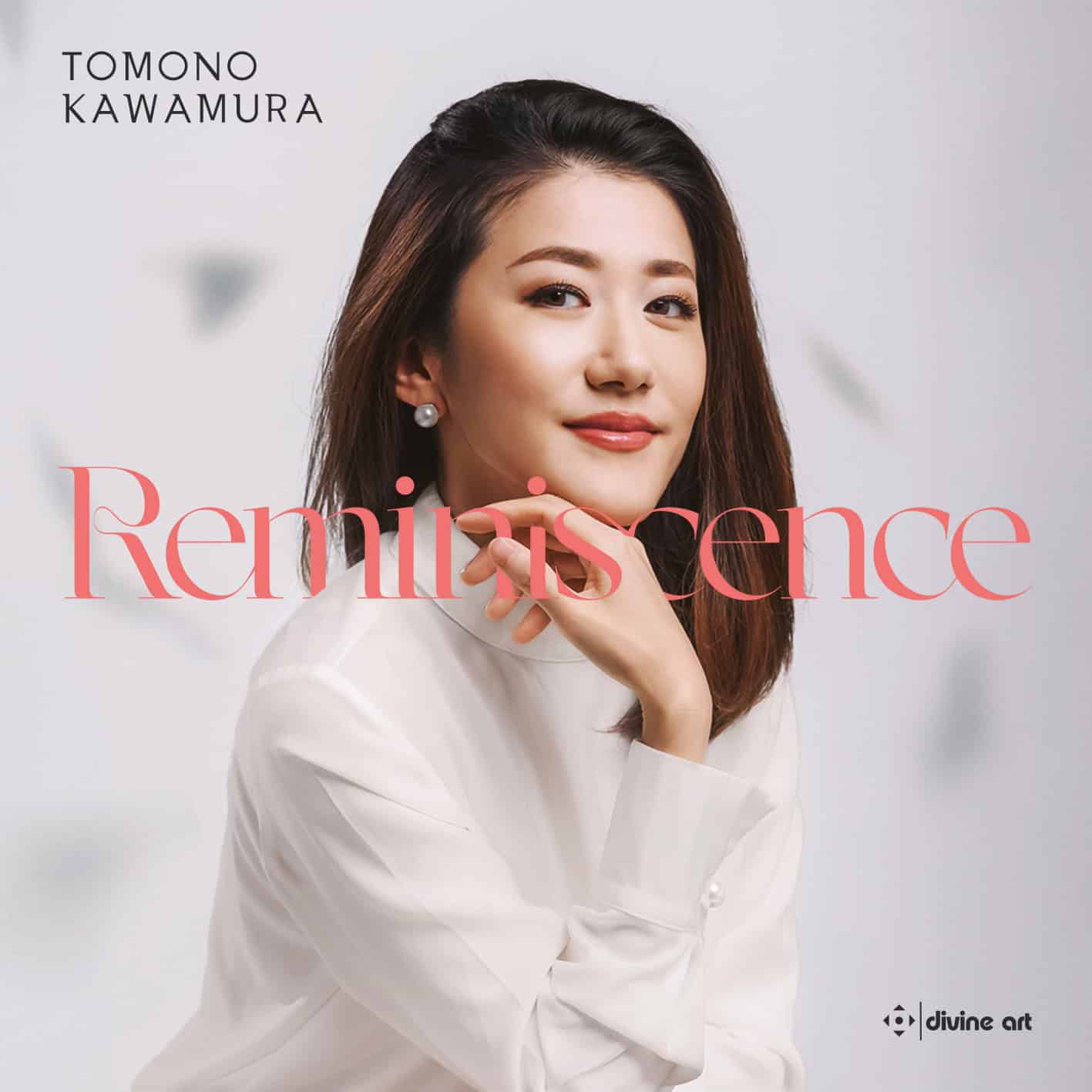
  • Tomono Kawamura: Reminiscence Textura Review

    Reminiscence impresses as a thoughtfully curated collection by pianist Tomono Kawamura. Connecting the selections are a shared focus on lyrical intimacy and elegiac feeling, but there’s considerable variety too. While many settings are exercises in inward probing, others are energized dance studies that enliven the programme. In presenting material by Chopin, Scarlatti, Sibelius, Rachmaninoff, Debussy, Grieg, and others, the album plays like the kind of recital the Japan-born pianist might deliver at any number of concert locations in North America or abroad.

    Kawamura could have titled the album Journey, given its travelogue-like character. In featuring six pieces by Frédéric Chopin, it reflects the importance of his music to her life; interestingly, though, one of the album’s most memorable compositions is the one credited to Kawamura herself, Variations, which plays like an heartfelt homage to the composers on the release by treating their material as a collective catalyst for her own statement. Like any recording of quality, Kawamura’s is both a revealingly personal expression and one that speaks universally; it also, needless to say, features performances of sound technical calibre by a pianist who initiated studies at three and made her orchestral debut at fifteen and demonstrates an insightful understanding of the material presented.

    A nostalgic tone is established with Tchaikovsky’s “Autumn Song” from The Seasons. The delicacy of her touch and poetic rendering of the material speaks to Kawamura’s sensitivity as an interpreter. The writing is certainly autumnal, but it’s her handling of pacing and dynamics that evokes that quintessential October-associated mood. As she relaxes into the music, we already know we’re in solid hands with her as our guide. Completely changing the tone, Sibelius’s “Etude” from 13 Pieces dances with breezy ardour and light-hearted charm. Its kinetic energy carries over into the equally lively “Vivace,” the rollicking sixth of Brahms’s folk-inflected 21 Hungarian Dances. He’s also represented by a lovely waltz, the A-Flat Major fifteenth from 16 Waltzes.

    The Chopin material arrives in a bunch, the six selections purposefully chosen to highlight different facets of his artistry. Three études pair with a prelude, nocturne, and ballade in this representative overview. After the twentieth prelude (in C Minor) from his Op. 28 collection provides a dramatic and solemn entry, the “Tristesse” étude (the first of three from Chopin’s Op. 10) alleviates the tension with a tender statement but then gradually swells in intensity before returning to its plaintive beginning; replacing its heartbreak with, respectively, joviality and dazzling fireworks are the high-spirited “Black Keys” and “Revolutionary” études, both of which call upon Kawamura’s virtuosic command. Her voicing of Chopin’s C-Sharp Minor Nocturne is exquisite, her attentive rendition of his A-Flat Major Ballade No. 3 as gripping. At almost eight minutes, the latter is the longest of the album’s sixteen tracks and affords a wonderful opportunity for the listener to luxuriate in her playing and savour her artistry.

    As technically impressive is her fleet-fingered delivery of Domenico Scarlatti’s exuberant A Major sonata. In alternating between gentle moments of reverie and declamatory episodes, Kawamura’s own Variations integrates into a single expression the diverse moods of the other composers’ pieces. Whereas the G Minor fifth of Rachmaninoff’s 10 Preludes is devilry incarnate, Debussy’s dreamlike “Clair de lune” is suitably transporting. As well-known a quantity is Grieg’s “In the Hall of the Mountain King,” which receives an enthusiastic, high-intensity reading from Kawamura. Capping the release is a sensitive treatment of Giulio Caccini’s wistful Ave Maria.While Tomono has performed as a soloist in many countries, she’s also become known as a performer on luxury cruise ships, and it’s easy to picture her captivating passengers with the album’s better-known crowd-pleasers. Reminiscence registers as something more than a user-friendly tour guide of the classics, however, when the quality of all of its performances is so consistently high.

  • Tomono Kawamura: Reminiscence

    Tomono Kawamura: Reminiscence

    In her new album, pianist Tomono Kawamura invites listeners on a journey through the rich tapestry of classical piano music. From her early beginnings of music education in Japan to her career on the global stage, Tomono’s deep connection to the piano shines through in every piece she plays. Her selections for this album reflect a blend of personal memories and timeless masterpieces, each one brought to life with her distinct poetic sensitivity and technical brilliance.

    The album begins with Tchaikovsky’s October, Op. 37a No. 10, from his celebrated cycle The Seasons. In choosing this particular piece, Tomono captures the reflective and nostalgic mood of autumn, with its lingering profound warmth and hint of melancholy. Her interpretation brings out the delicate interplay of light and shadow in Tchaikovsky’s evocative composition, setting the tone for the album’s journey through the changing emotional landscapes of classical music.

    Following this, Jean Sibelius’s Etude, Op. 76 No. 2 offers a glimpse into the Finnish composer’s introspective world. In Tomono’s hands, the piece’s subdued elegance and quiet intensity are carefully balanced, reflecting the stark beauty of the Finnish landscapes that inspired it. Brahms’s Hungarian Dance adds a lively burst of energy to the collection, with Tomono expertly navigating its spirited rhythms and fiery folk influences. The piece’s vibrant, dance-like qualities are captured with a joyful intensity that showcases her dynamic range and versatility.

    Tomono’s deep affinity for Chopin is evident in her performance of six of the composer’s works, each selected to highlight different facets of his genius. From the lyrical intimacy of his nocturnes to the virtuosic brilliance of his études, Tomono’s interpretations are marked by
    an emotional depth and clarity that resonate with the heart of Chopin’s music.

    The album continues with selections from Scarlatti, Rachmaninoff, Debussy, and Grieg, each piece chosen to reflect the diverse stylistic periods of the piano repertoire. Whether it’s the crystalline precision of Scarlatti’s sonatas, the sweeping passion of Rachmaninoff’s preludes, the dreamlike textures of Debussy, or the rugged beauty of Grieg, Tomono’s performances are a testament to her understanding of the masterpieces.

    A highlight of Reminiscence is the inclusion of Tomono’s own Variations which was written at the age of twelve. This original work bridges the past and present, blending classical form with contemporary expression. It serves as a showcase of her creativity and deep understanding of the classical tradition, offering a fresh voice while paying homage
    to the composers who have inspired her musical journey.

    Reminiscence is more than just a collection of classical works; it reflects Tomono Kawamura’s lifelong devotion to music. Through her thoughtful interpretations and masterful technique, she shares with listeners a deeply personal experience and memories that will resonate long after the final notes have faded.

    About Tomono Kawamura:

    Born in Japan, at the age of three, Tomono started her piano studies at the Yamaha Music School under Fumiko Eguchi. She made her orchestral debut as a soloist at fifteen. Later, Tomono was awarded a scholarship to study at the Royal Academy of Music in London with Christopher Elton where she graduated with the First Class Honours. She has won number of awards and appeared in such venues like the Wigmore Hall, London. In recent years, Tomono has appeared internationally as a solo recitalist, captivating audiences around the globe.