Catalogue Connection: 21128

  • Fanfare Review Joseph Sonnabend

    Look up Joseph Sonnabend (1933–2021), and you will most likely light upon his medical activities, particularly in the field of AIDS. Here there is a chance to meet Joseph Sonnabend, composer. Sonnabend made his debut as a composer in 2018, at the ripe age of 85, via a concert at Fitzrovia Chapel, London, part of the AIDS Histories and Cultural Festival An enthusiast of the music of Alban Berg, Sonnabend’s music shares with that great composer the creation of a space in which dodecaphony and Romanticism can coexist. One can certainly hear a sinewy chromaticism to the Piano Trio No. 1 in a superb performance by violinist Charles Mutter, cellist Idlir Shyti and Antony Gray (whose unforgettable recording of Michael Blake’s Afrikosmos made one of my Want Lists). The music itself is compelling, unrushed in its unfolding, occasionally unpredictable, and often rejoicing in linear counterpoint. And while Berg is often mentioned in reference to Sonnabend, Schoenberg is there too in the grittier moments. The stand-alone piano piece April eschews grittiness for proto-vernal open-heartedness. Grey plays with wonderful fluidity and a legato touch, finding just the right amount of sustaining pedal. This sounds a little as if it is a song reduction it is certainly melody-led). A change of pianist but not of medium for Mirage, performed by Morgan Hayes, follows;some of the writing here seems directly linked to the counterpoint of Berg’s Piano Sonata, op. 1.

    Sonnabend is very good at evoking moods that fit the pieces’ titles (although who knows what came first, the chicken or the egg?). This certainly holds for The Summer Before Last for cello (Shyti) and piano (Gray), riddled with a feeling of nostalgia. It is quite a complex piece though, rising to a significant climax. Shyti plays with real passion; the cello writing is markedly tricky, and the piece includes a fully-fledged cadenza complete with nods to the Bach Solo Cello Suites. This piece is a substantive statement, especially after the preceding two occasional pieces. The solo-violin Fluctuations is stunning, and Charles Mutter’s concentration never flags. The work is fairly extended (nearly 11 minutes in this case); it is discursive but certainly not rambling. All credit is due to Mutter, whose pizzicato riposte to an arco gesture is electric (to give one example of his excellence), whose performance is technically faultless, and who evidently puts both heart and soul into this performance. The other violin piece, Synergism for two violins, is heard in a cut version by Mutter sanctioned by the composer. It is Mutter and Cora-Marina Lordache who present the piece, as two absolutely equally strong voices. It is one of the most compelling pieces for two violins I have heard.

    Soprano Emma Tring joins Gray for three songs, listed simply as “Songs Nos. 1, 3, and 5.” Tring’s voice is beautifully pure, a trait I have previously commented on (and rejoiced in) in connection with the Navona recording of John Carollo’s Symphony No. 3 (see Fanfare 43:4, which includes an interview with that composer). It’s a pity that texts are not provided, as this is haiku poetry, where every word and its placement counts for so much. The soprano and right-hand piano dueting in the same register in the second song, “I am not at home,” is delightful, as are Sonnabend’s twists of harmony throughout. The relationship of chromaticism and consonance, so clearly a thread in all of these works, is managed particularly skillfully in these songs. The implied Buddhist basis to the final “How can I beak my attachment to the world” could usher in a linguistic parallel to “Ich bin der Welt abhanden gekommen” and therefore is perhaps Sonnabend’s Mahler-moment; both composers revel in world-weary matters, anyway, albeit via differing vernaculars.

    There is no doubt whatsoever that Passacaglia is exactly that, with the slow solo cello line (Shyti) joined, with a sense of inevitability, by the piano. This entrance is a 12-tone ground bass that forms the foundation of the piano’s expansion. The work is a joy, the processes audible but never simplistic, the piece shaped intelligently by both the composer and the executants. Sonnabend’s careful placement of pure octaves on a structural level is notable (and is an aspect of his music that appears in other works in this disc, too). A sudden interruption of the process, leading to a return of the solo cello opening, is most effective.

    There are some YouTube videos that are illuminating, directly linked to this release, and recommended as valuable supplementary research. Composer Andrew Toovey had a real input into this project and he offers a spoken introduction, as does violinist Charles Mutter, and there is also a 50-minute Celebration of Joseph Sonnabend available, introduced by BBC Radio 3 announcer Tom Service.

    Gripes? Some of the recordings are a touch dry, and although there is plenty of background material in the booklet notes, the commentary on the pieces themselves is distinctly pithy.

    But there is nothing really to detract from the importance of this release. Divine Art remains a force for good in the world of music, and Sonnabend’s music is fully deserving of attention.
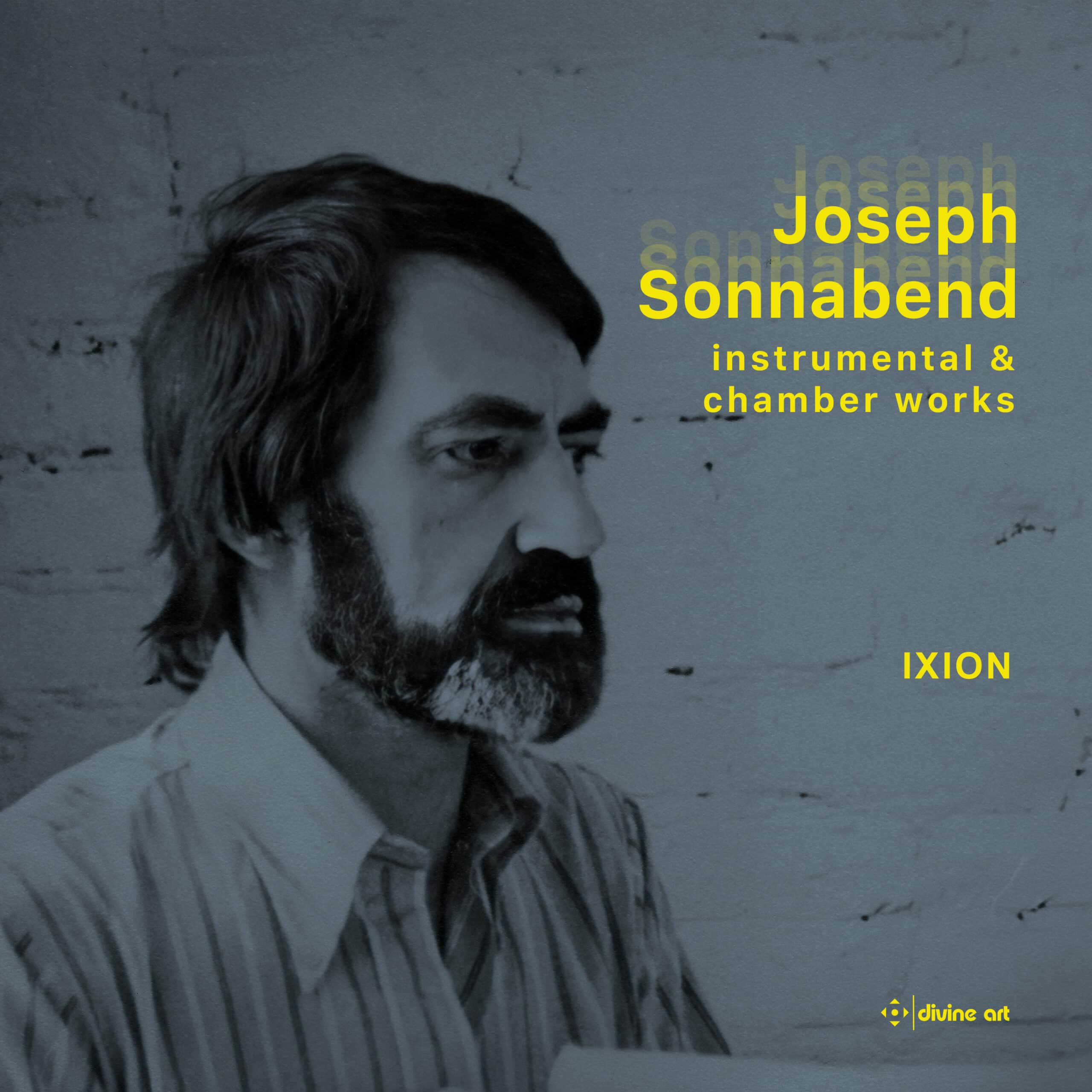
  • Joseph Sonnabend: Instrumental and Chamber Works Pizzicato Review

    Dr. Joseph Sonnabend’s profile initially reads like that of a doctor. Born in Johannesburg, South Africa, in 1933, he established himself as a pioneering AIDS researcher and clinician, particularly in the USA. He was involved in the discovery of interferon. In 1978, he was one of the first to recognize the emerging AIDS epidemic. He conducted some of the earliest AIDS research at his own expense and campaigned for the rights of people infected with AIDS. In 2005, he retired from medicine and moved to London, where he died in 2021.

    It was not until he was 85 that he made his public debut as a composer of classical music in London. He also created new music from earlier works. His late compositions can also be heard as a reaction to the tragedy of HIV/AIDS. The text accompanying the release provides many more details on the medical and musical aspects as well as the creation of the recordings.

    Alongside Berg and Schönberg, his style was influenced by Liszt, Rachmaninov, Scriabin and Stravinsky. Because of his openness to serial composition, chromatic melodies and harmonies, he wrote much of his music with these elements. The works on this album show Sonnabend’s sound world, his passion for piano, string instruments and songs. Typical for him was a basic material that he initially introduces in the work and which is developed in various forms and textures as the piece progresses, forming a continuous thread.

    The performers on the recording, who come from different backgrounds, are connected to London. They present Joseph Sonnabend, a little-known composer, in carefully selected exemplary compositions. They are convincing in their confident handling of the often serial works. With their commendable commitment, they help us to discover not only the medical side but also the musical vein. Their interpretations certainly provide an incentive to take a closer look at the composer, whose canon of works offers many more examples as well as other genres, such as string quartets.

  • Joseph Sonnabend: Instrumental and Chamber Works

    Joseph Sonnabend: Instrumental and Chamber Works

    2025 Contemporary Music International Classical Music Award Nominee

    Dr. Joseph Sonnabend: A Musical Journey Reflecting a Life of Compassion and Innovation

    Renowned AIDS researcher and clinician Dr. Joseph Sonnabend, who was known for his groundbreaking work in HIV/AIDS research, had a hidden facet of his extraordinary life – as a composer. Despite his illustrious medical career, Joseph Sonnabend’s passion for composition remained largely concealed from the public eye. However, with this album, we are invited into his world of instrumental and chamber works, showcasing his exceptional talent and profound musical sensibility.

    The collection of pieces featured on offers a glimpse into Dr. Sonnabend’s rich musical landscape. From piano solos to chamber works, each composition bears the mark of his deep appreciation for chromatic melodies and harmony, influenced by composers such as Alban Berg and Arnold Schoenberg.

    Collaborator Dr Andrew Toovey, who played a pivotal role in bringing Dr. Sonnabend’s compositions to life, reflects on the process: “Working with Joseph on his compositions was certainly a fascinating journey for both of us.” Together, they meticulously curated a selection of works, refining unfinished pieces and even commissioning new ones, resulting in a cohesive representation of the Sonnabend soundworld.

    Listeners can expect to be delighted by the diverse range of compositions, each offering a unique musical experience. Highlights include the Piano Trio, which weaves a chromatic melodic line throughout its entirety, and “Fluctuations,” a mesmerizing solo violin piece that oscillates between reflective and virtuosic passages.

    In addition to instrumental works, the album features poignant vocal pieces such as the Three Songs for soprano and piano accompaniment, which set a collection of haiku poetry to melodic and emotive music, creating a deeply resonant listening experience.

    Reflecting on his late-in-life debut as a composer, Dr. Sonnabend’s journey comes full circle, encompassing a lifetime of compassion, innovation, and artistic expression. His compositions serve not only as a testament to his musical talent but also as a poignant reminder of his profound response to the HIV/AIDS pandemic, which he tirelessly battled throughout his career.

    This album is not only a celebration of Dr. Sonnabend’s musical legacy but also a tribute to his unwavering commitment to humanity. As listeners embark on discovering this music, they are invited to experience the depth of emotion and the enduring legacy of a remarkable individual.

    Dr. Joseph Sonnabend (1933-2021) was a pioneering AIDS researcher and clinician, widely respected for his compassionate approach to patient care and his groundbreaking contributions to HIV/AIDS research. In addition to his medical career, Dr. Sonnabend was a prolific composer, whose debut album, “Thoughts and Programme Notes,” offers a glimpse into his remarkable musical talent and creative vision.