Catalogue Connection: 21135

  • Diabelli Variations Fanfare Review

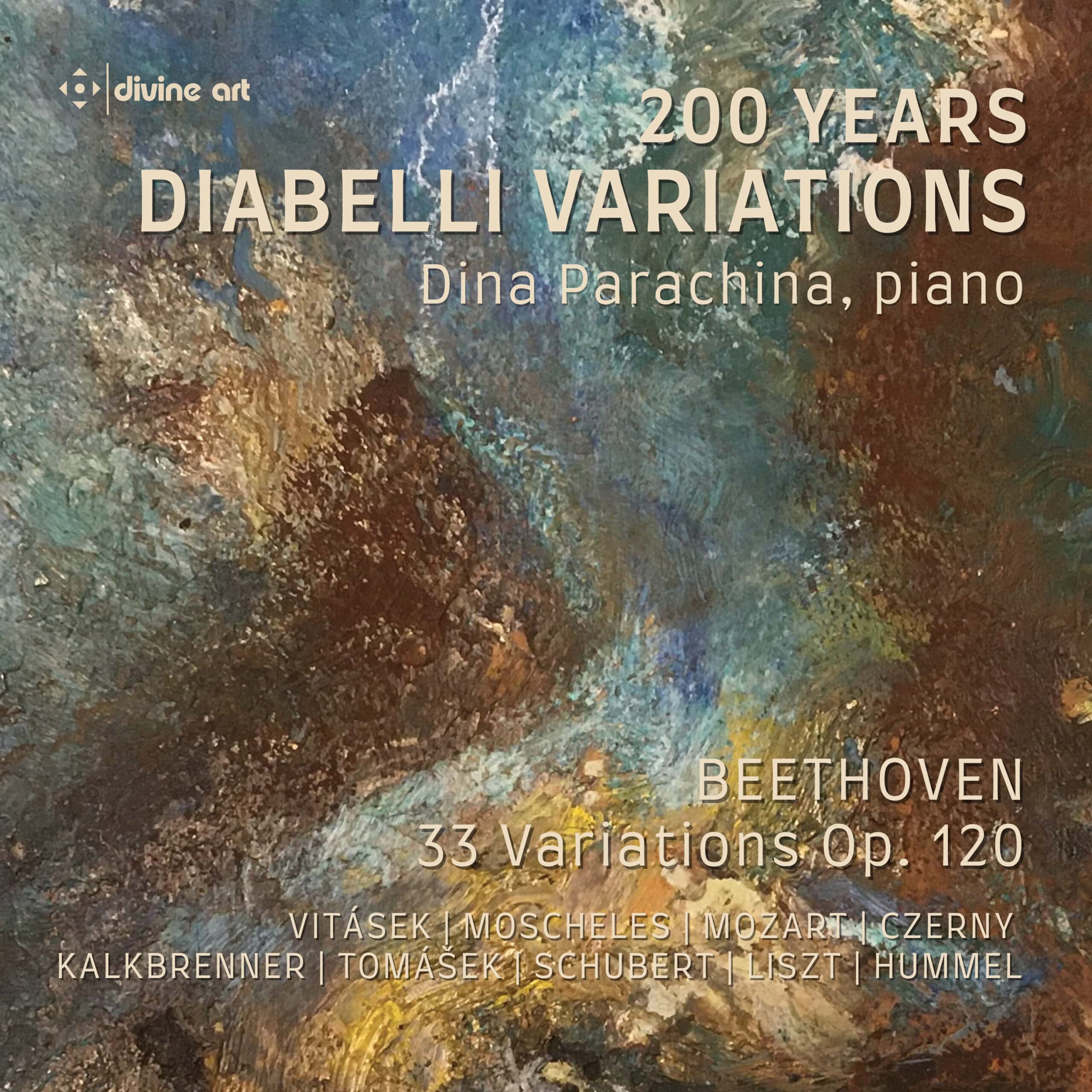
    For this imaginatively programmed disc, Russian-born pianist Dina Parakhina has added to Beethoven’s famous variations on a waltz by Anton Diabelli 10 more variations written by other composers who agreed to respond to Diabelli’s original request for each of 50 composers to write one. Beethoven refused to participate, but then composed an almost hour-long set of 33 variations that turned into one of his late keyboard masterpieces. 

    Beethoven’s Diabelli Variations come first, after which Parakhina has chosen well from among the others, putting them in what she believes is an appropriate musical order designed for flow rather than the order in which they appear in the original set of fifty. Since Beethoven’s comprises nearly 75% of the quantity and a much higher proportion of the quality, the performance of his contribution is of paramount importance. 

    Parakhina acquits herself well without effacing memories of the finest recordings of the Diabellis, such as those by Sviatoslav Richter, Rudolf Serkin, and Piotr Anderszewsi. They exhibit a degree of coloristic variety that doesn’t seem to be in Parakhina’s arsenal. She embraces the dramatic contrasts in the music, but her dynamic range is somewhat limited, particularly at the softer end of the spectrum. Her soft playing in Variation 26, for example, is a bit blunt. She captures the drama and sweep of Beethoven’s writing, but there are moments when more of a smile would be welcome in response to the score’s rough humor. 

    What sets this release apart is the selection of variations by other hands. Those by Schubert and Liszt are of the expected high quality, but most of the rest are also imaginative. In particular, Variation No. 4 by Czerny shows a level of wit and ingenuity you might not expect if you only knew his exercises, and No. 16 by Hummel exhibits great charm. 

    The same virtues and limitations that mark Parakhina’s Diabelli Variations are present in the other composers. She has considerable technical fluency, avoids muddiness even in the most rapid passagework, is rhythmically alert, and has a good sense of the dramatic. By the same token, one can imagine that some variations would benefit from a warmer, less severe, approach. 

    All in all, this is a worthwhile disc even if it doesn’t rival the great Diabelli Variations on disc. The piano sound is fine, if not outstanding, and the program notes are quite informative.
  • 200 Years Diabelli Variations AllMusic Review

    There’s no shortage of recordings of Beethoven’s Diabelli Variations, Op. 120, one of the masterworks of his late period. But this one by Dina Parakhina can compete with the crowd, thanks to a pair of distinctive features. One is that Parakhina includes variations by other composers from the set in which Beethoven’s work was initially published. Parakhina is not the first pianist to do this, but these non-Beethoven Diabelli Variations — there was one per composer, except for Beethoven — are quite interesting. Consider the pianistically spectacular one by the 12-year-old Liszt, or the lively registral shifts of the variation by Franz Xaver Wolfgang Mozart, son of Wolfgang Amadeus. Parakhina is probably right to present a well-chosen selection of these rather than plowing through the whole set (there are 50 of them, plus Beethoven’s 33). The other strength is Parakhina’s interpretation of the Beethoven Diabelli Variations themselves. The pianist has a long acquaintance with this work, which she played at her final university recital in Moscow. She presents a detailed, well-thought-out reading that begins with a strongly shaped theme (in contrast to the majority of recordings, where the theme’s triviality is emphasized), giving rise to a high-impulse reading in which pairs of variations seem to pick up on one another and add energy. Parakhina avoids monumentally serious treatments of the slow variations in favor of forward motion that leads to a really relentless fugue. In so doing, she gives the work a strongly virtuoso aspect, and there is nothing wrong with this; although it’s not a conventionally virtuosic work, it’s plenty difficult in spots. A Diabelli Variations set that has no trouble standing out from the crowd.

  • Diabelli Variations International Piano Review

    Any new recording of Beethoven’s Diabelli Variations has to confront an astonishing array
    of rival versions by many of the greatest Beethoven pianists of the past half century – including Rudolf Serkin, Alfred Brendel, Stephen Kovacevich and Ronald Brautigam – but Dina Parakhina helps her case by presenting Beethoven’s set in an interesting context, alongside a well-chosen selection from the other’ Diabelli variations written for the collective endeavour published in 1824 as the second volume of Diabelli’s Vaterländische Künstlerverein – a multi-composer sequel to Beethoven’s set which had been issued the previous year. There are a few mannerisms in Parakhinas presentation of the theme itself, but for the most part her Beethoven is very impressive, with a clear overview of the whole work: the variations flow from one to the next with a strong sense of cumulative power, and there’s plenty of variety in touch and colour, too. The fugue is maybe a little relentless. but the concluding Tempo di minuetto is beguiling, with plenty of delicacy and wit.

    This is a worthwhile Diabelli even without the extras; but they add a good deal of enjoyment, even if they are entirely overshadowed by Beethovens masterpiece. There are plenty of diverting curiosities here: the stormy variation by the boy Liszt, a tender and delightfully characteristic contribution from Schubert, engaging virtuoso pieces from Moscheles and Franz Xaver Mozart, and the variation and coda by Czerny. Rudolf Buchbinder recorded the complete Vaterländisches Künstlerverein on two Telefunken LPs (later reissued), but unless you want such a comprehensive recording, Parakhinas new album is recommendable, offering excellent performances of a selection of the most worthwhile variations, alongside an admirable account of the Beethoven.

  • Dina Parakhina: 200 Years Diabelli Variations

    Dina Parakhina: 200 Years Diabelli Variations

    Celebrating 200 Years of the Diabelli Project

    To commemorate the bicentennial of Beethoven’s Diabelli Variations, the Divine Art label proudly presents “ 200 Years: Diabelli Variations”. Originally introduced by Anton Diabelli with words of admiration for its innovation and artistic brilliance, the Diabelli Variations have since transcended time, becoming a cornerstone of the piano repertoire, rivalling even the esteemed works of J.S. Bach.

    The story behind the Diabelli Variations adds to their mystique. Legend has it that Beethoven initially dismissed Diabelli’s theme as a mere “cobbler’s patch.” Yet, he later transformed this simple waltz into a complex, kaleidoscopic masterpiece, showcasing a wide range of characters, styles, and textures. From playful parodies to profound meditations, Beethoven’s variations span over 60 minutes of inventive musical exploration.
    Renowned pianist Dina Parakhina, who first performed the Diabelli Variations during her final recital at the Moscow Conservatory, brings her deep understanding and lifelong study of this monumental work to her latest recording. Parakhina’s interpretation captures the intricate structural unity and the emotional depth of Beethoven’s composition, reflecting her illustrious career and devotion to classical music.

    About Dina Parakhina
    Dina Parakhina, a distinguished Russian pianist and educator, has been a Piano Professor at the Royal College of Music since 2009 and a College Fellow since 2019. She has taught at prestigious institutions such as the Central Music School in Moscow and Chetham’s School of Music, and currently holds a position at the Royal Northern College of Music. Parakhina has performed globally as a soloist, made numerous recordings, and given master-classes around the world. Her expertise and passion for music have also seen her serve on juries for international piano competitions.

    Parakhina’s illustrious career began in Sochi and led her to study under notable mentors in Moscow. She toured extensively with the Bolshoi Theatre Orchestra and later organized significant projects like the Medtner Marathon, which celebrated the works of Nikolai Medtner. Her recording of Medtner’s Piano Sonatas and Fairy Tales was critically acclaimed, highlighting her dedication to bringing classical masterpieces to contemporary audiences.