Catalogue Connection: 21140

  • Textura Palimpsest Review

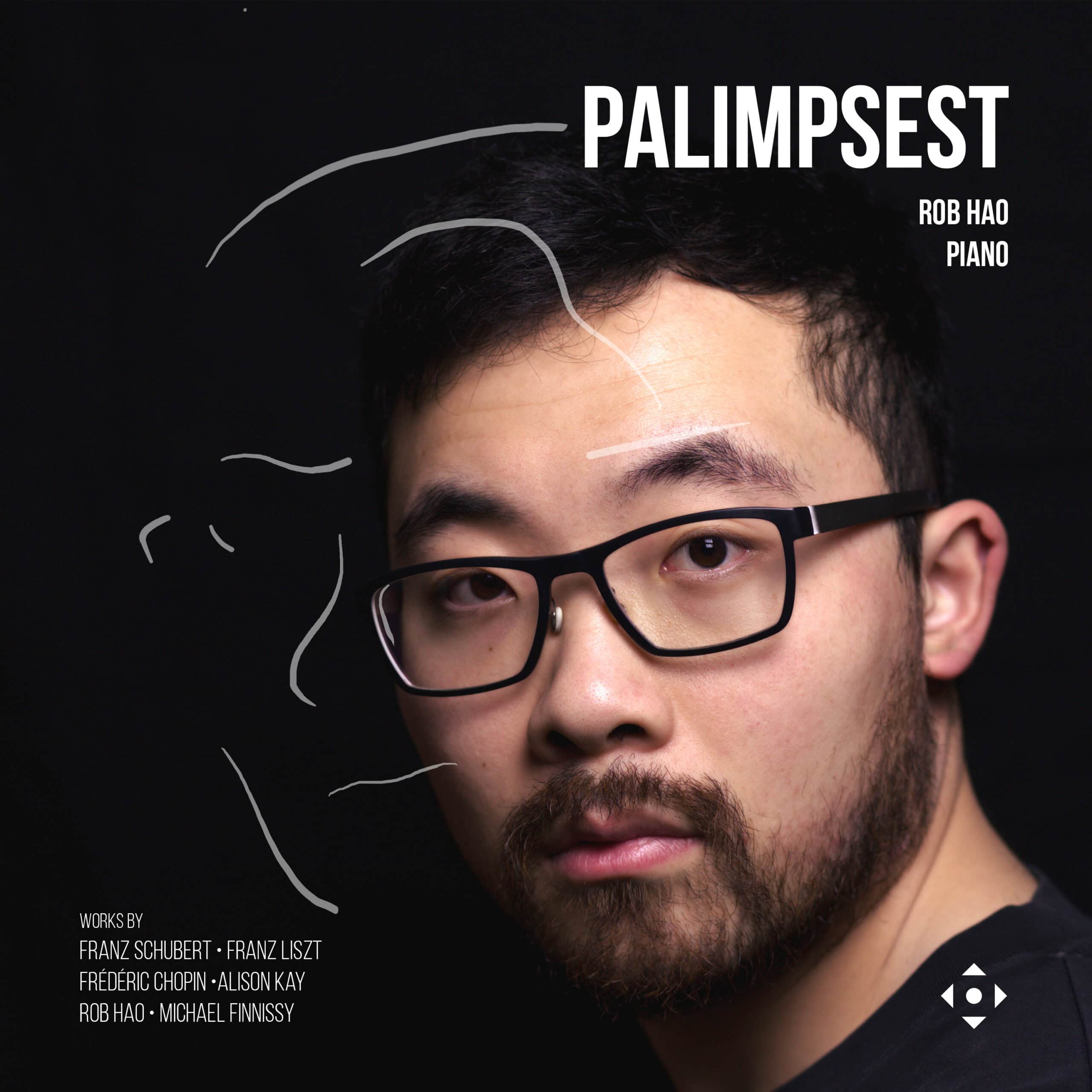
    Australian pianist Rob Hao deployed an interesting concept as a template for his debut album, whose title alludes to the act of writing over an existing work but not so completely that the original is effaced. In leaving visible traces of it behind, a startling juxtaposition remains that allows the earlier and later treatments to co-exist. The idea applies equally well to literary, visual, and musical contexts, but Hao’s focus is obviously on the latter. To that end, the sixty-five-minute set includes his own elaboration on a Schubert sonata, a Liszt transcription, and Michael Finnissy’s reimaginings of English country-tunes. The palimpsest concept, in short, enabled Hao to devise a programme that while ranging widely and adventurously is still held together by a central theme.

    The concept lends itself naturally to artistic practice when every creator builds on what’s come before. As Hao notes, the score for a piece of music acts as a palimpsest when any and every performance is an act of interpretation and thus superimposition. Even the most exhaustively detailed score can’t prevent the performer from personalizing a treatment, Glenn Gould’s two recordings of Bach’s Goldberg Variations merely one illustration. A fertile dialogue between past and present is effected every time a new performance occurs.

    Recorded at St. George’s Headstone Harrow in London during February 2025, Palimpsest augments Schubert’s unfinished Piano Sonata in F-sharp minor (and Hao’s “completion” thereof) and Finnissy’s material with Chopin’s final nocturnes, two etudes by British composer Alison Kay, an impromptu by Schubert, and Liszt’s piano transcription of Der Müller und der Bach. Hao, born in Auckland but raised in Sydney, delivered his first concerto performance at the age of sixteen and later graduated from the Royal College of Music where he specialized in both composition and piano. He’s performed at the Sydney Opera House, the Melbourne Recital Centre, and in the UK. All such experiences readied him to meet the many challenges this debut release poses.

    Palimpsest opens with the unfinished sonata fragment Schubert composed in his early twenties. Classic Schubertian brooding initiates the setting as undulating left-hand patterns lend the music an enticing lilt. Oscillating fluidly between major and minor tonalities, the haunting material glows with a gentle incandescence, and Hao’s performance is distinguished by sensitivity to touch, tempo, and dynamics; however, as only the work’s exposition and development were completed, it lends itself perfectly to his three-minute “extension.”Hao understands that the idea of completing Schubert’s fragment is impossible—no one can ever sufficiently inhabit another’s sensibility that fully—but that doesn’t rule out the possibility of creating a continuation that credibly extends its tone and style. It helps that the transition from the original to Palimpsest 571 is effected seamlessly, though the more abstract sound world of Hao’s treatment is audibly different than the one fashioned by Schubert.

    From that contemporary realm, we return to an earlier one via Chopin’s final nocturnes and a reinstatement of the lyrical tone of the fragment. Composed three years before his death, the two entrance with their delicate flowing lines and vulnerability. Both the B Major first and E Major second grant Hao ample time to give eloquent voice to their introspection; they’re both also long enough that structurally they allow for an opening section to be followed by a contrasting central episode and then eventually return at the end, though this time in a more resigned state. The dignity with which the tender E Major setting is executed speaks highly on behalf of Hao’s artistry. Leaping back to the present, Palimpsest continues with two short etudes by Kay, the poetic first, “Orison II,” severely minimal and intensely atmospheric, and the second, “Lullaby for Isabelle,” written for her daughter and in its dreamlike character a compelling evocation of the liminal space between waking and sleep.

    The second piece from Schubert’s Impromptu in A-flat major returns the recording to the place from which it began, though now with Hao’s exquisite rendering of material written in 1827, a year before the composer’s death. Drawn from the cycle Die Schöne Müllerin, the final Schubert setting is Liszt’s transcription of its penultimate song “Der Müller und der Bach” (The Miller and the Brook), which segues between tragedy and affirmation. Much like the fragment at album’s start, the way “Der Müller und der Bach” moves between major and minor tonalities enhances its hypnotic allure.

    For the final time we jump to the present day with three pieces from Finnissy’s set of English Country-Tunes (1977/1982-85), considered to be one of his most notorious and uncompromising creations. That said, there’s little overly daunting about “Midsummer morn” when it begins in a largely tranquil mode; it grows increasingly shadowy and convulsive, however, when its melody is subjected to violent deconstruction and transformation. Tranquility reasserts itself for “My bonny boy,” with this time a single melodic line alluding tangentially to the original as it advances across slowly modulating terrain. “Come beat the drums and sound the fifes,” the aggressive concluding movement of the eight-part work, rumbles threateningly when the extreme upper register evokes the fifes and the combative lower the drums.

    Palimpsest is a fascinating album for its set-list, as well as a terrific document of Hao’s pianistic prowess, and the range he demonstrates in tackling stylistically contrasting works by composers from different time periods impresses too. As importantly, it successfully accomplishes its goal in showing how fundamental the palimpsest idea is to music’s evolution and to the way in which material becomes, in his words, “a living canvas for contemporary performers and composers to interact with.” 
  • Pianist Magazine Palimpsest Review

    A palimpsest is a manuscript on which further writing has been overlaid. According to Australian pianist Rob Hao, however, the term also encompasses every act of interpretation, because ‘the performer’s understanding is layered upon the composer’s intentions.’ Hmm. Fortunately Hao’s music is much more exciting than his woolly hermeneutics. The USP of this album is found in his own short, haunting completion of Schubert’s Sonata D571. He rearranges Schubert’s themes and twists them with a strange polytonal melancholy. His gorgeously transparent performances of two Chopin nocturnes are later matched by the dazzling control he displays in spare, taut pieces by Alison Kay and Michael Finnissy. I was particularly drawn to Kay’s oneiric Lullaby for Isabelle performed with conviction, beauty and imagination. He finishes with a rollicking crash-bang account of Finnissy’s Come Beat the Drums. Not sure about the gobbledygook liner notes, but a great debut nonetheless.

  • Limelight Palimpsest Review

    Here’s a fine, intelligently programmed, eloquently played debut on disc with an intriguing premise by the young Australian pianist, Rob Hao. Taking Schubert’s F-sharp minor Piano Sonata as his starting point, Hao glosses the unfinished fragment with his own notional completion before overlaying both with Chopin Nocturnes, a Schubert Impromptu and song (the latter transcribed by Liszt), Etudes by Alison Kay and three English Country-Tunes by Michael Finnissy.

    The result is a well-argued and articulated sleight of hand implied by the album’s title with old and new entering into an ever-changing dialogue with each other. That intriguing notion of composers offering both commentary on and continuation of work by their predecessors is well mapped in Hao’s elegant trajectory from Schubert’s lyrical harmonic fluency through to Finnissy’s intensely virtuosic interrogation of his own English folk heritage.

    Hao negotiates the multiple overlapping paths with aplomb, stitching in along the way his own Palimpsest 571, a nod to the catalogue number of Schubert’s early Sonata and a notional, dexterously textured completion (or continuation) of it, sensitive accounts of two late Op. 62 Nocturnes by Chopin (themselves glancing back to Bach), and meticulous delivery of Alison Kay’s contrasting miniatures, the hushed Orison II and lilting, porcelain-delicate Lullaby for Isabelle.

    New layers are deftly added with Schubert’s pastorally accented Op. 142 A-flat major Impromptu and Liszt’s studied and artful transcription of Der Müller und der Bach from Die Schöne Müllerin before Finnissy’s atomised take on English folk tunes, Hao treating them to liquid, turn-on-a-sixpence playing rich in detail and feeling.

    Adaq Khan’s pristine production and engineering in London’s St. George’s Headstone church, intimately cusps and frames the crisp clarity of Hao’s persuasively careful and considered playing. 

  • Palimpsest Indie Boulevard Review

    An Australian pianist creates a temporal collage where Schubert meets contemporary minimalists, and the Romantic tradition gains unexpected relevance through the lens of the 21st century. 

    The concept of a palimpsest – a manuscript where new text is superimposed over an erased older one -serves as an ideal metaphor for Rob Hao’s project. His new album, Palimpsest, is an instrumental piano album that blends a mix of different styles and eras, showcasing how music has evolved under the influence of time and cultural development. Palimpsest can be described as an exploration of how music from different generations can impact a listener. Take my word for it: Rob Hao’s work is truly admirable. I’d love to share my impressions right away, but to get a clear picture of what’s happening and understand who created such an unusual—I’d say, chronological—album, let’s first discuss the artist himself.

    Rob Hao was born in Auckland and grew up in Sydney, where he began studying piano. Imagine what typically occupies the minds of sixteen-year-old teenagers—naturally, entertainment. Hao had his own priorities, and at sixteen, he had already given his first concert. Calling him merely talented would be a clear understatement. In his musical career, Rob Hao has reached significant heights and continues to delight audiences with his music, drawing inspiration from the most diverse sources. Hao can confidently be called a professional in his craft, and this is easily justified by the fact that he studied at the Royal College of Music in London—and that’s far from the last of his achievements. 

    His Palimpsest combines works by various composers—both contemporary and those who have entered the history of music. It is truly a monumental work. The album consists of eleven compositions, with the centerpiece being Piano Sonata in F-Sharp Minor, D. 571. This piece serves as the completion of Schubert’s sonata. The work begins with a fragment of the original, after which Hao opens a path into his own musical world, with Schubert remaining a constant companion on this journey. While listening, I feel an airiness with a shade of hope and a slight melancholy hidden between the bars, in the amazingly soft harmonies that caress the hearing like a sudden cool wind caresses the skin on the first day of autumn.

    I’d like to highlight two of Chopin’s nocturnes: Nocturnes, Op. 62, No. 1 in B Major and Op. 62, No. 2 in E Major. These are the longest compositions on the album. Their duration slightly exceeds eight minutes, during which Chopin’s nocturnes merge into a unified sound. The musician’s impeccable technique makes it possible to literally live through every note. Each build-up of the melody and its subsequent smooth decrease in intensity creates for me the feeling of the “breathing” of the sound, when on the inhale the melody opens, and on the exhale dissolves.

    However, equally impressive was Piano Etudes No. 10, Orison II. The joy of hearing this composition during the listening experience is hard to overstate. I must admit that this miniature étude has won me over. I was left with a light, trembling feeling in my chest.

    However, the mood and dynamics shift with 4 Impromptus, Op. 142, D. 935: in A-Flat Major. Allegretto. It initially lulls you with its unhurried sound but then reveals its strength through rhythm. English Country-Tunes: No. 2, Midsummer Morn—in this melody, the piano sounds envelop you with their lyrical resonance. English Country-Tunes: No. 7, My Bonny Boy—a composition distinguished by its steady sound and playing style. The album concludes with English Country-Tunes: No. 8, Come Beat the Drums and Sound the Fifes. Its most distinctive feature is the presence of percussion instruments and flute, along with a ringing performance.

    The restraint present in the album, which does not allow it to deviate from traditional norms, is a strong side of the release. It allows one to enjoy the sound of classical compositions and to feel how they breathe anew through the interpretation given by Rob Hao. The static elements, especially in the middle section, create a meditative sound, allowing you to pause, let your mind go, and enjoy the hypnotic atmosphere of the music. I like this effect created by Rob Hao’s music. It allows one to lose themselves in the sound, to lose the sense of time, and thus merge with Rob Hao’s enchanting performance. It creates a new dimension of sound where there is no concept of time as we know it. There is only the piano, the soul of the compositions, and the source of energy.

    Palimpsest demonstrates that contemporary music could exist solely because of the music of past years. It invariably serves as a source of inspiration and rethinking. This process is endless and is an inseparable part of creativity and music. In this symbiosis, music continues to live, gaining new features and being rethought through the souls of musicians. In Palimpsest, Rob Hao has created a real connection between the past, the present, and the future, thus creating timelessness. The compositions of the past come to life again, acquiring echoes of modernity. And in the future, new listeners will be able to hear Palimpsest and discover something truly beautiful for themselves. This chain of years, generations, and entire centuries lives thanks to such musicians as Rob Hao and will live forever in the hands of humanity. It is exactly this that elevates the album Palimpsest, equating it with true art, which remains in the memory for a long time.

    After listening to Palimpsest, one is left with a feeling of inspiration touched by shades of melancholy and nostalgia. The thing is, Palimpsest possesses a very deep atmosphere. On one hand, the album is a reflection and gratitude toward what can no longer be returned. This is revealed in the sound and the form of the album. However, on the other hand, it is an attempt to give new life and to bring beloved compositions back into the world with a pinch of one’s own heart and soul. This is a very complex work that demands incredible effort from Rob Hao and boundless love for music. That is why Palimpsest can become an excellent beginning for those who are only starting to enjoy classical music, and for longtime listeners, it will bring a real miracle and pleasure that can only be experienced through listening to classical music. The main advice remains – listen, enjoy, and let Rob Hao’s music win you over.

  • ArtMuse Palimpsest Review

    This impressive debut recording from Australian pianist and composer Rob Hao places music by Schubert and Chopin alongside works by contemporary composers Alison Kay and Michael Finnissy to create a compelling album which demonstrates how music evolves and how works from different times and styles can interact and inspire new ideas. Thus, the notion of a musical palimsest is amply illustrated

    At the heart of the album lies the title track, ‘Palimpsest 571’, Hao’s completion of Schubert’s fragmentary Piano Sonata in F-sharp minor, D. 571. Others have attempted to complete this sonata fragment, notably Paul Badura Skoda, Malcolm Bilsom and Martino Tirimo, drawing inspiration from other published pieces by Schubert.

    We hear the Schubert fragment first. Hao opens his album with it and brings a tender simplicity to Schubert’s writing. There’s ample opportunity in this music – and with the attendant “psychobabble” around the composer’s mental and physical health – to linger too long over certain motifs or harmonies, but Hao eschews false sentiment, instead shining a light on Schubert’s ambivalent harmonies and desolate poignancy.

    Segueing straight into his own work, we enter Hao’s own soundworld, yet Schubert is still a constant presence. Gestures, structures and motifs from the original are still evident, overlaid with new material which reiterates the desolation and unsettled harmonies of Schubert’s sonata. It’s a miniature hommage (the piece lasts a mere three-and-a-half minutes), rich in texture and emotion.

    ‘By embracing the distance between Schubert’s world and our own, rather than attempting to conceal it, we can arrive at a deeper understanding of his music – not as a relic from the past, but as a living canvas for contemporary performers and composers to interact with.’ – Rob Hao

    The two Nocturnes from Chopin’s Opus 62 follow, each given the same sensitivity and elegance as the opening Schubert sonata, and then we hear two Piano Etudes by British composer Alison Kay (b.1970). The first, the atmospheric minimalist ‘Orison II’, contrasts with Chopin’s florid, ornamented writing, offering a kind of ‘musical palette cleanser’, before ‘Lullaby for Isabelle’. Written for the composer’s daughter, this delicate, fleeting miniature ‘plays with ideas of perceived simultaneous temporalities to emulate stages between consciousness and sleep’ (Alison Kay).

    More Schubert in the second Impromptu from the D935 set. From a stately, sarabande-like opening section the music moves into a flowing, dramatic middle section, with lyrical quaver figures redolent of the D571.

    Liszt created many ‘palimpsests’, if you will, in his transcriptions of Schubert’s song for solo piano, and here we have Der Müller und der Bach (‘the Miller and the Brook’), the penultimate song from Schubert’s cycle Die Schöne Müllerin. Liszt cleverly retains the melodic line – the “story” of the music –  highlighted beautifully here by Hao’s glowing cantabile.

    The album closes with three pieces by Michael Finnissy (b.1946), a composer for whom transcription plays an important part across his oeuvre. The first, ‘Midsummer Morn’, opens with a minimalist tranquillity, expressed in two voices, before moving into far more disturbed territory, in which the original theme is dismantled and then shockingly transformed. ‘My Bonny Boy’, No. 7 from English country-tunes, is a study in monody: a single modal, melodic line, reminiscent of the opening of the previous piece, modulates gradually though never really settling – an echo of both Schubert and Chopin’s writing. Here, individual notes, timbre and resonance create a Feldman-like sense of distance, almost as if the original folksong has been slowed right down as to become unrecognisable.

    The album closes with Finnissy’s ‘Come beat the drums and sound the fifes’, a clanging, stomping virtuosic Totentanz inwhich the traditional English march, with pipe and drums, is transformed into something more sinister, almost paramilitary. Hao plays this, and the other pieces by Finnissy, with a mixture of bravura and intensity of expression, bringing this fascinating and absorbing debut recording to a dramatic close.

  • Palimpsest

    Palimpsest

    Australian pianist Rob Hao makes a striking debut with an album that explores how music from different times and styles can interact and inspire new ideas. At the heart of the recording is the premiere of Palimpsest 571, Hao’s original work completing Franz Schubert’s unfinished Piano Sonata in F-sharp minor, D. 571. Rather than trying to imitate Schubert’s style exactly, Hao embraces the gap between past and present, creating a continuation that respects the mood and mystery of the original fragment while adding a fresh, modern voice.

    The album also features a set of piano etudes by British composer Alison Kay, whose minimalist and atmospheric pieces invite listeners to experience sound and silence in new ways. Alongside these contemporary works are carefully chosen pieces by Chopin, Schubert, Schubert-Liszt, and Michael Finnissy’s challenging English country-tunes.

    Chopin’s final nocturnes showcase his gift for blending long, flowing melodies with delicate harmonies, revealing the emotional depth he reached late in life. Schubert’s impromptu and Liszt’s piano transcription of Der Müller und der Bach bring vocal storytelling to the piano, highlighting the instrument’s expressive power.

    Finnissy’s English country-tunes is a powerful and intense piece that explores English folk traditions with virtuosic energy, moving between moments of lyricism and dramatic intensity. This mix of works demonstrates how composers and performers continue to build on musical traditions, layering new ideas over old, and keeping classical music vibrant and alive.

    This album offers a rich listening experience that invites reflection on how music evolves —shaped by both history and the creative present.