An enjoyable…collection. The abundant riches of choral music by living British composers are mined for the latest album for The Purcell Singers….fine singing from the enfolding warmth of Paul Mealor’s A Spotless Rose and Will Todd’s My Lord has Come through to John Rutter’s playfully swaying setting of ‘Sign no more, ladies’…Kerry Andrew’s All things are quite silent is especially striking…The Main pity, though, [is it] is over too soon
Catalogue Connection: 21148
-
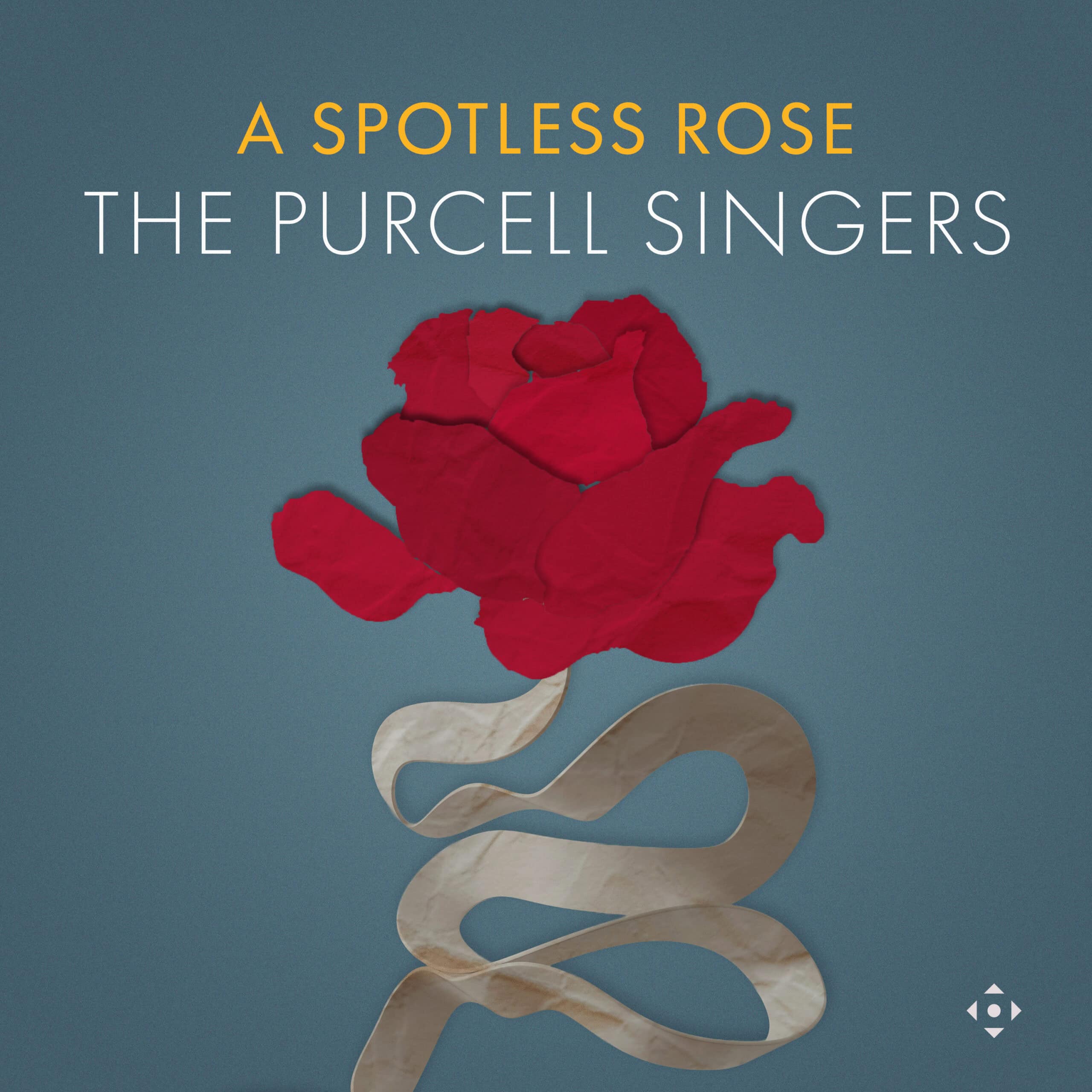
A Spotless Rose Classical Music Daily Review
A Spotless Rose is rather a curious mixture of choral settings from The Purcell Singers. It’s a half sacred, half secular combination of settings from a range of contemporary British composers. The sacred section is focussed on the Virgin Mary or on events where she is a major part of the story. The secular section includes a folk song arrangement and three settings of Shakespeare.
At all times, this is a highly disciplined set of performances. The choir is perfectly balanced and there’s a warmth to their performance which shines through.
Some of the texts are highly familiar. Paul Mealor’s setting of A Spotless Rose, for example, has been set by several others, so there is always the expectation that there needs to be something new to surprise the listener. Mealor does that by pushing the basses to resounding depths and, conversely, sending the sopranos to considerable heights. The piece, taken from the composer’s madrigal cycle Now Sleeps the Crimson Petal, pushes the voices to their vocal limits yet they never lose poise. The dense harmonies used could have sounded muddy but, here, they have an uncanny clarity.
Will Todd‘s setting of his own poem My Lord has come is an exercise in tranquil contemplation until the choir lets rip he sets ‘His love will hold me’. Again, this is an exercise in precision, something which is shown copiously in this recording.
There are two exhortations to Mary – Ave Maria by Sarah Cattley and James MacMillan‘s Ave Maris Stella. Cattley’s eight-part setting often hears the choir working antiphonally and the extreme tenderness here is slightly disrupted by some welcome harmonic diversions in the second part of the piece.
The MacMillan, as so often with this composer, is an exercise in simplicity while the harmonic fascination is never lost. It is a tranquil piece but with a brilliantly dramatic Amen.
There’s a skilful setting of Dorothy Sayers’ poem The Three Kingsby Jonathan Dove. This 2000 commission from King’s College, Cambridge, has entered the regular repertoire of many choirs. The words track the journey of the Magi, with each character treated, musically, in a different way. There’s quiet reverence in the first verse, rather less respect in the second and the third, describing the old king who carried gold suddenly erupting into an energetic episode.
Kerry Andrew’s setting of the folk song All things are quite silent is skilful. The sound of the sea is a constant backdrop and the choir must make the sound of wind blowing across the waves. It is a tragic tale and the choir does its theatrical best to make this tragic tale work. It is brilliantly evocative and tightly controlled.
The final three pieces on the disc were dedicated by the composer to the choir to mark their long mutual relationship. John Rutter’s Three Shakespeare Songs are hugely entertaining, sometimes mysterious and melancholy, at other times energetic.
Conductors Jonathan Schranz and Mark Ford can be proud of what they have achieved here. It’s an intriguing programme from a disciplined choral group whose dedication to diction, pitch and general musicality is razor sharp.
-
A Spotless Rose
On 10 April 2026, Divine Art presents A Spotless Rose, a thrilling collection of choral works by leading contemporary British composers including James MacMillan, Jonathan Dove, John Rutter, Kerry Andrew and more, from the award-winning vocal ensemble The Purcell Singers, conducted by Jonathan Schranz & Mark Ford.
This digital only album takes listeners through a journey of themes of arrival and the sea, with Christmas themed texts and poems, Marian hymns and folksong. A Spotless Rose culminates in the premiere recording of John Rutter’s Three Shakespeare Songs. The work is dedicated to the Purcell Singers and conductor Mark Ford, an acknowledgement of Rutter’s long and fruitful relationship with the ensemble, and issued to celebrate the composer’s recent 80th birthday, completing a rich and rewarding album.
The title track is Paul Mealor’s setting of the 14th century Christmas text A Spotless Rose, the emotional heart of his madrigal cycle ‘Now sleeps the crimson petal‘, a meditation on the mystery of the Incarnation, in which the metaphorical rose unfurls with gradually building textures and a staggering range of tessitura. Will Todd’s carol My Lord has Come, from his own poem, is a favourite amongst choirs and audiences alike. At the climax of the piece, ‘his love will hold me’ bursts out of the preceding tranquillity. Jonathan Dove’s The Three Kings is a true modern classic, with text by Dorothy L Sayers, telling the story of the magi.
In the eight-part Ave Maria by award-winning composer Sarah Cattley, upper and lower voices are frequently treated as two separate choirs, combining for added harmonic tension at key moments; Sir James MacMillan’s setting of the medieval Marian hymn Ave Maris Stella is in just four parts, harmonising a strikingly simple soprano melody in increasingly inventive ways. In a contemporary contrast Kerry Andrew’s atmospheric setting of the folksong All things are quite silent was originally written to perform using a loop station music device, gradually layering the sounds of the sea with fragments of a tune they found in an old book of English folksongs about a girl who loses her love to the sea.
Sir John Rutter’s Three Shakespeare Songs draw inspiration from settings by Finzi and Vaughan Williams. O mistress mine takes the form of a jazz waltz, Be not afeard uses expansive harmony and deep textures to create a mysterious aural landscape and Sigh no more, ladies brings the set to a cheerfully energetic conclusion.
One of London’s leading chamber choirs, The Purcell Singers, formed in 1994 by conductor Mark Ford, has performed extensively in the UK and internationally. The group has a wide repertoire, ranging from Gibbons to Tavener, via Bach, Howells, Poulenc, Barber and Britten, and has developed a particular reputation for championing unusual late romantic works, notably those of the German composer Georg Schumann. The Purcell Singers are also active in session work, and have recorded several discs for film and television.