Catalogue Connection: 25004

  • Fanfare – Maria Nockin – 25004

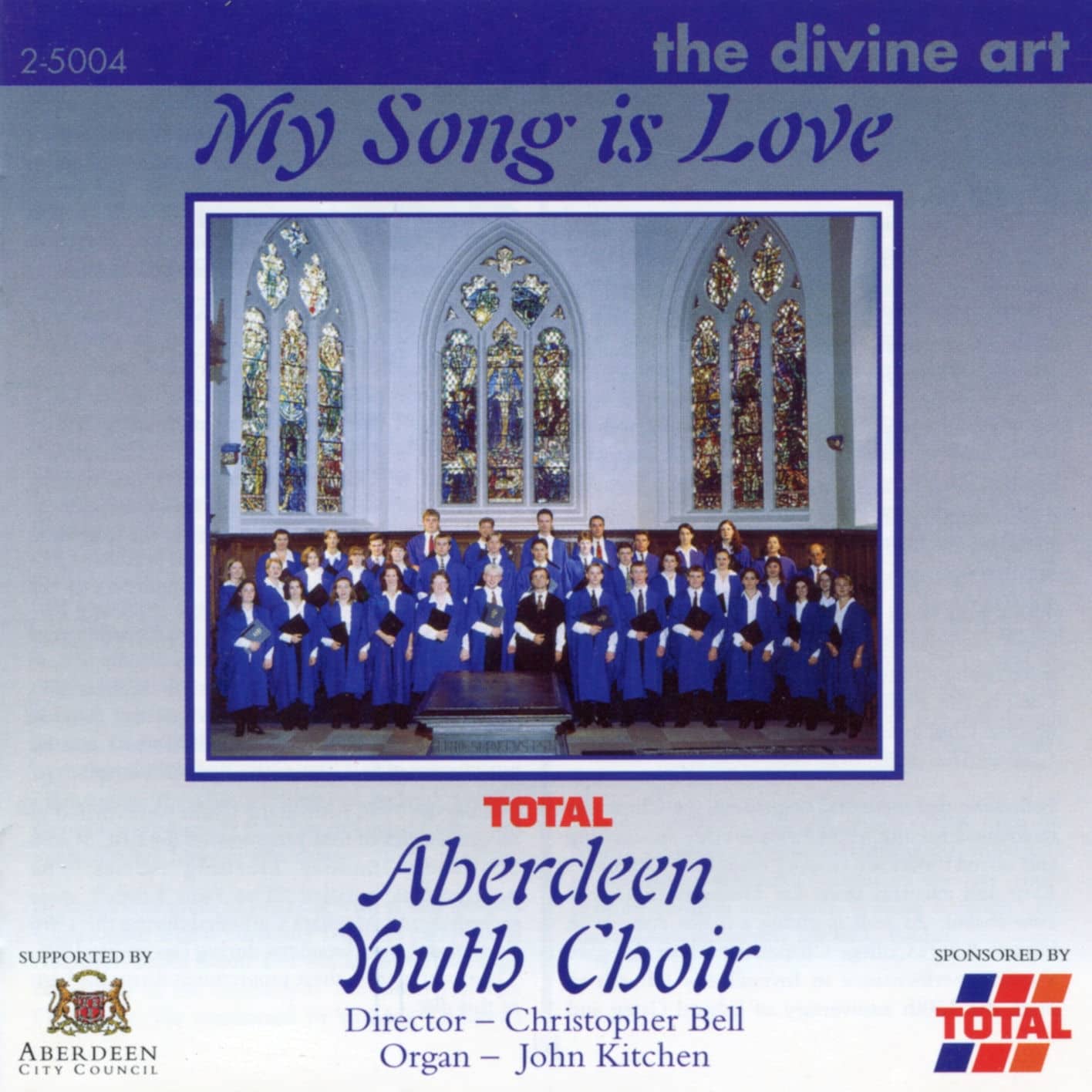
    Directed by Christopher Bell, who also directs the Royal Scottish National Orchestra Junior Chorus, the Total Aberdeen Youth Choir is made up of young singers from all over Scotland. Organist John Kitchen is senior lecturer and director of the University Singers at Edinburgh University. He is also the organist at Old St. Paul’s Episcopal Church in the same city and often records for BBC Radio On this disc, Kitchen plays the organ whenever it is called for and Bell leads the young choristers in music grouped according to the ancient classifications of love. The groups, which refer to religious love, are entitled: Friendship, Affection, Eros, and Charity. Bell has added a finale of Scottish songs. The Friendship section begins with Charles Villiers Stanford’s meditative O for a Closer Walk with God, which includes a charming solo by soprano Naomi Freireich. The second selection, John Ireland’s Greater Love Hath No Man, has a dramatic organ accompaniment and interesting solo parts for both the clear-voiced Freireich and the darker-sounding baritone, Christopher Breckenridge. Ireland’s My Song is Love Unknown concludes the group. Affection is represented by the modern lines of Scottish composer Martin Dalby’s Mater Salutaris, the intricate harmony of Thomas Tomkins’s When David Heard, and the simple melody that Freireich sings in Samuel Wesley’s Love One Another. Bell speaks of a religious eros when he chooses Edward Bairstow’s I Sat Down Under His Shadow, Dalby’s My Heart Aflame, and the 16th-century anonymous Descendi in Hortuum Meum (I Went Down into my Garden). Many denominations seem to have adapted Maurice Durufle’s unforgettable hymn Ubi Cantos et Amor. Bell combines it with John Taverner’s graceful Love Bade Me Welcome and John Stainer’s contemplative God So Loved the World.

    Bell’s finale is made up of secular, fun-loving Scottish ditties. Traditional songs include the en¬ergetic Fa. La, La, Lo; and three songs with lyrics by Robert Burns: the plaintive My Love Is like a Red, Red Rose; the lively Scots Wha’Hae, and the heart-rending Ca’ the Yowes, which baritone Breckenridge sings with virile tones. The last three songs, the Skye Boat Song, Westering Home, and a song about the Aberdeen area, O Gin I Were Where Gadie Kins, are boating songs with increasingly lively rhythms. This CD was recorded in 1996. The solo parts and the excellent accompaniments come across well but there are occasions when the choral sound could be a little more pristine. That is a minor concern, however. I loved the exquisite timbres of the young voices and the singers’ exuberant renditions of these beloved songs. If you have any relationship at all to Scotland, you will want this disc.
  • Fanfare – Haig Mardirossian – 25004

    To hear young musicians sing about love is nothing too very remarkable, but to hear such an accomplished young choir as this take on such a ranging wealth of music demands extraordinary attention. The Aberdeen Youth Choir (in partnership with a commercial sponsor) has provided youth aged 16 to 25 throughout Scotland the opportunity to sing in what amounts to a professional choir. Conductor Bell, who holds respectable credentials.. has fashioned a precise, tight, highly musical and flexible ensemble from these 36 young singers. The sopranos in particular prove supple, transparent in tone and dead in tune. The lower voices, as typical of high-school-aged singers, sometimes lack depth in production, a quality obvious in their reaching for higher pitches. But this is a minor observation in what is otherwise inspiring to hear and demanding of great respect and enthusiasm.

    Spirituality and sensuality are but two sides of the same, and that realization drives this wonderful choice of repertoire. The works are less sentimental than longing in nature, perhaps for the comforts of salvation or the wonder of adoration, or the very real red-blooded attraction of one human being for another. So it is that Stanford and Ireland so easily coexist with Tomkins, Tavener, or a host of traditional Scottish love songs. Some sources are obvious, such as Edward Bairstow’s sumptuous and brief setting from the Song of Solomon. Others are further afield, like the Tomkins staple When David Heard. Indeed, by Bell’s own admission, he has grouped the repertoire by associations with particular aspects of love: friendship, affection, eroticism or charity. As a coincidence, except for the Duruflé potboiler, all the works come from the British Isles. No juxtaposition of style or time jars the hearer, just as no musical demand outweighs the abilities and sensitivities of these singers.

    Those of us in the choral business have, more than once, wondered aloud where the next generation of talent might be hiding…This powerfully accomplished, if sometimes flawed, disc serves to remind us of the abilities of young musicians and the truly gratifying results readily at hand for those who make the effort. Sponsor, choir, conductor and label alike deserve great thanks and credit.

  • Choir & Organ – 25004

    In 1996 BBC Radio Scotland broadcast four programmes on the theme of love during their Sunday morning series. This disc derives from music performed then,. The programme spans five centuries, with a particular leaning towards Scottish music (excellent folksong arrangements by Ken Johnston).

    The singing is young in fervour but mature in musicianship. The dynamic control is especially impressive.

    **** (four stars awarded).

  • My Song is Love

    My Song is Love

    Performances which are both polished and committed, from this amazing choir, including a few well-known sacred pieces by Durufle, Stainer, Stanford; new works by brilliant Scots composer Martin Dalby, gems from John Tavener and Alan Rawsthorne, and a selection of traditional Scottish songs in super new arrangements by Ken Johnson.