Catalogue Connection: 25006

  • MusicWeb – David Wright – 25006

    This is a fascinating disc and the beginning of a very important project in which Peter Seivewright is to record all 90 of Galuppi’s keyboard sonatas and endeavour to publish them so that we can perform them too.

    What makes this project so important is that it is a pioneering undertaking. There is no performing tradition in Galuppi sonatas as there is in say Scarlatti or Bach. Mr Seivewright has to establish a performing tradition in effect. He has already conducted detailed research in Venice and has been shocked at comparing manuscripts of the sonatas and unearthed endless copyist errors. It is clear that his dedication to this task is similar to Ralph Kirkpatrick’s commitment to the Scarlatti sonatas.

    The Galuppi manuscripts do not give clear indications as to tempo, dynamics, ornamentation and character. As you will see the sonatas are not numbered and on this disc you have two in A minor and two in C minor. The work of cataloguing and editing will take some time.

    Some of the sonatas have a baroque feel while others approach early Beethoven as you might expect from Galuppi’s time (1706 – 1785). His music is very tuneful, unpretentious and untrammelled by ‘early music fussiness’. They are far more appealing than Scarlatti sonatas.

    I have to commend the recording engineer on this disc, Douglas Doherty who produces a close, intimate and crisp sound.

    As to the sonatas ….

    Sonata in A minor

    Here Peter Seivewright gives us a splendid example as to how to play cantabile which all students and fellow pianists would do well to emulate. The opening movement is tuneful and coherent, expertly realised with colour and a very sensitive performance. The tempo is expertly judged. The allegro vivace is an engaging movement with welcome contrasts and displays clear and reliable finger work.

    Sonata in C minor

    The expressive cantabile is again present in adagio molto. There is some exquisite imitation. And the darkness of C minor that one usually associates with Mozart and Beethoven is here. It is often very beautiful. The allegro has clear form and, again, is very tuneful. The choice of ornamentation is excellent and adds to, rather than distorts the sheer melodic joy.

    Sonata in B flat

    This begins with a long andantino movement full of melodic invention and played with superb sensitivity. Even scales sound fresh and original. The allegro is playful.

    Sonata in C minor

    This is a three movement work. A descending arpeggio figure is one of its many features. The allegro is both captivating and contagious and, yet again, there is a melody that sounds ‘mountain fresh’. The final allegro assai seems to stutter a little.

    Sonata in A

    The andante is a good piece and improves with further listening. It takes an exceptional composer to so cleverly develop what appears to be scant material. There is a final allegro.

    Sonata in G minor

    The substantial opening largo is a fascinating inner quest by the composer. The allegro energico is fugal in character and makes compelling listening. The final allegretto grazioso has a courtly but not affected elegance and the performance is infused with a splendid variety of tone and colour.

    Sonata in E

    This is an allegro followed by variations, and splendid they are. Again the performance is one of reliable finger work and great sensitivity.

    Sonata in F

    A long slow movement begins with tremendous beauty and develops into exciting energy. The thoughtful finale may surprise a few listeners. The ‘sleeve booklet’ gives an excellent introduction to the life and times of this gifted composers and whets our appetite for further helpings.
    Highly recommended – Performances **** – Recording ****
  • Yorkshire Post – Robert Cockroft – 25006

    “A revelatory disc…Galuppi’s invention is rich and fresh, and Seivewright plays these wonderful pieces with a sense of delight in discovery. Highly recommended.”

    Performance ***** – Recording *****

  • Fanfare – Martin Anderson – 25006

    Here’s a project that better-known pianists and bigger companies will be knocking themselves for not having thought of first, for this is the first volume of what will be 10, containing all 90 keyboard sonatas of Baldassare Galuppi (1706-85) Here we have eight, in A Minor, C Minor (two), B I Major, A Major, G Minor, E Major, and F Major. Galuppi, of course, we all know from Browning’s poem, “A Toccata of Galuppi’s”, proof if we needed it, that Galuppi’s was at one point a name that Browning could be sure his readers would recognize. Indeed, pianist Peter Seivewright’s notes with his disc talks of Galuppi’s “fall from stellar celebrity to almost total obscurity today”.
    Seivewright’s extended essay (billed, intriguingly, as “part one”) gives a learned summary of his achievements and the principal stylistic characteristics or his music, which is anchored in the Baroque but, as Seivewright puts it, “looks forward not only to the Classical period but also on to the early Romantics, such as Weber, Schumann, and Mendelssohn”. It doesn’t have the sheer verve and varied panache or the keyboard music of Domenico Scarlatti, 21 years his elder, but it can more than hold its own against that of Antonio Soler, who was nine years younger but essentially a more conservative composer than Galuppi. There is an enormous amount to enjoy on this disc, from calm elegance to finger-stretching display, and Seivewright’s projected integrale might well do us all the service of reminding other players that here is a composer whose return to the concert platform could brighten up a good many recitals.

    You may have come across thc playing of the English-born, Scottish-based Peter Seivewright through his two Naxos CDs of the Nielsen piano music, though he has also recorded with the Danish label Rondo; and I am pleased to see that he has plans to record, also for Divine Art, the piano music of the neglected northern English composer William Gillies Whittaker – that will be well worth looking forward to. In the meantime he proves a reliable guide to Galuppi’s measured spirit. One might have hoped for a little more agility in the trills and turns, but at this stage one’s attitude, as Tom Lehrer sings, should be one of gratitude, for Seivewright’s endeavor is an important one and deserves every success. The recorded sound, barely marred by a tiny editing glitch, gives the piano (unidentified, but dating, I guess, from some time in the second half of the 19th century) quite a bit of space, but not so much that it is set at a distance from the listener.

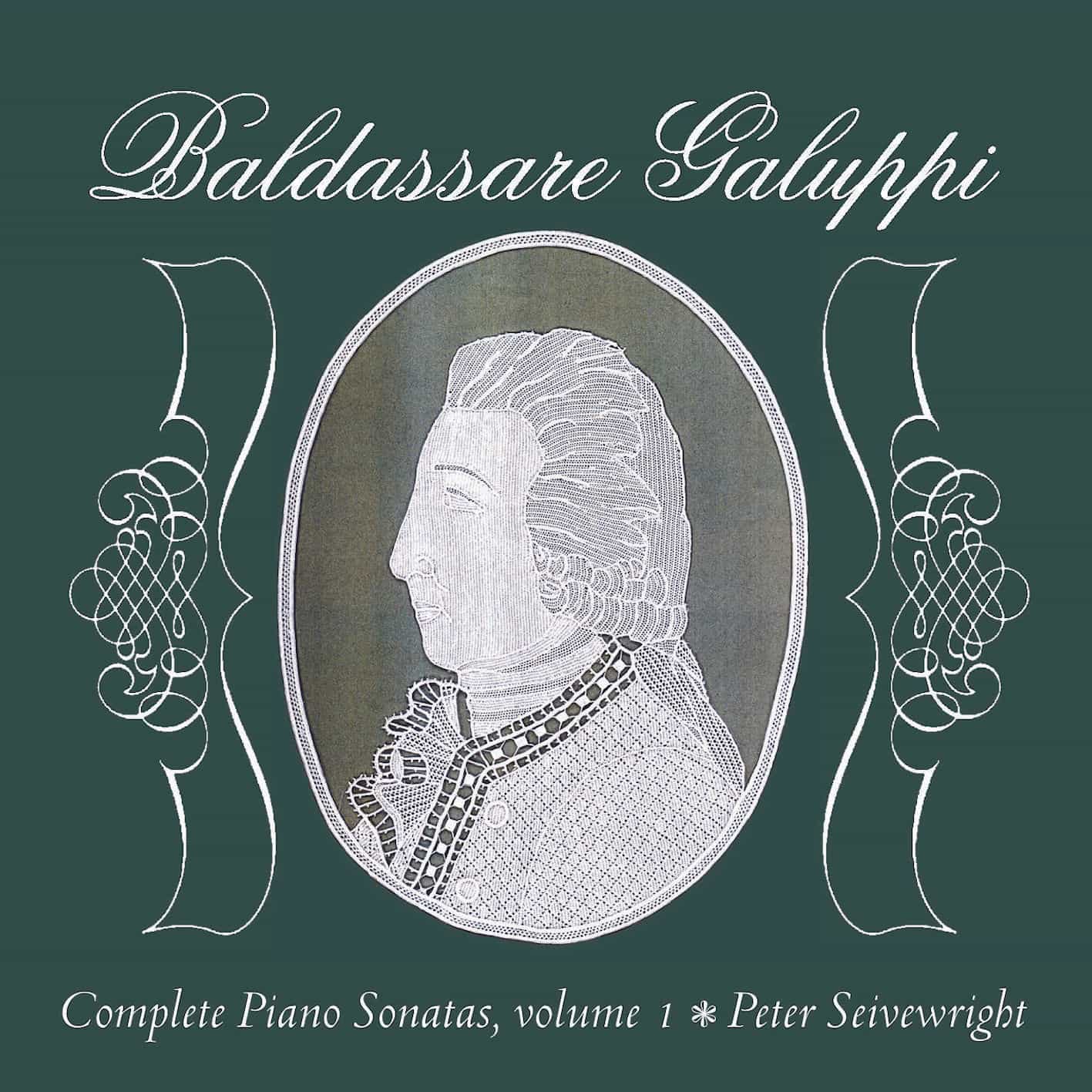
    A CD can often be distinguished not only by the quality of the music it presents but also by felicitous touches in the presentation. Here it’s in the lace-art designs on the front and back of the booklet by Lucia Constantini, working on the Venetian island of Burano, where Galuppi was born – a lovely little kiss with which to send this disc on its way in the world. Warmly recommended.

  • Galuppi Piano Sonatas, Vol. 1

    Galuppi Piano Sonatas, Vol. 1

    In the first of a series containing Galuppi’s 100 piano sonatas, we present eight of these masterpieces. All music lovers should sample these seminal works, which made Galuppi one of the greatest composers of his day;all the more strange that he should have fallen into such obscurity.

    Peter Seivewright has spent a good deal of time on a research mission to Venice and other European cities, retrieving the unpublished manuscript scores and preparing performing editions. One of the great revelations brought about by this work is that Galuppi, far from being a straightforward baroque composer writing for the traditional keyboard instruments (harpsichord and clavichord), which have been employed in all previous recordings, actually waited until the piano had been developed before creating most of his phenomenal output. Many of the original manuscripts are titled “Sonata for Pianoforte”, and much of the writing, making substantial use of the sustain pedal, simply do not work on the earlier instruments.

    Click here for details of:
    Volume 2
    Volume 3
    Volume 4