Catalogue Connection: 25094

  • International Record Review – Raymond S. Tuttle – 25094

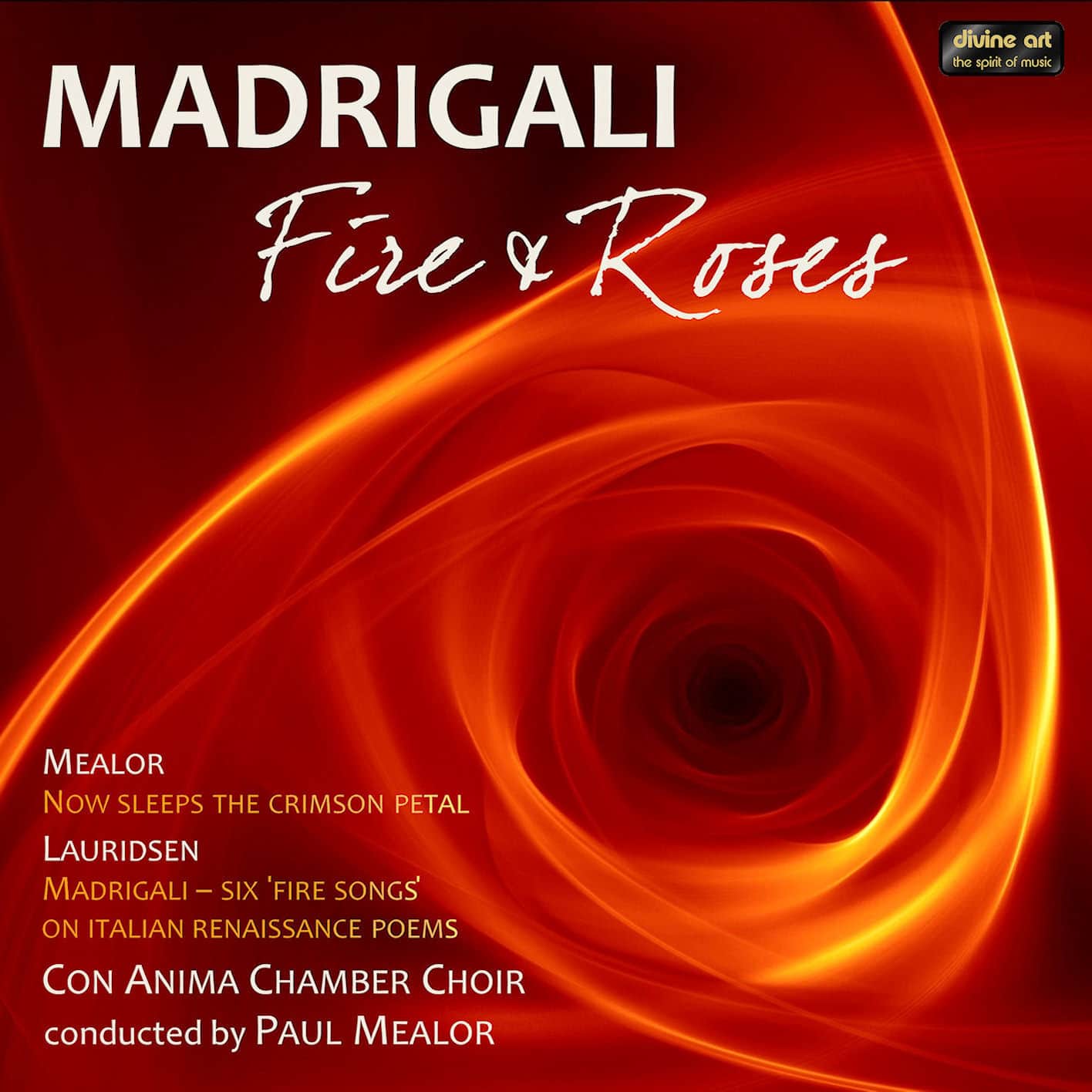
    A chamber choir is like a family. The smallness of the group, combined with the intensity of music-making, facilitates bonding. One feels how true that is, paging through the booklet that accompanies this release. The middle pages are a photographic collage of the Con Anima Chamber Choir, apparently in rehearsal for, or actually recording, this CD. Judging from the bulky outerwear, knitted caps, mittens and scarves, it must have been chilly in St Mary’s Chapel, Blairs, Aberdeen. The cosy, informal air created by these photos is reinforced by a listing of sponsored tracks. Now, I’ve certainly heard of whole recordings being sponsored but not individual tracks. We read, for example, that one track is sponsored by chorister ‘Angelika Ebenhöh-Padel, as a memory of her time in Aberdeen’, and that another is ‘dedicated to Alistair and Betty Philip, with love from [soprano] Lorna, Gill and David’.

    The Con Anima Chamber Choir was founded in 2001 and apparently plays a prominent role in Aberdeen’s arts scene. The ensemble’s website lists concerts both upcoming and in the recent past: Handel’s Messiah, Rachmaninov’s Vespers, Christmas programmes and the like. ‘Come- And Sing’ programmes invite the public to join it in special performances of its current repertory. ‘Madrigali: Fire & Roses’ is its third CD and the first to be devoted, at least in part, to a composer other than principal conductor Paul Mealor. In other words, with this release Con Anima seems to be aiming for recognition further afield.

    Including music by American composer Morten Lauridsen is a good strategy for doing so. Over the past two decades, Lauridsen’s works have been embraced by many choral societies, both large and small, and both accomplished and less so. Speaking from experience, they are rewarding but not easy to perform, and they appeal to knowledgeable audiences. Madrigali, composed in 1987, is subtitled ‘Six “Fire Songs” on Italian Renaissance Poems’ because the texts use fire as a metaphor for love. Lauridsen unifies the score with what he calls a ‘fire chord’ – a B flat minor triad with an added C – whose dissonance aptly mirrors love’s pain. (I am writing this on the eve of Valentine’s Day!) Lauridsen’s style is quickly recognizable: richly consonant chords occasionally spiced with mild dissonances, musical rhythms governed by the rhythm of the texts, and a preference for vocal parts that move in parallel.

    Madrigali is a rewarding work, and Chanson eloignée (a setting of Rilke) is similarly gratifying. Several ensembles have recorded the Madrigals. I had on hand Polyphony’s version and the differences between it and Con Anima’s are striking. First, one notices that Con Anima has been recorded in a much more reverberant acoustic and closer to the microphones. The effect is dramatic but perhaps a little oppressive. Once past that, one also notices that Polyphony’s sound is more blended and that the music-making is more spontaneous. Polyphony’s performance develops phrase by phrase; Con Anima’s more cautious singing tends to proceed chord by chord. I won’t belabour the point, other than to conclude that Polyphony is a more polished ensemble than Con Anima.

    Mealor’s Now sleeps the crimson petal, four madrigals whose texts allude to roses, is also a welcome addition to the choral repertory. Mealor’s choral writing, like Lauridsen’s, is fundamentally conservative. While it is less distinctive, it is more varied in the way the choir is used. For example, in ‘Upon a bank with roses’ Mealor’s use of micro-polyphony to evoke the stream’s gentle waters is not far from Ligeti. Con Anima, with the composer at the helm, seems more confident here and this is a very good performance by any standard. (To be fair, I must add that Lauridsen was present at the recording sessions as well.)

    The balance of the programme is made up of shorter works, several of them sharing texts with the larger selections. Here, the results are not overwhelming. In the Italian madrigals, the ensemble is pared down to three, four or five voices. The phrase ‘safety in numbers’ comes to mind. These madrigals are a test of any ensemble’s intonation, blend, responsiveness and stylistic acuity. Con Anima’s singers make a heroic attempt here, but it would be useless to pretend that these performances are competitive on an international level. They sound like the work of three, four or five talented singers. If only the individual voices would disappear to
    reveal that elusive single, multifaceted voice that this music needs. The shorter English works come off better, but my reservations remain.
  • Classical Music Sentinel – Jean-Yves Duperron – 25094

    A luminous collection of a cappella choral works spanning five centuries, the showpiece of which is the Now Sleeps the Crimson Petal cycle, by Paul Mealor himself, of which the first movement was personally chosen by Prince William and Kate Middleton (now the Duke and Duchess of Cambridge) as the musical centerpiece of the April 2011 Royal wedding service. An impressive choral work that superbly combines the clean and open harmonies of the Renaissance, with the more distant harmonic intervals of today, and sits within a pitch range that always serves the four individual voice parts extremely well. An evocative work that at times demands vocal gymnastics from the singers, but most of all commands a beauty and richness of sound too often absent from today’s music.

    The Scottish Con Anima Chamber Choir is quickly establishing a reputation as a choral ensemble that can comfortably adapt to the various demands of music past and present, as evidenced on this new recording. From John Ward, to Gustav Holst, to Morten Lauridsen, their delivery enhances the music’s character and style, and never sounds as if out of its element. The blend of voices from the basses to the sopranos is always in perfect equilibrium, and could be compared to a supple and malleable fabric that conductor Paul Mealor can easily mold and shape to fit the music at hand.

    The Divine Art sound recording has calibrated the distance between you and the choir very well, giving it a tangible and realistic feel that wraps you in a warm blanket of sound. You will understand what I mean when you hear the final chord of the Paul Mealor work.

  • MusicWeb – Paul Corfield Godfrey – 25094

    Recordings by choirs of mixed choral works by mixed composers can be something of a very mixed bag, the various styles and moods jostling each other without any sense of purpose and sometimes without any sense of propriety either. This disc presents a very imaginative approach to the problem. It centres around two substantial modern works by Morten Lauridsen and Paul Mealor (who also conducts the disc) which employ texts from the fifteenth to nineteenth centuries. These are then contrasted with settings of the same texts by composers who were working at the same time as the poets themselves. So for example we get to compare Mealor’s setting of Now sleeps the crimson petal with that by Holst, and Lauridsen’s setting of Se per havervi, ohimè with that by Monteverdi.

    Lauridsen comes extremely well out of this competitive sort of environment. He takes the basic madrigal style and enhances it with a halo of choral sound which cluster around and reflect the melodic lines in an admirably close study of the madrigal texts themselves and their meanings. The translations in the booklet by Erica Muhl are excellent, precise and comprehensible without being over-flowery, rather like the original Italian texts themselves. Lauridsen’s often extremely beautiful music is well sung by the Con Anima Chamber Choir from Aberdeen in what sounds (and looks) like a particularly atmospheric local church, of which we are given lots of session photographs including some of the composer himself obviously enjoying the performances.

    The original madrigals themselves, by Monteverdi, Gesualdo and others, are a mixed bunch and quite frankly that by Giralomo Scotto – setting a text by Machiavelli, of all people – is a laughably bad piece of composition. One reads in the booklet notes that he was a publisher, and if he had not been one doubts whether this madrigal would ever have found its way into print. The madrigals are all sung by soloists from the chamber choir, who do a fine job by them. Three of the same soloists also sing the mediaeval English There is no rose (as a near-equivalent of Mealor’s A spotless rose ) and this performance is an absolute highlight of the disc.

    Mealor’s cycle Now sleeps the crimson petal is surprisingly close in idiom to Harbison; maybe there is a greater degree of choral blurring in the sounds he achieves, nearly coming close to Ligeti at times. That said, there is always a strong sense of melodic line and the harmonies serve to enhance rather than obscure this. There is another recording of this cycle – as indeed there is of the Harbison – and both the alternatives are given with rather larger forces, which means that the intricate vocal lines are not – as they often appear to be here – reduced to one voice to a part. This is particularly noticeable in the setting of Lady, when I behold the roses where the solo soprano counterpoint, finely sung as it is, overwhelms the melodic line which it should be accompanying. The recording by Tenebrae (on Decca) uses more sopranos on the descant line, and thus integrates it more closely into the texture. In the end, this sort of approach does the music greater justice. In fact the Tenebrae recording is obviously the one to go for if you want an entire disc of Mealor’s often magically gleaming choral music including the Ubi caritas sung at the recent Royal Wedding.

    The two madrigals by Ward and Wilbye are finely done, but the Holst setting of Now sleeps the crimson petal for female voices only really does need a larger body of singers than the ten we have here; the beautiful setting by Mealor is in any case much superior to that by the relatively young and inexperienced Holst. The final two items on the disc comprise another piece by Lauridsen, a nice book-end to the Madrigali which open the disc, and an absolutely heavenly setting of Burns’s My love is like a red red rose by James MacMillan, which again would benefit from a larger number of singers to make its full effect.

    Obviously there is no competition in this sort of recital, and the singing by the choir is always perfectly tuned and beautifully recorded. Lucky Aberdeen to have such a body in their locality! Could choirs making miscellaneous disc let us have more of this sort of imaginative programming please?

  • Fanfare – Maria Nockin – 25094

    This is a fascinating collection of madrigals from various eras, composed to poems written as early as the 15th century. All pertain either to love or roses. Twentieth-and 21st-century composi­tions by Paul Mealor, Gustav Hoist, James MacMillan, and Morten Lauridson are combined with madrigals from the 15th through 17th centuries.

    The Con Anima Chamber Choir was founded in 2001 in Aberdeen, Scotland. On this disc, the sopranos are wonderful but there is a lack of robust alto and tenor sound. However, Con Anima’s careful execution of each piece seems to add character. The group’s music director is Welsh com­poser and conductor Paul Mealor, who teaches composition at the University of Aberdeen. Since some of his music, which was played at the 2011 Westminster Abbey wedding of Prince William and Kate Middleton, was seen on worldwide television, his star has risen.

    The early composers are a motley bunch. Vincenzo Ruffo was a priest who was influential in the reform of church music. Claudio Monteverdi was a full-time musician who became a priest in his old age. Girolamo Scotto was a wealthy publisher, John Ward was a lawyer, and John Wilbye the most famous English madrigalist. Carlo Gesualdo, Prince of Venosa, murdered his wife and her lover quite openly because, as a member of the nobility, he was beyond the reach of the law. It only proves that you cannot tell much about the composer’s personality from his music. Gesualdo had a wonderful talent, but you would not want to meet him in a dark alley. Scotto was a fine publisher who did a great deal for music by distributing it. His compositions are of considerably less import.

    Gustav Holst is more commonly remembered for orchestral compositions, but he wrote quite a few beautiful songs. Now Sleeps the Crimson Petal, with a text by Alfred, Lord Tennyson is only one among many. Mealor has a different setting of the same exquisite poem, and the two make an interesting combination.

    Comparative recordings can only be found a piece or group at a time. Morten Lauridsen’s Fire Songs are sung with clear but rather colorless tone on a Hyperion disc called Lux Aeterna. The Aberdeen group has a wider range of color. There is another fine recording of Wilbye’s Lady, When I Behold the Roses that features Pro Cantione Antiqua on two Warner compact discs. William Christie and Les Arts Florissants also give a fine performance of Luci serene e chiare (Eyes, Serene and Clear) on a Harmonia Mundi recording. Mealor’s madrigals are also to be heard on A Tender Light, a Decca recording featuring Tenebrae directed by Nigel Short.

    The engineers at Divine Art have done well in making you feel as though you are in a small hall listening to this wonderful choir

  • Nottingham Post – Peter Palmer – 25094

    Within the past year, Scottish-based musician Paul Mealor has twice hit the headlines. Last spring his Latin motet Ubi Caritas was sung at the wedding of Prince William to Catherine Middleton, and at Christmas the Military Wives topped the charts with Mealor’s Wherever You Are.

    But success has not come instantly for 36-year-old Mealor. A professor at the University of Aberdeen, he has long been helping the city’s Con Anima Chamber Choir to make a name performing sacred and secular music.How the 20-strong mixed choir sounds under his direction can now be heard on a Divine Art CD. The disc features American composer Morten Lauridsen’s Fire Songs on Italian texts, as well as Mealor’s setting of Tennyson’s Now Sleeps The Crimson Petal and further English rose poems.

    Complementing the recent music are Renaissance and Tudor madrigals, several of them drawing on identical lyrics. Some were written by well-known figures like Italy’s Claudio Monteverdi and England’s John Wilbye, while others amount to rediscoveries.This is a must for anyone relishing the choral expression of passionate poetry across the ages.

  • The Scotsman – Kenneth Walton – 25094

    MADRIGALI: Fire and Roses is a golden blend of a cappella repertoire, both ancient and modern, sung by the fresh voices of Aberdeen’s Con Anima Chamber Choir under its director Paul Mealor. Mealor’s own music is featured in the juicy atmospherics of his short choral cycle, Now sleeps the crimson petal. So are two beautifully crafted works by the American composer Morten Lauridsen, including the disc’s title track Madrigali, vivid modern settings of Italian Renaissance poems that harness echoes of Monteverdi. Genuine Renaissance madrigals by the stylistically anarchic Gesualdo, John Wilbye and others, including Monteverdi himself, are complemented by more recent settings by Holst and James MacMillan. Rating: ****

  • Madrigali: Fire and Roses

    Madrigali: Fire and Roses

    An intensely beautiful programme, delectably performed. Paul Mealor’s choir gives a stunning performance of original 16th century madrigals and some modern counterparts, including the fabulous Madrigali of Morten Lauridsen. Of Mealor, we have the awesomely beautiful ‘Now Sleeps the Crimson Petal’ cycle, of which the first movement was personally chosen by Prince William and Kate Middleton (now the Duke and Duchess of Cambridge) as the musical centerpiece of the April royal wedding service (re-set to the words of ‘Ubi Caritas’).

    This is the original version, conducted by the composer, and thus 100% authentic.

    Paul Mealor’s work is also available as a download-only single, Now Sleeps the Crimson Petal (DDS 29002). It was also featured in the soundtrack of the award-winning documentary “Shining Night: A Portrait of Composer Morten Lauridsen” (DVD 003).