Catalogue Connection: 25127

  • Classical Music Sentinel – Jean-Yves Duperron – 25127

    You may recall that I was very impressed with the previous recording by organist Erik Simmons playing music by Carson Cooman , so much so that it found a place on the Definitive Recordings page. Well let me say that I am just as impressed with this new recording, but for altogether different reasons. Whereas Litany featured pieces concerned more with fantasy and flair, this new Masque disc centers more around form and structure, but that certainly doesn’t prevent composer Carson Cooman from yet again flexing his creative muscle and laying out a series of Preludes and Fugues as varied as they are meticulously crafted. Like I mentioned in the previous review, American composer and concert organist Carson Cooman (b. 1982) does not seem to be inflicted with the “sameness” syndrome that most of today’s composers appear to suffer from. While one piece may make use of harmonic intervals à la Keith Emerson, another sounds as if written by Bach if he were living today. While one works ideas out over a 5/4 time signature, another sticks to traditional form like glue. While one is melodic and bright, another’s dark charater reminds me of the organ music by Rued Langgaard. While some are very soft and serene, segments of one sound like a Hercules transport plane on take off. And once again, organist Erik Simmons , through the use of a wide variety of stop combinations and expressive playing, reveals each one’s unique colors and character.

    The Symphony for Organ , actually dedicated to Erik Simmons, is quite something. With an opening movement that would have sounded right at home in the original black and white version of the Phantom of the Opera (maybe it’s subtitled “Masque” for that reason), a 21st century re-tooling of a Sarabande, and a tremendously powerful Chorale that will send your neighbours packing, not only because it’s loud, but also because they’ll think you’ve gone absolutely mad.

    All of this great music is performed on the outstanding 1973 Marcussen & Son Organ of Laurenskerk, Rotterdam, in the Netherlands, comprised of 85 stops that range from a 1′ Octaaf to a 32′ Bazuin. It can purr like a kitten or roar like a lion, and everything else in between. This is yet another outstanding recording courtesy of Divine Art once again engineered by Erik Simmons himself.

  • The Classical Reviewer – Bruce Reader – 25127

    Back in March last year I particularly enjoyed a recording of organ music by American composer and organist Carson Cooman played by Erik Simmons and released by Divine Art Recordings (dda 25116).

    Now from Divine Art comes a new release of preludes and fugues and an organ symphony by Carson Cooman again played by Erik Simmons on the Marcussen and Son organ of Laurenskerk, Rotterdam. Netherlands.

    All of Carson Cooman’s Preludes and Fugues were written in 2013 with the exception of the Prelude and Fugue No. 1, Op. 913 , commissioned by the Boston Pipe Organ Encounter in 2011. There is a light textured fugue that quickly flows with lovely harmonies before a fugue that is slower; rising naturally with a sense of gravitas as Cooman slowly adds layers of harmony and texture, rising in drama and dynamics to a fine coda.

    Commissioned by Erik and Charissa Simmons, Prelude and Fugue No. 2, Op. 1021 has a lovely gentle little motif over which a fine melody is played with beautifully judged quiet harmonies before a fugue that moves off with a gentle, light theme, so delicate and exquisitely played.

    Prelude and Fugue No. 3, Op. 1022 , dedicated to Heinrich Christensen, opens with a lively prelude, again so pure and light textured before leading through some terrific passages to the fugue that gently proceeds with a particularly fine melody, gently weaving its way forward to the coda.

    Dedicated to Randall Mullin and Dan Daniels, Prelude and Fugue No. 4, Op. 1023 brings a stately plodding theme where the pedal line keeps the pulse with a fine theme above, before slowing and lightening in feel. The fugue leads so very naturally on, an absolute joy, wonderfully light and airy.

    Prelude and Fugue No. 5, Op. 1024 , dedicated to Nancy Granert, brings an exquisitely hushed melody that gently weaves its way ahead before rising up for the fugue, a constantly shifting theme, beautifully developed as layers and textures are added.

    Dedicated to Sara Bareilles, the Prelude and Fugue No. 6, Op. 1025 has a lively prelude with a fine rhythmic figuration leading to a fugue that takes a slow, steady theme that is wonderfully developed.

    Prelude and Fugue No. 7, Op. 1026 is dedicated to another fine organist, Kevin Bowyer, and has a quizzical little theme that gently progresses with some very lovely intervals and harmonies before a terrific fugue that opens with some lovely timbres as it swiftly moves forward, rhythmically in a kind of moto perpetuo.

    Prelude and Fugue No. 8, Op. 1027 opens with a flowering of a theme, gently developed with harmonies slowly growing over a held pedal note before gently leading into the fugue that slowly grows in dynamics, layers of harmony and texture being added with a restrained yet forceful forward drive. It is dedicated to Jonathan Orwig.

    The last of the Preludes and Fugues on this disc, the Prelude and Fugue No. 9, Op. 1028 , is dedicated to Harry Lyn Huff. The prelude sounds out loudly and confidently, showing this lovely organ magnificently, before falling to a faster lighter textured theme that has a fine rhythmic spring to it. It brings some fine textures as it develops before subtly transforming into a very fine, flowing fugue, rising forcefully in dynamics for the coda.

    This is an absolutely terrific conclusion to these beautifully crafted Preludes and Fugues, finely played by Erik Simmons.

    Preghiera, Op. 1058 (2014) , dedicated to Carlotta Ferrari, was composed especially for this new recording to act as a short interlude before the organ symphony. It opens with a rhythmic pedal pulse over which a theme is laid that slowly and quietly develops to the hushed coda.

    Symphony for Organ, Op. 1038 (2013) was written for and dedicated to Erik Simmons and represents a progression from darkness into light. In three movements Masque opens with bold, dramatic organ chords that surge out full of drama before dropping to a reflective, quiet passage with some lovely colours drawn from the Laurenskerk organ. The music develops through some dark, threatening passages before the music rises again, this time lighter textured. Soon a rhythmic theme appears before the music rises again dramatically. When the music falls to a hush again, it retains an intensely brooding atmosphere only lightened by little drops of sound appearing. Eventually a lighter moment introduces dynamic runs on the organ as the music scurries forward to the tremendous, dynamic and threatening coda that ends with terrific growl.

    With the Sarabande, the symphony finds a quieter yet somewhat brooding nature, slowly growing lighter and more optimistic before strange little harmonies and textures appear. Between the slowly moving, mournful passages a number of little motifs appear before leading to a gentle hushed coda.

    In the Chorale, firmly but steadily, a theme is developed, the organ slowly rising in brilliance as though in expectation of a dawn, the light slowly emerging with constantly shifting and emerging colours and textures. The harmonies slowly richen as the music grows louder leading to a blaze of sunlight that appears in the dazzling coda.

    This is an organ symphony to rival any, spectacularly played by Erik Simmons. He receives an excellent recording and there are excellent notes from Carson Cooman. Surely all organ enthusiasts will want this fine new disc.
  • Choir And Organ – Rupert Gough – 25127

    This is in fact the second recording of Carson Cooman’s organ music by Erik Simmons, but such is the prolific nature of Cooman’s writing, there is still much repertoire to discover. The main focus is nine Preludes & Fugues, mostly composed in 2013, which form a large concert cycle. This may sound ominously academic, yet Cooman’s inventiveness is beguiling, particularly in the preludes which explore the characterful themes played out in the ensuing fugues.

    The three-movement Symphony for Organ is a grittier affair, progressing from darkness to light. Naturally, the limpid sounds of the Marcussen organ help to draw the best out of this contemporary music.

  • The Chronicle – Jeremy Condliffe – 25127

    We reviewed a church organ album the other week, and just couldn’t be doing with it. Very discordant and unsettling.

    This, on the other hand, is very different and we’ve been playing it over and over all week.

    If you told us a while ago that we’d be moaning about pop bands and praising church organ music, we’d have thought you were giddy.

    Unlike the discordant one from the other week, this is quiet and gentle, though it does boom out in places. It’s most definitely organ geared towards a more modern audience, with plenty of variations and even playfulness.

    The opener Prelude and Fugue No. 1, Op. 913 opens quite perkily but then turns into a more traditional fugue.

    Track two Prelude and Fugue No. 2, Op. 1021 is intellectually playful. Written for two girls, Lydia and Emily (the daughters of organist Simmons), the first part uses Lydia as a theme and is written in Lydian mode (which as you all know, is a rising pattern of pitches comprising three whole tones, a semitone, two more whole tones, and a final semitone, and pitches roughly describes the fifth of the eight Gregorian [church] modes). You can see why we say we feel inadequate reviewing this stuff.

    Still, you can get all the clever bits from the sleeve notes. To listen to, it’s gentle and ranges in sound from the more somber end of the church music spectrum to rather jolly music that could be played at a wedding. It’s an enjoyable CD, so what more do you want?

  • American Record Guide – Robert Delcamp – 25127

    Carson Cooman is a prolific American composer whose works number in the hundreds. They include solo instrumental pieces, operas, orchestral works, hymn tunes, and several works for organ. The composer is an excellent craftsman who has developed a distinctive, individual voice.

    Carson Cooman is not only a composer but also an active performer who has had over 130 new works written for him. The nine preludes and fugues were conceived as cycle; they explore a variety of approaches and structures. Perghiera was written for this recording as an interlude between the cycle of preludes and fugues and the substantial symphony. It has an approachable style and is well conceived for the organ.

    Simmons gives clean, committed performances on the 1973 Marcussen organ in the Laurenskerk in Rotterdam. The recorded sound is vivid.

  • Masque: Music for Organ by Carson Cooman

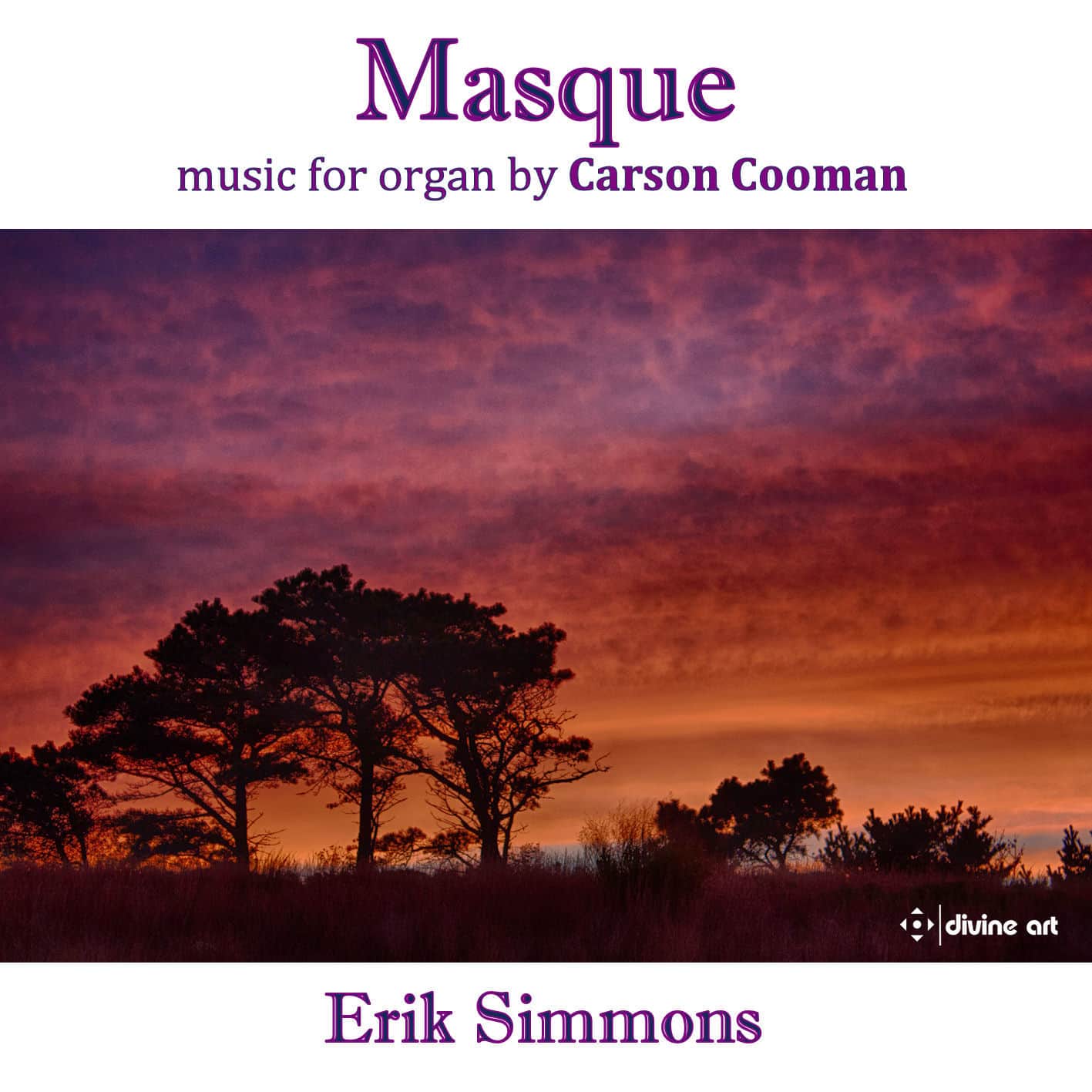
    Masque: Music for Organ by Carson Cooman

    Erik Simmons has recorded a second programme of fine organ music by Carson Cooman, Composer in Residence at Harvard University’s Memorial Church and one of America’s most prolific composers, writing in a variety of approachable musical styles, innovative but within traditional tonal boundaries. The previous album ‘Litany’ received rave reviews, one critic called it a ‘benchmark recording”, and this new CD will appeal very much to organ enthusiasts.

    The album is recorded on the sounds of the wonderful Marcussen organ of the Laurenskerk, in Rotterdam using the Hauptwerk system which gives full rein to the wide tonal range of the instrument, while avoiding the excessive reverberation which can spoil many organ recordings. The sound here is crisp and clear allowing full enjoyment of the music and the instrument.