I confess that I’m a sucker for the clavichord. I love it the way you might love a three-legged dog or a mangy but charming cat. The clavichord was too small and quiet for use outside of small rooms or in ensembles, and although it utilized a hammer action it sounded more like a harpsichord than a fortepiano–though a harpsichord with much less sustain. Its sound is limited and idiosyncratic but definitely charming, and on this collection of keyboard works by the likes of Antoine de Févin, Louis Couperin, and Nicolas Gigault clavichordist Terence Charlston uses the instrument’s radically limited expressive range to full effect. Keyboard programs in particular will greatly benefit from access to this disc.
Catalogue Connection: 25134
-
The Chronicle – Jeremy Condliffe – 25134
This pleasant album is more important for scholars of music and keyboard buffs than your casual listener, though it’s a nice enough collection.
Early-music specialist Terence Charlston is playing Mersenne’s Clavichord, a clavichord built according to specifications left by Marin Mersenne — no examples of an original French clavichord survive.
Wikipedia reports that Mersenne, a French theologian, philosopher, mathematician and music theorist, is often referred to as the “father of acoustics”, and the plans he left behind have been used by Peter Bavington to build a clavichord as per the 16th and 17th centuries.
It’s a music geek’s delight, as Charleston plays music of the period, recreating a sound that has probably not been heard for several hundred years: it’s how early French keyboard music would have sounded to the audiences of the day. You’ve got to admire the energy behind the enterprise.
Works from the 16th, and the early and late 17th centuries are played, a number arranged by Charlston for the rebuilt instrument, some pieces originally written for the lute. It’s got a nice early music feel to it, though we guess this is music that was written as background music in the first place, a chap on a lute or keyboard playing away while upper class people mingled and chatted, and nibbled on whatever passed for canapés in 1684 (the French tardily invented canapés in the 18th century). It’s equally suited now for a quiet evening in with a mug of cocoa.
-
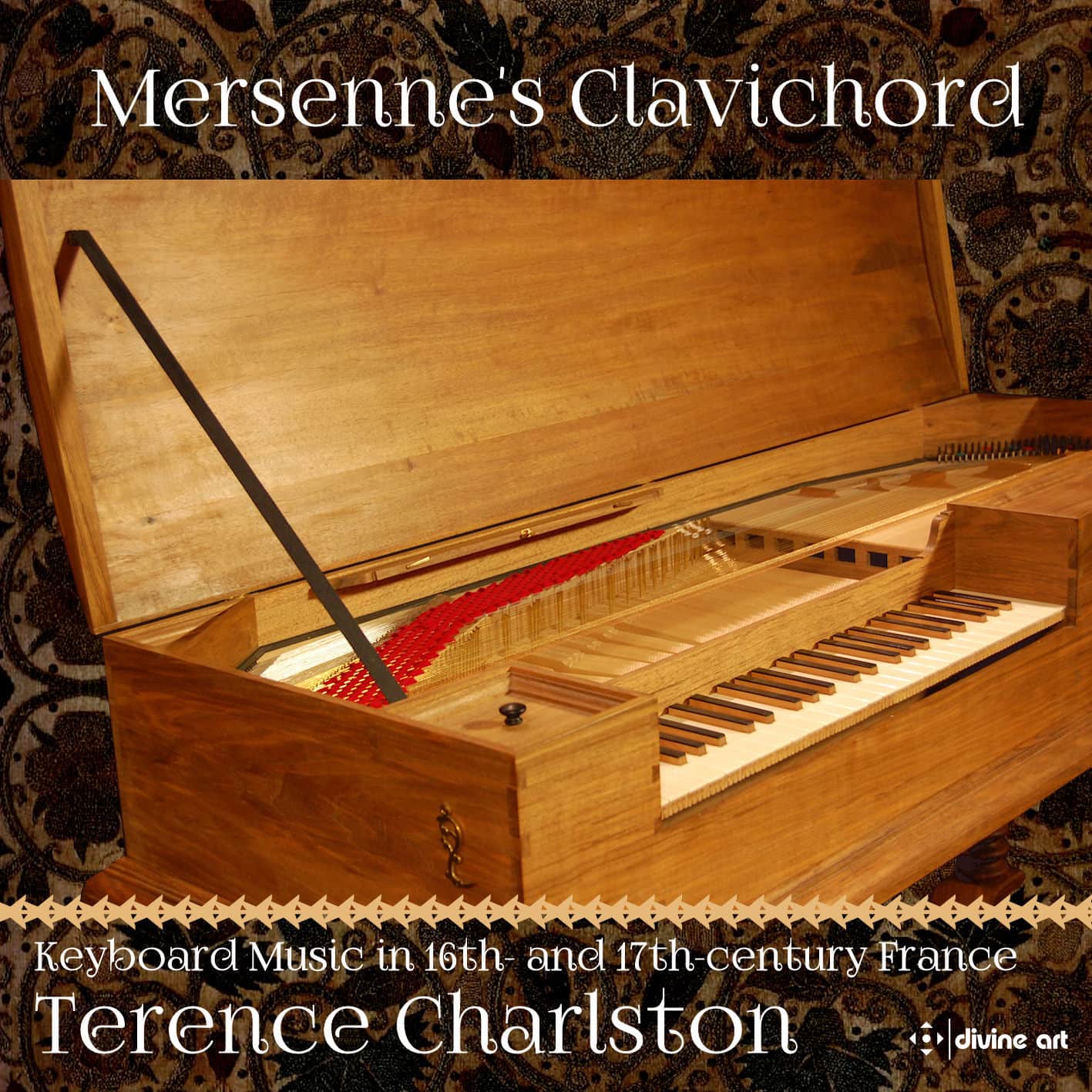
Mersenne’s Clavichord
Not one example of an original French clavichord survives. The instrument played on this historically important recording is a new construction following the specifications published by Marin Mersenne in the 17th century. It’s therefore the only example of how early French keyboard music may have actually sounded to the first audiences. A range of works from the 16th and 17th centuries are presented, all French except the well known Toccata by Sweelinck, whose music was prevalent around France at the time.
Also by Terence Charlston is The Harmonious Thuringian (DDA 25122).