Catalogue Connection: 25146

  • Travelling Light – music by Jim Parker – review in The recorder

    Travelling Light is probably my favourite of the three discs [featuring John Turner reviewed this month]. Parker’s music is known to many from TV shows such as Soldier Soldier, Foyle’s War and Midsomer Murders. A South American Journey, originally conceived for recorder and harpsichord, is here reworked for recorder, harp and string quintet. The writing is evocative and Turner’s recorder tone, strongly vibrato-laden, is frequently reminiscent of the pan-pipes. The driving rhythms from the strings capture a sense of movement and urgency.

    Three Diversions
    uses the same instrumentation, and alludes more to the folk music traditions of these shores in the opening movement, Spring Dance, and the finale, A Leave-Taking.

    Paean has a regal, refined quality, above which floats a beautiful melody. In Hoofers: Four pieces for oboe and piano, Richard Simpson’s oboe tone is clear with precise articulation. The driving piano accompaniment, with a hint of moto perpetuo, to The Flying Scotsman was deftly handled by Janet Simpson.

    Bonjour M. Grappelli, performed by the Solem Quartet, is engaging; beautiful melodic lines interwoven between all voices, jazzy glissandi, pizzicato bass-lines, and blue notes all contribute to a most enjoyable piece, stylishly performed.

    Turner is on excellent form; technically secure and musically convincing. I was particularly taken by his tonal palate, as varied as the music. His interpretations will ensure [these discs] remain in the public consciousness and, it is to be hoped, become a cornerstone of the repertoire. He is supported and accompanied by a cast of exceptional musicians. Fantastically satisfying music, brilliantly played; musicianship of the highest calibre.

  • Jim Parker – Travelling Light Review

    The front cover of this disc proclaims Jim Parker as the “composer of music for Midsomer Murders, Foyle’s War, House of Cards and many more.” His music, on the present evidence, is engaging, always easy on the ear. The piece for recorder, harp, and string quintet, A South American Journey, was especially rescored for this combination for this recording; it was originally for recorder and harpsichord. Titles of the movements appear in Spanish (“any apparent linguistic expertise on my part is illusory,” says Parker; so is any impression that he actually travelled to South America, it turns out). The recorder fits surprisingly well into the piece. Be warned, there is a lot of reverb to the recording, something which is rather obvious after the closing gesture of the first piece, “Tango Cinco.” The recorder’s piercing tone intriguingly takes on the role of a “new” indigenous South American wind instrument in the long-breathed phrases of “Volando,” a movement whose central section explodes with surprising vehemence, the double bass underpinning and grounding the adventure. The happy-go-lucky finale, simply marked “Rapido,” is a terrific romp that suddenly darkens, taking the recorder into its husky lower registers.

    The four-movement piece Bonjour M. Grappelli intriguingly reworks old themes by Parker into a tribute to Stéphane Grappelli and his energetic style of playing. So it is that themes from Body and Soul, Midsomer Murders, and a BBC musical called Petticoat Lane find their way into the experience. The second movement is particularly poignant, featuring some wonderful solos by the cello and viola players (Stephanie Tress and Alistair Vannart, respectively). The most advanced writing comes in the third movement, “Hurdy Gurdy.” The second violin is asked to play a quarter-tone flat at the beginning and end of the movement, to good, atmospheric effect. Everywhere, though, Parker’s skill and his Schubertian aptitude for a never-ending stream of melody is in evidence. Wit is certainly there in plentiful supply in this movement. The work’s final panel is a valediction to the star, entitled “Au revoir, M. Grappelli,” features a blues theme of Parker’s. Amy Tress’s sweet, high violin is a particular delight, while the quartet as a whole captures the atmosphere of bitter-sweet regret.

    First performed at the Royal Northern College of Music in Manchester, the Three Diversions features as its last movement a tribute to the well-loved musical commentator Antony Hopkins; that movement that takes the traditional song The Leaving of Liverpool as its basis. Jolly in tempo and phrasing, there remains an element of regret to the theme itself, a contrast Parker explores imaginatively. The string playing is particularly fine here. Again putting old music to good use, Parker takes themes from the television series Parnell and the Englishwoman in the first two movements. There’s more than a hint of the influence of Malcolm Arnold in the first movement’s carefree demeanor; this, in complete contrast to the interiorizations of the central, expansive “Paean” (the thought struck me this movement would surely be even more poignant for string orchestra).

    There are no photos, and in fact no biography included, but I assume that Richard Simpson is the same oboist who was principal oboe with the Hallé Orchestra for a long time, and who provided me with many moments of pleasure in my formative years as an attendee in Manchester’s Free Trade Hall in the 1980s. As far as I recall, Janet Simpson is his wife and was also associated with the Hallé. They perform Hoofers, four pieces for oboe and piano, and the rich oboe tone of the opening does indeed imply to my ears it is the same Richard Simpson. The depiction of the train The Flying Scotsman, including oboe multiphonics, presumably invoking the train’s hooter, in the first movement is most involving. The musical language is the most advanced on the disc; the piano supplies the ongoing movement of the train. Inspired by the writings of P. G. Wodehouse, “Banjolele” refers to a hybrid instrument marrying the tuning of the ukulele with the percussive sound of the banjo. The piece is good old fun, frankly, invoking hoe-downs without, miraculously, making one think too much of Copland, while the next panel, “The Lonely Ballerina” (again using a theme from Midsomer Murders) depicts a reminiscing ballet dancer. The Simpsons play this beautifully, the oboe’s runs perfectly judged, the piano’s simple accompaniment the epitome of refinement. Finally there comes, “Hoofers,” slang for dancers. The music comes from a commissioned musical about Margaret Kelly and the Bluebell Girls of the Paris nightclub The Lido and offers a both literal and metaphorical high note on which to end.

    A fun disc, without doubt—easy on the ear, especially in such expert performances as these.
  • Recorder Magazine – Andrew Mayes – 25146

    If you enjoy some of the popular drama series on television – Midsomer Murders, Foyle’s War, House of Cards – among numerous others for which Jim Parker has composed music, you will already have heard just one element of his compositional activity. Nevertheless, as Jim observes in the booklet notes, much of the music written for television disappears with the programmes themselves, so the opportunity to rescue some of it is clearly welcome.

    A South American Journey is a five-movement work originally scored for recorder and harpsichord and written in memory of the composer Stephen Dodgson. In this recording the music has been re-scored for recorder, string quartet, double bass and harp, which suites the overtly Spanish flavour of the music especially well.

    Bonjour M. Grappelli for string quartet is a four-movement work that makes use of some previously composed music for television. The opening movement, that gives the work its overall title, and the final movement “Au revoire, M. Grappelli”, are heart-warming tributes to the celebrated jazz violinist. The deliciously and unashamedly romantic second movement, “Elegy” makes use of a melody that was the theme tune for the TV series “Body and Soul”. “Hurdy Gurdy” is the title of the idiosyncratic and sometimes quirky third movement that stated life as a song in the television musical “Petticoat Lane”.

    The first performance of Three Diversions was given in a concert at the Royal Northern College of Music to celebrate the opening of the Ida Carroll Walkway. The scoring is as for South American Journey. The first movement, “Spring Dance”, has the lively feel of a reel, while the second, “Paean” is a flow of melody and counter-melody over lush harmonies. Both movements develop themes previously composed for the TV series “Parnell and the Englishwoman”. Based on the traditional song “The Leaving of Liverpool” the final movement ‘A Leave-Taking” is in memory of the composer Antony Hopkins. It is a set of continuous variations with a lively part for the sopranino recorder.

    Hoofers (show business slang for dancers) is the overall title and that of the last of these four pieces for oboe and piano. The Flying Scotsman is an enthusiastic musical depiction of an approaching and passing train; the relentless piano accompaniment and oboe multiphonics providing evocative locomotive sounds. Banjolele is inspired by one of P G Wodehouse’s Jeeves and Wooster stories in which Wooster is evicted from his lodgings for incessantly playing the instrument – it’s all there in the music! Though reworking a theme used in “Midsomer Murders”, “The Lonely Ballerina” here depicts a retired dancer’s reminiscences with elegant yet wistful arabesques. A television musical about the life of Margaret Kelly, better known as Miss Bluebell, and the Bluebell Girls of The Lido nightclub in Paris are the source of this ebullient rondo. Frothy music that inhabits the world of Poulenc and Milhaud and concludes a thoroughly entertaining CD, which very evidently totally engaged the players who are on impressive form.

  • The Chronicle – Jeremy Condliffe – 25146

    The title says it all: Parker writes light music, and the collection takes the listener to different parts of the world. (He also wears his talent lightly, the sleeve notes being witty and self-deprecating).

    You might not know the name of Jim Parker but you’ll know his music; he has written for television and his scores include Foyle’s War, House of Cards, Midsomer Murders and House of Elliott.

    If the seriousness of “classical” music puts you off, you’ll love this. The opening piece, A South American Journey, is in memory of composer Stephen Dodgson, who never went to South America, and features recorder and harpsichord, which are not South American instruments; the fourth movement nods to mariachi, which is Mexican. The titles of the five movements are in Spanish but Parker admits he looked them up in a dictionary. It’s true the flute sometimes sounds like an Andean siku (panpipes to you, like Mr P we looked it up in a dictionary) but it’s flutiness prevents the pieces sounding like one of those cheesy bands you see in shopping centres, and it’s entertaining stuff.

    Bonjour M Grappelli is the next piece, a tribute to the legendary jazz violinist that reworks three of Parker’s old themes, with added Grappelli violin flourishes. There’s nothing not to like here; it sounds like a theme for a television show that’s not yet been written.

    Three Diversions was written to celebrate the opening of the Ida Carroll Walkway at the RNCM (we had another album of music for the same event a while back; it must have been some show). These are lively pieces that sound in places as if they were lifted from a Mike Oldfield album, so even novices to classical music will find an entry point.

    The CD closes with our favourite, Hoofers, four pieces for oboe and piano. The Flying Scotsman celebrates that train, which Parker saw when he was younger: train sounds from the piano, excitement and drama from the oboe. Lonely Ballerina is reworking of music from Midsomer Murders. The closing piece, Hoofers, celebrates the Bluebell Girls, dancers at the Paris Lido.

    Easy on the ear, plenty of melody and variation and with a definite lightness of step, this is something of a minor gem.

    The music is performed by John Turner (recorders), Anna Christensen (harp), The Solem Quartet, and Richard and Janet Simpson (oboe and piano).

  • MusicWeb International – John France – 25146

    I first came across the music of Jim Parker in the wonderful record made with the late John Betjeman, Banana Blush. I remember feeling that the poetry and the music were a perfect match for each other. Since that time, despite not being an avid watcher of television, I have seen Parker’s name in TV credits for programmes as diverse as House of Cards, The House of Elliot, Foyle’s War and Midsomer Murders. For the concert hall, there is a splendid Clarinet Concerto, the wonderful A Londoner in New York for brass and Mississippi Five for wind quintet. I am beholden to the liner notes written by the composer for all information about these four works.

    A South American Journey is based on an imaginary visit to that continent. The work was originally conceived for recorder and harpsichord. The music celebrates the life of the late Stephen Dodgson, and was commissioned by John Turner, who plays the recorder in this recording. Parker has rescored the work for ‘forces available,’ which includes string quartet, harp, double bass and recorders. The Journey has five contrasting movements, all sporting Spanish titles: ‘Tango Cinco’, ‘Pueblo Tranquilo’, ‘Volando’, ‘La Cometa’ and ‘Rapido.’ It is a thoroughly enjoyable suite that creates an excellent Latin American atmosphere. There is much splendid virtuosic playing by John Turner.

    Stephane Grappelli was one of the ‘greats’ of popular music. Along with Jean “Django” Reinhardt, he is best recalled for the performances and recordings made with the legendary Quintette du Hot Club de France. Jim Parker’s Bonjour M. Grappelli is written for string quartet and seeks to emulate the great man’s playing style without being pastiche. There are four well-balanced movements. The first introduces the tune ‘High Rise Blues’ which began life with the Barrow Poets in 1972. The second, an ‘Elegy’ is quiet and thoughtful. It is dedicated to the late Celia Sheen, the Theremin player in the Midsomer Murder TV series. It had a previous life as the theme tune to a forgotten TV series Body and Soul. ‘Hurdy Gurdy’ was originally used in a musical for BBC TV called Petticoat Lane. I love the way the second violin plays (deliberately) a tone flat at the beginning and end of this piece. The final movement, ‘Au Revoir M Grappelli’ revisits the blues tune, with some quite romantic and thoughtful playing.

    The Three Diversions were first heard at the opening of the Ida Carroll Walkway at the Royal Northern College of Music. Once again Parker has made use of themes he wrote for television. Listeners will recognise the tune in the final movement, ‘A Leave Taking’. It is based on the traditional song ‘The Leaving of Liverpool’. It was composed in memory of Anthony Hopkins, composer, pianist, musicologist and conductor. The other two Diversions are a lively ‘Spring Dance’ and a meditative ‘Paean.’ There is a definite Irish feel with much of this music. Fab! The work is scored for string quartet, recorders, double bass and harp.

    The final work on this imaginative CD is Hoofers, written for oboe and piano. The pieces are quite disconnected in titles and imagery, but make a satisfying suite. The first is in praise of the train running between London King’s Cross and Edinburgh, named the ‘Flying Scotsman’. Parker has created an effective train sound. The second piece is ‘Banjolele’ and derived its inspiration from P.G. Wodehouse’s Bertie Wooster. The protagonist was evicted from several lodgings because of his attachment to this instrument and his desire to master its intricacies. Even Jeeves walks out. No banjolele here, just a jaunty little tune with a sprightly piano accompaniment. Next comes ‘The Lonely Ballerina’ which is another reworking of a theme from Midsomer Murders. More of a reflection about a life well danced than a depiction of a night at the ballet. Quite charming. The finale is the eponymous ‘Hoofers’, about a troop of dancers in Paris. The music is appropriate for a depiction of Hoofers – dancers. A great way to conclude the fascinating CD. The playing is simply superb.

    Typically, the liner notes are excellent and give all relevant details about the music performed. There are also brief notes about the composer and the artists, but no names given for the players in the Solem Quartet. I located them in the ’net.

    It is unfortunate that dates for each work have not been given. This problem was not solved with a Google search. Even the composer’s date of birth is not included. I do believe that this information is very important to many listeners.

    This is a fantastic CD. It is full of imaginative, interesting and well-wrought music that has the distinct advantage of being totally approachable and enjoyable. Jim Parker has a unique voice in music that manages to seamlessly cross the divide between popular, classical and light.

  • New Classics – John Pitt – 25146

    After graduating as an oboist at the Guildhall School of Music, Jim Parker played with leading orchestras and chamber groups before concentrating on composing and conducting. He had early success with a series of recordings in which he sympathetically set to music the poems of John Betjeman, spoken by the poet and conducted by himself. These and subsequent records led to work in theatre, film and television, for which he has written scores for hundreds of programmes such as House of Cards, Foyles War and Midsomer Murders, winning BAFTA award for best television music four times. Classical compositions include a Concerto for Clarinet, a one act opera for Channel Four Television, settings of poems by Oscar Wilde and chamber music for wind ensembles.

    This very enjoyable album collects a number of Parker’s recent compositions which have a pictorial quality and display his remarkable talent for memorable melodies and colouration, whether it be the recorder acting like a Peruvian pipe, or violins emulating the Hurdy-Gurdy. Light music albums of this quality are rare these days and this is a joyful gem. The first three suites are scored for String Quartet (some with recorder, harp and bass); Hoofers (named for stage dancers) is a suite for oboe and piano of individual pieces: The Flying Scotsman, The Lonely Ballerina, Banjolele and Hoofers. The talented musicians are Richard Simpson (oboe), Janet Simpson (piano), John Turner (recorder), Anna Christensen (harp), Alex Jones (double bass) and the Solem Quartet.
    Highly recommended.

  • Travelling Light: Music of Jim Parker

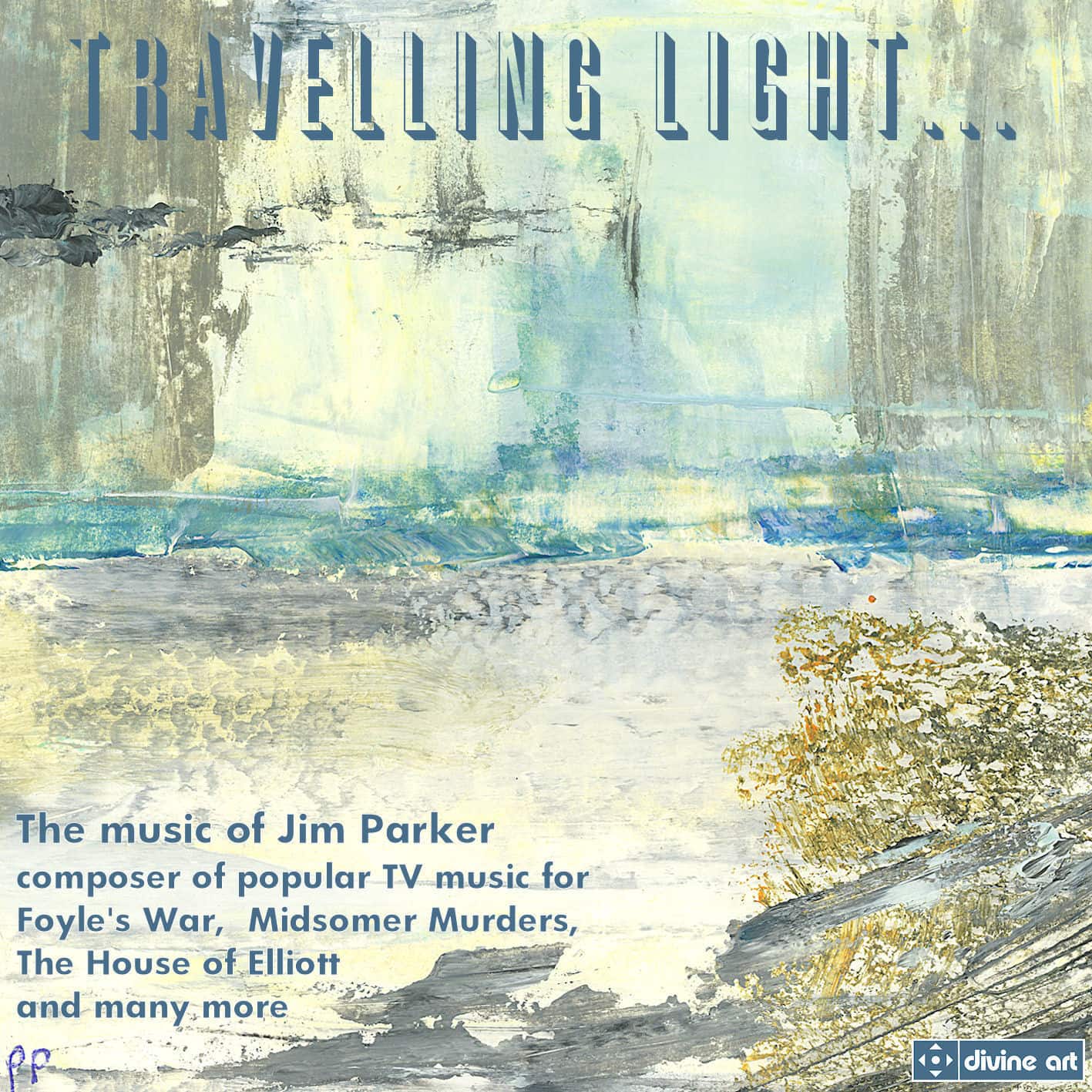
    Travelling Light: Music of Jim Parker

    Perhaps the name of Jim Parker is not well known – but his music is loved worldwide. Composer of numerous film and theatre scores, he is best known for his television music which includes Foyle’s War, House of Cards, Midsomer Murders and House of Elliott among many more. He has won the British Academy Award for Best TV Music on no less than four occasions.

    This brilliant album collects a number of Parker’s recent compositions which are not directly for TV but still have a marvelous pictorial quality and display his remarkable talent for memorable melodies and coloration, whether it be the recorder acting like a Peruvian pipe, or violins emulating the Hurdy-Gurdy.

    Light music albums of this quality are very rare these days and this is a joyful gem.