Catalogue Connection: 25169

  • American Recorder review – Rawsthorne and Other Rarities

    Somewhat of a sequel to “A Garland for John McCabe”, Rawsthorne and Other Rarities contains 11 works – six employing recorder and one with bamboo pipe. Alan Rawsthorne, Halsey Stevens, Ralph Vaughan Williams and Arthur Bliss are well-known 20th –century composers on this disc. Their works here are appealing – but with the exception of Stevens’s Sonatina Piacevole, do not use the recorder.

    However, works from perhaps less familiar composers – Basil Deane’s The Rose Tree, Karel Janovicky’s The Little Linden Pipe and Malcolm Lipkin’s The Journey (the last two unaccompanied recorder), Donald Waxman’s Serenade and Caprice and David Ellis’s Mount Street Blues – are strong pieces that deserve inclusion in performance and courses of study. The Journey and Mount Street Blues are dedicated to the memory of John McCabe.

    As in the disc of pieces honoring McCabe [DDA 25166], the sequencing of tracks is very well done. Good recording quality guides me to recommend the best quality available (CD or higher-quality downloads).

    For anyone interested in the recorder as a central part of 20th-century and later chamber music, both this disc and A Garland for John McCabe form essential listening. Thank you, John Turner!. The discs reviewed point to Turner’s exceptional skills as a musicology researcher, bringing to our attention music we might well have not known otherwise.

  • Rawsthorne and Other Rarities review

    This real hodgepodge of a disc is all the more entertaining for it. Recorder player and Rawsthorne expert John Turner is the motivating force behind it all, playing in seven of the eleven pieces; ironically, in none of Rawsthorne’s works, including the 1939 Chamber Cantata, for long lost but rediscovered by Turner in the Library of Congress in Washington, DC. While by no means the longest work here, this four- movement piece for mezzo-soprano, string quartet and harpsichord is the major item here, setting three anonymous medieval texts and, in the finale, Alexander Montgomerie (a 16th-century Scot). The Chamber Cantata‘s loss was lamented by Rawsthorne’s biographer, the late John McCabe … to whose memory, incidentally, this album is dedicated – and hearing it now one can but aver his judgment was well-founded. It is an absolute gem, and very strongly sung here by Claire Wilkin¬son, well supported by the Solem Quartet and harpsichordist Harvey Davies. Claire Wilkinson also delivers Basil Deane’s diptych The Rose Tree (2006, in Raymond Warren’s completion made two years later) and the two brief songs by Bliss (1921, arr c.1924) and Vaughan Williams (cl939).

    The Chamber Cantata‘s manuscript came to be in the Library of Congress as part of the collection of the composer and musicologist Halsey Stevens, whose Sonatina Piacevole (1955-6) is included here by way of tribute. A brief work of neoclassical perfection, if no great depth, it is beautifully performed by Turner and Davies, as they do Donald Waxman’s sprightly, more recent Serenade and Caprice (2016). Turner also plays two works unaccompanied, Karel Janovický’s lovely variation set, The Little Linden Tree (2016), and the late Malcolm Lipkin’s tribute (one of several) to McCabe, The Journey (2016), after the completion of which Lipkin sadly departed on a journey of his own. The disc closes with another Liverpudlian tribute to McCabe, that of David Ellis, a family friend from the 1920s and named from Mount Street, where they both attended the Liverpool Institute.

    Rawsthorne remains the principal focus of the disc, however, and the other two discs reveal much about his range as a composer, his technical prowess and sense of humour. Practical Cats (1954) sets six of TS Eliot’s twinklingly gleeful poems from Old Possum’s Book of Practical Cats for a carefully notated reciter and small orchestra. Rawsthorne made a partial and somewhat unplayable piano reduction, which Peter Dickinson edited and-in the case of ‘Old Deuteronomy – arranged from scratch in 2014. It is an absolute delight, beautifully rendered by Mark Rowlinson and Peter Lawson. But then so too is the Solem Quartet’s interpretation of the early unnumbered String Quartet in B minor (1932-3). This has been recorded before, by the Flesch Quartet for ASV, but this is a fine rival, the Solem’s rigour in the opening Fugue very impressive, but their account of the remaining two movements is no less so. Great sound throughout.

  • Rawsthorne and other Rarities – BMS review

    An epic 22 page accompanying booklet comes enclosed with the CD. It is enlightening, informative, and also includes the words from the Chamber Cantata. Because of this, I do not intend to go into too much depth here in this review, as the necessary facts are to be found in the booklet. However, I’ll say a few words about the main focus here, Alan Rawsthorne.

    It’s good to have another group of his works available, thus reaching out to potential admirers of his compositions, and bringing them to wider musical world.

    The ‘Chamber Cantata’ with Clare Wilkinson (mezzo soprano) singing with Harvey Davies (harpsichord), and the Solem Quartet is the true starting point in this journey into Rawsthorne’s world.

    ‘Practical Cats’ is an interesting work, here presented as arranged for piano and soloist, rather than the more familiar chamber version. Peter Lawson (piano) leads the way with his fabulous playing, whilst Mark Rowlinson recites the poems of T.S. Elliot. Both performers at times weave themselves around each other nicely. The poems, as ever are enchanting. The piano never gets in the way, and all seven movements constitute a tight, atmospheric little group.

    Bringing together such a terrific group of experienced, and creative musicians as these to this new Rawsthorne project, guarantees that the finished CD would be an excellent addition to the ever-growing catalogue of Rawsthorne recordings available. Alongside the Rawsthorne works, there are also other auditory delights and rarities – hence the CD title. Included are pieces by David Ellis, Malcolm Lipkin, Ralph Vaughan Williams, Halsey Stevens, Arthur Bliss, Basil Deane, and Karel Janovicky. A truly eclectic mix of pieces they are too, with works ranging from solo recorder pieces, to songs, with a variety of accompaniments. All these short works played with true conviction, enabling the listener to be absorbed in the different composer’s original thoughts.

    So, to sum up a little. this is a fine recording indeed, with a true balance between the Rawsthorne works with the shorter rarities by other composers interspersed. Please spend a little time reading the aforementioned booklet for more information about the pieces and biographies, while also reading the introduction by recorder player and all-round great musician John Turner, who provides us with much insight.

  • Rawsthorne and Other Rarites – Fanfare Review

    The rather odd title of this Divine Art collection—Rawsthorne and Other Rarities—is explained by the fact that in addition to three recording premieres of music by Alan Rawsthorne (1905-1971), there are also brief works by eight other composers with increasingly tenuous connections to him, by far the best being the five-and-a-half minute Sonata Piacevole by the American composer Halsey Stevens (1908-1989), charmingly performed by recorderist John Turner and harpsichordist Harvey Davies. (Turner was searching through the list of Stevens’s manuscripts at the Congress in the hope of finding other works written for his instrument when he stumbled on the manuscript of Rawsthorne’s Chamber Cantata, long thought to be lost.) The other works—tiny songs by Vaughan Williams, Arthur Bliss, and Basil Dean and recorder pieces by Karel Janovicky, Donald Waxman, Malcolm Lipkin, and David Ellis—are largely ephemera that add little to value of the album, which as it turns out is considerable.

    The Chamber Cantata from 1939 is one of Rawsthorne’s minor masterpieces, a 12-minute setting of three anonymous Medieval poems (all in Middle English) and “The Night is near gone” by the Elizabethan Scottish poet Alexander Montgomerie (c. 1544-1610). The songs range from the austere and gravely beautiful (“Of a Rose is al myn song”) to the charming and whimsical (Montgomerie’s rollicking contribution), while “Winter Wakeneth al my Care” suggests a religious dimension rare in this composer’s output. The performance seems nearly ideal, with mezzo-soprano Clare Wilkinson negotiating the ancient texts as though they were her native language and harpsichordist Harvey Davies and the Solem String Quartet reveling in the work’s unique and appealing sound world. (As long as they were devoting nearly a half hour to non-Rawsthorne pieces, we could have used a much-needed new version of Lester Trimble’s Four Fragments from the Canterbury Tales, which is a close American cousin of the Chamber Cantata.)

    Practical Cats is not, strictly speaking, a recording premiere, given that the orchestral version has been done several times, most notably in the performance featuring Simon Callow on Dutton (currently available as an iTunes download only). What is new is the piano arrangement by Peter Dickinson, which not only misses little of the original’s color but actually works even better as a kind of daffy Sprechstimme Lieder recital, not far removed from the Walton/Sitwell Façade. If not quite as masterfully ham-on-rye as Callow, then Mark Rowlinson delivers T. S. Eliot’s celebrated verses with a droll, stiff-upper-lip seriousness, with pianist Peter Lawson laying down the perfect musical bed. Even confirmed dog-lovers will find it difficult not to respond.

    The major discovery here is the early String Quartet in B Minor, written in 1932 or 1933 when the composer was still in his mid-20s. Well received at its London premiere but eventually withdrawn because the composer came to feel that the lovely second movement didn’t quite jell with the darkly menacing opening fugue and the hell-bent-for-leather finale, it’s a hugely accomplished work for such a late-blooming composer and is full of hints of things to come, not the least of which is Rawsthorne’s chronic aversion to wasting a second of the listener’s time. It’s a work crowded with incident, intelligence, and personality, and the Solem String Quartet obviously relishes each of its scant fifteen minutes. For anyone interested in 20th century British music this is an extremely desirable introduction to one of its still-neglected masters; for Rawsthorne fans, it’s an absolute must.

  • Rawsthorne and other Rarities – A.R.G. review

    As the title indicates, these British and American chamber pieces are rarities. The album is dedicated to John McCabe, Alan Rawsthorne’s biographer and promoter, with first recordings of works by McCabe’s fellow composers, all ably performed by the soloists and ensembles. Most are on the light side, though David Ellis’s ‘Mount Street Blues’ has a lyrical melancholy, and Rawsthorne’s String Quartet in B minor has a somber fugue. Rawsthorne’s newly dis-covered Chamber Cantata, skillfully sung by Clare Wilkinson, is also rather austere.

    Halsey Stevens’s Sonatina Piacevole, Vaughan Williams’s Willow Whistle, and Karel Janovicky’s Little Linden Pipe all have an earthy peasant quality. People who believe that the Broadway show Cats is an insult to felines everywhere should sample Rawsthorne’s Practical Cats for reciter and piano, which sets TS Eliot’s marvelous cat poems (Old Possum’s Book of Practical Cats) as they should be set, with subtlety and dry wit. ‘Gus the Theatre Cat’ and ‘the Naming of Cats’ are particular delights here. Mark Rowlinson recites them all with loving drollery, and Peter Lawson handles the varying piano styles with panache. Who can resist Constant Lambert’s statement: “With one or two noteworthy exceptions, I know of no composer or executant who has not been devoted to the feline world.” As the excellent notes point out, it’s too bad Lambert did not live to hear this delightful work.

    These are not all older pieces. Donald Waxman’s tender Serenade and Caprice is from 2016. Waxman knew many of these composers, as he was music editor of the New York publisher Galaxy Music, which serviced a number of them. It must be dismaying for him to see how many of these terrific mid-century composers have fallen into neglect. Maybe this album will be a step toward restoration.

  • Rawsthorne and other rarities – Chronicle review

    This is billed as a sequel to A Garland for John McCabe (DDA 25166), an affectionate tribute to McCabe that doubled as a sampler for various composers’ work. Apparently intended as the second disc in that set, this project grew to be a full album and is also dedicated to McCabe.

    It features recordings of works by McCabe’s fellow composers, but it’s got a different air to the McCabe tribute, which was warm and affectionate; this is drier and more prickly, at least early on.

    The sleeve notes say the disparate collection was inspired by recorder player John Turner’s chance discovery of the manuscript of Alan Rawsthorne’s Chamber Cantata, long believed destroyed, in the Library of Congress, Washington DC.

    This has been recorded with two other Rawsthorne rarities, one a version of the well-known Practical Cats (i.e. Old Possum’s Book of Practical Cats, later more profitably turned to music as Cats).

    As a tribute to McCabe, the CD also includes two short pieces written in his memory by Malcolm Lipkin and David Ellis. The CD opens with the Chamber Cantata, which is prickly and dry, although it does have some lighter moments. It’s the kind of music that puts us in mind of stiff upper lips and starched collars, and English gents talking about the stock market.

    Halsey Stevens’s Sonatina Piacevole lightens the mood and is rather jolly, with recorder and harpsichord. It’s a near relative of the courtly music you might hear in a 1950s Hollywood take on Henry VIII.

    TS Elliott’s felines follow, the piece predating the famous musical by decades, commissioned for Edinburgh Festival in 1954. It’s just a reciter and piano, and it’s well done. As a piece commissioned for a one-off live performance for kids, it was perhaps never meant to have longevity as a recording, but it’s far from annoying. Post-puss entertainment is warmer and includes a short but charming piece from Vaughan Williams, with Turner on recorder for a world premiere, and The Little Linden Pipe, another short piece featuring Turner.

    The closer is Mount Street Blues, by Ellis and dedicated to McCabe, which would have fitted well on the A Garland For… CD. It is a disparate collection, although this adds to its charm. After repeated plays we conclude the earlier section is more difficult, the cat poems never fail to please, and the subsequent sections are easier to listen to; perhaps too easy, as you start to miss the sharper sounds of the opening pieces. Many modern CDS we review lie unplayed thereafter, but we suspect this is one that, like the children’s setting of Old Possum’s Book of Practical Cats, will prove longer lasting in appeal.

  • Rawsthorne Rarities review in New Classics

    Alan Rawsthorne was born in Lancashire in 1905 and originally was persuaded by his parents to become a dentist, though soon found that he disliked the profession. ‘I gave that up, thank God, before getting near anyone’s mouth’, he said later and his friend Constant Lambert remarked, ‘Mr Rawsthorne assures me that he has given up the practice of dentistry, even as a hobby.’ He studied instead with the great pianist, Egon Petri, and obtained a teaching post in one of England’s specialist music schools at Dartington Hall. His first composition to gain significant recognition, the ‘Theme and Variations for two violins’, did not appear until he was 33. The following year he had a most successful first performance of his Symphonic Studies at the International Society of Contemporary Music held in Warsaw. He volunteered for the army during the Second World War but continued writing, and in 1942 his First Piano Concerto was performed at a Promenade Concert in London’s Royal Albert Hall. Two years later there was to follow the work that cemented popular acclaim, the insouciant ‘Street Corner’ Overture, with its affectionate view of London. He went on to write background music very successfully for films, many with a message of hope, and his 26 film scores included The Cruel Sea, The Captive Heart, Pandora and the Flying Dutchman, and The Man Who Never Was. He only lived to the age of 66, and apart from film work his output was modest, though it included symphonies, a number of concertos for a wide range of instruments, chamber and choral works. He remained a very personal composer and was never a popular figure within the British music ‘establishment’.

    ‘Rawsthorne and Other Rarities’ is in a way a sequel to ‘A Garland for John McCabe’ (Divine Art DDA 25166). Originally intended as the second disc in that set, the project grew to be an album in its own right, and is dedicated to the memory of the late McCabe with first recordings of works by his fellow composers. It’s a feast of fine music by British and American composers Arthur Bliss, Basil Deane, David Ellis, Donald Waxman, Halsey Stevens, Karel Janovicky, Malcolm Lipkin and Ralph Vaughan Williams. All (except one short track) are here recorded for the first time, including Alan Rawsthorne’s unknown early and jolly String Quartet in B minor, his 1939 Chamber Cantata, and the piano version of his witty and entertaining ‘Practical Cats’ arranged by Peter Dickinson, which outshines Andrew Lloyd Webber’s settings of the same T.S Eliot poems. Clare Wilkinson is receiving rave reviews for her work and is a mezzo with beautiful tone; veteran baritone Mark Rowlinson is the fine reciter of ‘Cats’. Leading recorder player John Turner and highly regarded pianist Peter Lawson are joined by keyboard maestro Harvey Davies and the excellent Solem Quartet.

  • Rawsthorne Rarities musicweb review

    RECORDING OF THE MONTH
    This remarkable CD opens with Alan Rawsthorne’s Chamber Cantata dating from 1937 (not 1939 as listed in the liner notes). It is a premiere recording. John Turner explains that he discovered the manuscript of this work in the Library of Congress, Washington DC amongst the papers of American composer and musicologist Halsey Stevens. It was believed to have been destroyed. The Cantata was premiered at the Wigmore Hall, London on 15 February 1937. I guess that the composer quietly withdrew the work, after receiving a bunch of less than positive reviews. Rawsthorne chose to set four medieval poems: ‘Of a Rose is al myn Song’, ‘Lenten ys come’; ‘Wynter Wakeneth al my Care’ and ‘The Nicht is neir gone’. They are a subtle balance of slightly ribald humour, nature painting and religious piety. The liner notes remind the listener that this cantata was a rare example of Rawsthorne’s setting of Christian texts (the first two of these songs). However, the composer was clearly inspired by medieval poetry, religious or otherwise: subsequent settings of medieval texts included Carmen Vitale (1963) and the Medieval Diptych (1962).

    What is interesting is the contemporary critics’ view of this work, which as mentioned, was none too encouraging. The reviews do give the present-day listener a clue to enjoying this music. For example, the Daily Telegraph (16 February 1937) thought that the piece was “sincere, and even humorous” but the “obstinate counterpoint and the nervous shrinking from a natural vocal line made an effect of strain and forced expression”. The Times critic (19 February 1937) felt that the dichotomy between the “four very old English poems” and the “very new dissonances” denied the vocal line “feeling”. And finally, the most acerbic review of all was in the Musical Times (March 1937): “Here the composer has set four poems in spiky old English to modern linear counterpoint so very spiky that its strands evoke an image of barbed wire…” Viewed from a period of more than 80 years later, this work is a remarkable balance of ‘experimental’ music and a deep sensitivity for the varied impact of the poems. Since 1937, listeners have become accustomed to hearing texts from all periods of English and Scottish literature set to music of wildly differing styles: from pastiche to avant-garde. It is not an issue to have ‘dissonances’ and ‘obstinate counterpoint’ in music any more (hopefully). And there is a satisfying tension raised between the timelessness of the medieval texts and hints of forthcoming barbarity that was in the air at the time of composition. Maybe “barbed wire” was not a bad metaphor to use. Alan Rawsthorne’s Chamber Cantata is sung to perfection on this recording. The string quartet and harpsichord accompaniment is ideally balanced.

    American composer Halsey Stevens (1908-1989) provides a neo-classical Sonatina Piacevole for recorder and harpsichord. This work was composed around 1955/6. The opening ‘allegro moderato’ is pure pastiche. Then follows something more modern sounding – the ‘poco lento.’ This is truly lovely music. The proceedings close with a lively ‘allegro.’ Here the label ‘neo-classical’ may obscure the vibrant and contemporary harmonies and rhythmic vitality of this music. A great work that deserves to be in the repertoire of all recorderists.

    I first heard Alan Rawsthorne’s wonderful Practical Cats in the 1957 recording made by Robert Donat and the Philharmonia Orchestra conducted by Alan Rawsthorne for EMI. It was reissued on CD in 1998. In 2007, Dutton Epoch released a new version with Simon Callow as the speaker, accompanied by the Royal Liverpool Philharmonic Orchestra.

    Practical Cats was commissioned by the Edinburgh Festival Society for a children’s concert during 1954. It was scored for reciter and orchestra. The present version, which substitutes a piano for the ‘band’ was realised by Peter Dickinson from sketches in the Rawsthorne archive at the Royal Northern College of Manchester. I think that this is a splendid ‘reduction’ which ought to allow many more ‘economical’ performances of this sparkling and witty confection.

    Rawsthorne’s take on T.S. Eliot’s poems includes a rumbustious overture followed by ‘The Naming of Cats’; ‘The Old Gumbie Cat’; ‘Gus, the Theatre Cat’; ‘Bustopher Jones’; ‘Old Deuteronomy’ and ‘The Song of the Jellicles’. It is full of felicitous musical impressisons and allusions. Mark Rowlinson and Peter Lawson give an inspiring and enjoyable performance of this wonderful fun work.

    I have occasionally run into trouble with friends who enjoy Andrew Lloyd Weber’s popular musical Cats: I would pit Rawsthorne’s take on Eliot’s poems against this every time! The problem I do have, is which of the three outstanding recordings of this work do I listen to?

    Basil Deane’s The Rose Tree is presented on this disc in an arrangement by Raymond Warren for soprano, recorder and cello. It is a setting of two poems by the Irish poet W.B. Yeats: the eponymous ‘The Rose Tree’ and ‘I am of Ireland.’ These remained unfinished at the time of Deane’s death in 2006. Deane had written the vocal line only of both songs. The original holograph was lost, but later turned up amongst the composer’s papers. What struck me about these two songs is the inherent timelessness of the music. I have noted before that it is extremely difficult to argue for a particular ‘stylistic or analogous descriptive label’ for them. The nearest I can come to giving a flavour of the sound world of these two songs is to suggest a fusion between the lilt of Irish folksong and an atonal accompaniment which tends to be fragmented rather than lyrical. That said, these are minor masterpieces that work extremely well in Warren’s excellent ‘realisation.’

    It is always a delight to come across a piece of music by Ralph Vaughan Williams that I have not heard before. ‘The Willow Whistle’ is a case in point. This is a setting for treble voice and bamboo pipe. The text was by M.E. Fuller. Michael Kennedy, in his catalogue, notes that the manuscript of this piece is undated, but he considers that is may be contemporaneous with the Suite for pipes composed just prior to the Second World War. Little is known about the poet, nor is any indication given as to where the text was garnered. The opening line gives sufficient clue to the nature of the song and its beautiful pastoral setting: “Only a boy can set free/The music in a willow tree…”

    I have never come across any music by the London-resident, Czech composer Karel Janovicky. The present miniature The Little Linden Pipe is an engaging set of variations for solo recorder based on a Moravian folk-song. The liner notes explain that the text translates as “I have a little pipe made of linden-tree wood/It does always tell me when my love is angry”. It was composed for John Turner in 2016. There is no real anger in this music: it is a delightful exploration of the potential of the original tune.

    Like most Rawsthorne enthusiasts, I have known of the existence of the String Quartet in B minor for several years. Yet, I have never heard it until reviewing this CD. I believe that this is the premiere recording. The work was first given at Dartington Hall on 11 June 1933 at a private performance. This was followed by its first public performance at the Ballet Club Theatre, Notting Hill Gate on 22 January 1934 at one of the ‘famous’ Macnaghten-Lemare concerts. There are three movements: ‘Fugue’, ‘Andante – allegretto’ and a ‘Molto allegro quasi presto.’

    The only problem with this quartet is the slight imbalance between the more ‘modernist’ first and last movements and the ‘Dvorakian’ tune heard in the middle movement. This did not bother me in the least, but it was picked up by contemporary critics. Yet, there is no doubt that the 28-year-old composer was a master of form and presented a work that often looked forward to his own unique musical language. The most magical part of this quartet is the final episode in the ‘finale’, just before the coda. This music is touchingly (sentimentally?) romantic for Rawsthorne.

    Donald Waxman’s superb ‘Serenade and Caprice’ (2016) was dedicated to John Turner. It is a delightful parody of all sorts of music, with nods to Baroque, more modernist music and even ‘pop.’ I note that the composer is 93 in October and still going strong.

    ‘The Buckle’ is a charming setting of Walter de la Mare’s lovely poem about the soul of a child at play. It is the third of Bliss’ Three Romantic Songs composed in 1921. The song was “dedicated to the composer’s infant half-sister” Enid Bliss , who was latterly a bridesmaid at his wedding (1925). The cycle was originally for voice and piano. The liner notes suggest that the composer is likely to have made the present sparkling and somewhat elaborate arrangement for string quartet as a companion piece to ‘The Fallow Deer at the Lonely House’ (1925) to words by Thomas Hardy.

    The Journey (2016) for solo recorder was the last work composed by Malcolm Lipkin before his death in 2017. It was composed for a colleague who had recently died. This short study is supposed to be a mediation on life as a journey, with its inevitable end. It is formless, lacking interest and short on lyricism. It is not a piece that I warm to.

    David Ellis’s haunting Mount Street Blues for recorder and string quartet is dedicated to the memory of John McCabe. The connection to Mount Street is interesting. John McCabe studied at the Liverpool Institute in that street. The music is sad and lugubrious, making this short work into an elegy. It is movingly played by John Turner and the Solem Quartet. I am not sure when it was written, but I guess it was probably around 2016.

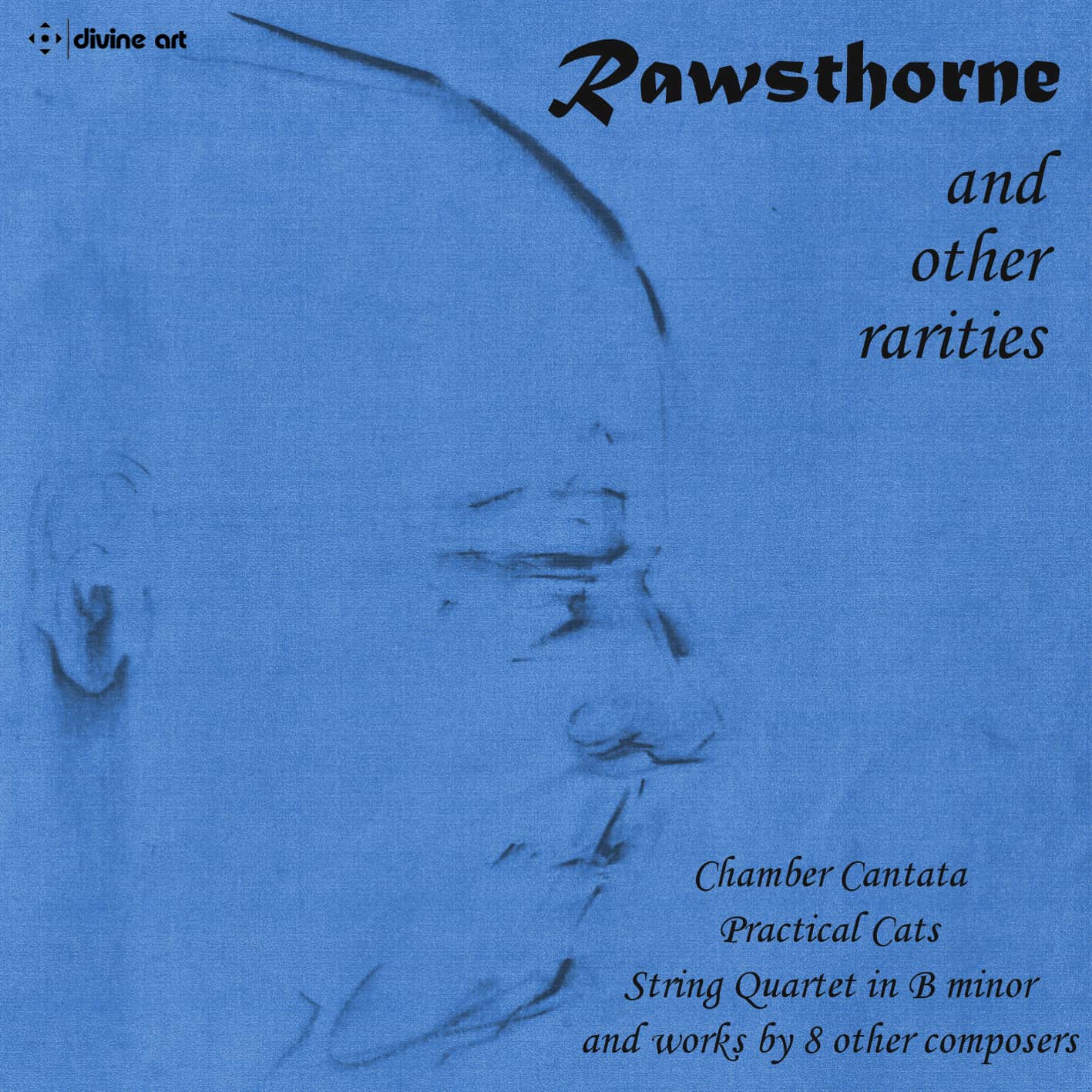
    The playing and the singing by all the performers on this adventurous CD is ideal in every way. I loved Clare Wilkinson’s voice, especially in Rawsthorne’s Chamber Cantata. The Solem String Quartet play with clarity and commitment in the String Quartet. The recording is excellent. John Turner not only gives first-rate performances on the recorder and the bamboo pipe, but also wrote the liner notes which are informative and entertaining. I was disappointed in the CD cover: reading black text on blue background is not good for ageing eyes. Texts are given for the Rawsthorne Chamber Cantata, but not for the other songs. I understand the copyright issues with T.S. Elliot. And finally, I was surprised to read that Matthew Arnold is included in the Galaxy music publisher’s listings of British Music.

    All in all, this is an extraordinary disc. Not only does it do what it says on the tin and introduce the listener to some rarities by a variety of better-and-lesser-known composers, it gives Rawsthorne enthusiasts two previously unrecorded works, the Chamber Cantata and the String Quartet in B minor and includes an incarnation of the whimsical Practical Cats which deserves all success. Finally, the entire CD is dedicated to the memory of John McCabe (1939-2015). It is a most worthy tribute.
  • Rawsthorne rarities – MusicWeb review

    This collection began life as an intended companion for ‘A Garland for John McCabe’ (DDA 25166). It too is dedicated to the late John McCabe (1939-2015).

    Rawsthorne bears away the laurels with three of his works. These together run to approaching 50 of the disc’s almost 80 minutes. The first of these is a song-cycle from 1939. The generic anonymity of the title Chamber Cantata does less than justice to the music. It was thought to have been lost but then discovered among the papers of American composer Halsey Stevens. This is emotionally chilly and thorn-barbed music although ending in warmth. The active instrumental brocade provided around Clare Wilkinson’s searching mezzo by the adept Solem Quartet and by Harvey Davies’ harpsichord does nothing to blunt the effect. In terms of song-style Rawsthorne is in this case closer to Britten than to Geoffrey Bush. This work, which sets four English medieval poems, will appeal if you want less of the brimming melodious in your English poetry settings and more in the way of cool restraint. I last heard this excellent singer – consistently attentive to the shifts of mood and the demands of enunciation – in the Signum collection of the songs of her father, the choral conductor and composer Stephen Wilkinson.

    Here Practical Cats is heard in the composer’s piano reduction. This compares with the better known orchestral version recorded by Rawsthorne with Robert Donat in the 1950s and more recently redone by Simon Callow for Dutton. Peter Lawson invests the score with care and whimsy, as does Mark Rowlinson who avoids being arch. He catches the music-hall innocence (Berners-style), guileful stagecraft and caricatured accent opportunities. Rowlinson may be better known as the tenor at the centre of John R Williamson song collection as well as Dunelm’s Wagon of Life anthology. He has also sung in the Naxos Parry choral collection and in the classic EMI recording of RVW’s Sir John in Love.

    Rawsthorne’s String Quartet of 1932-33 is in three movements. After an emotionally ruminative and subdued Molto Adagio Fugue comes an eventually bustling Andante – Allegretto. With its dancing cheeriness, at times it might have been written with an ear cupped towards the Dvořák and Smetana quartets. The stabbing athletic sprint of the final Molto Allegro Quasi Presto is at times filmic – Rawsthorne was no slouch when it came to music for the silver screen – haunting, exciting, cool and eager. Outside the numbered canon (Naxos), it was premiered in public at the Macnaghten Concerts in 1934. It is the second of two unnumbered quartets from the 1930s and is different from the quartet recorded by the Flesch Quartet for ASV.

    Wilkinson’s bell-like clarity entwines the next two songs – the joint work of Basil Deane and Raymond Warren in The Rose Tree and I am of Ireland. These frankly folksy pastorals work easily on the ear. The second song has some Warlock-like witchery but its opening phrase suggests a link with the traditional Irish air, Women of Ireland, so well used by The Chieftains in the Barry Lyndon film and in the work of that fine Irish composer Sean O’Riada. The Vaughan Williams song The Willow Whistle is for bamboo whistle. The treble voice is here rapturously piped by Clare Wilkinson. RVW’s Suite for Pipes (rarely heard) was taken up by David Munrow and its sound is clearly related to this song. Karel Janovický’s The Little Linden Pipe – a set of evenly-proportioned and tuneful variations – was written for John Turner in 2006.

    As you can see, this disc is fully loaded. Halsey Stevens’s Sonatina Piacevole for recorder and harpsichord has a high calorific value and counts its five minutes in smiles but lightly touched with an archaic accent. Another American, Donald Waxman, wrote the completely engaging and folksy-jazzy Latin-American Serenade and Caprice. It’s a quirky piece – a merry-go-round of the placid and the flighty. Waxman was a student of Alec Rowley and his music is, in this case, for recorder and harpsichord. It is dedicated to John Turner.

    Bliss’s 1920s Buckle is one of Three Romantic Songs to words by Walter De La Mare. It’s very short and this version with string quartet is new to the catalogue. This bustling jolly song was recorded with piano in Hyperion’s two-CD set of the Bliss songs. We end with two short envoi tributes to John McCabe. Malcolm Lipkin’s The journey for solo recorder is agreeably hesitant – unsure of the way? David Ellis is the composer of Mount Street Blues. With its mingling memories this piece ends the disc on a very personal and kindly caressing note.

    The liner essay is well worth the read. It’s packed with useful information that enhances the experience. Even so, I could have done without ‘miniscule’ instead of ‘minuscule’ and ‘Matthew Arnold’ instead of ‘Malcolm Arnold’. The sung texts of the Rawsthorne cantata are printed but not the words of the other works. The back insert of the disc carries the titles of the works but the font is very small. It does not help that they are printed black on a matte dark blue – all but impossible to read *****. The booklet lists the tracks much more accessibly.

    Everyone associated with this disc brings both high skill and poignant feeling to this musical treasury. It’s well done with the few minor documentary blips mentioned above. This is a CD that appeals to several constituencies: enthusiasts of John McCabe (and we will hear more of his music, I hope – NMC have just brought out another McCabe disc), Rawsthorne and indeed John Turner and Clare Wilkinson. We should also note the other artists and subscribers who gave unstintingly to make this distinctive disc happen.

    ***** note – we checked – I find it easy to read – the background is light blue not dark….

  • Rawsthorne and Other Rarities

    Rawsthorne and Other Rarities

    In one sense this is a sequel to the recent release ‘A Garland for John McCabe’ (DDA 25166) – originally intended as a 2nd disc in that set, but it grew to be a full album in its own right, and is also dedicated to McCabe with first recordings of works by McCabe’s fellow composers. Just as importantly it is a feast of fine music by British and American composers, all (except one very short track) recorded for the first time, including principally music by Alan Rawsthorne – the early and jolly String Quartet in B minor, the Chamber Cantata, and the piano version of the remarkable ‘Practical Cats’.

    Clare Wilkinson is receiving rave reviews for her work and is a mezzo with beautiful tone; veteran baritone Mark Rowlinson is the fine reciter of ‘Cats’. John Turner, one of the leading recorder players of today and former member of many world-renowned early-music ensembles, and pianist Peter Lawson, another highly regarded performer who has played with most top British orchestras and has a long and distinguished recording and teaching career, are joined by keyboard maestro Harvey Davies and the very fine Solem Quartet.