Catalogue Connection: 25191

  • Fanfare review: Helen Habershon ‘Found in Winter’

    The works on this disc might well fall in the category of “New Age,” or “Salon Music.” I do not mean the label “Salon Music” in any pejorative way. I have nothing against salon music, and even released a disc of same.

    Much of the music on the disc is the sort that one can envision being played while sitting in a garden sipping some tea. There is an unassuming simplicity in the music. At times the music sounds more like an improvisation than a through-composed work. That is not to say that there isn’t charm to some of it. It struck me that Habershon was trying to capture some imagined vision of an earlier, gentler time. There is very little in the way of what one might call “dissonance.” Farewell Ice and Requiem-Anna Akhmatova offer some passages of dissonance that come as a surprise. Other than those exceptions, the music presents little challenge in its harmonic vocabulary. From time to time the tunes are quite lovely; however, I found that the music did not sustain my interest. It is a succession of pleasant tunes that offer little in the way of contrast. To my ears, the most engaging piece was Day of Judgement. It reminded me of something that one might encounter in one of the lyrical pieces on a Mannheim Steamroller album.

    The composer is also the clarinetist in several of the compositions. She has a fine tone and is a very good player. It would be wonderful to hear her in some challenging repertoire. All of the players do an excellent job, even if the music is no more challenging than playing some slow-moving accompaniment figures. The recorded sound is appropriate to the intimacy of the music.

    The music is “what it is.” There seems to be no other aspiration other to being charming and uncomplicated. No doubt her music will find an appreciative audience. It just isn’t my cup of tea.
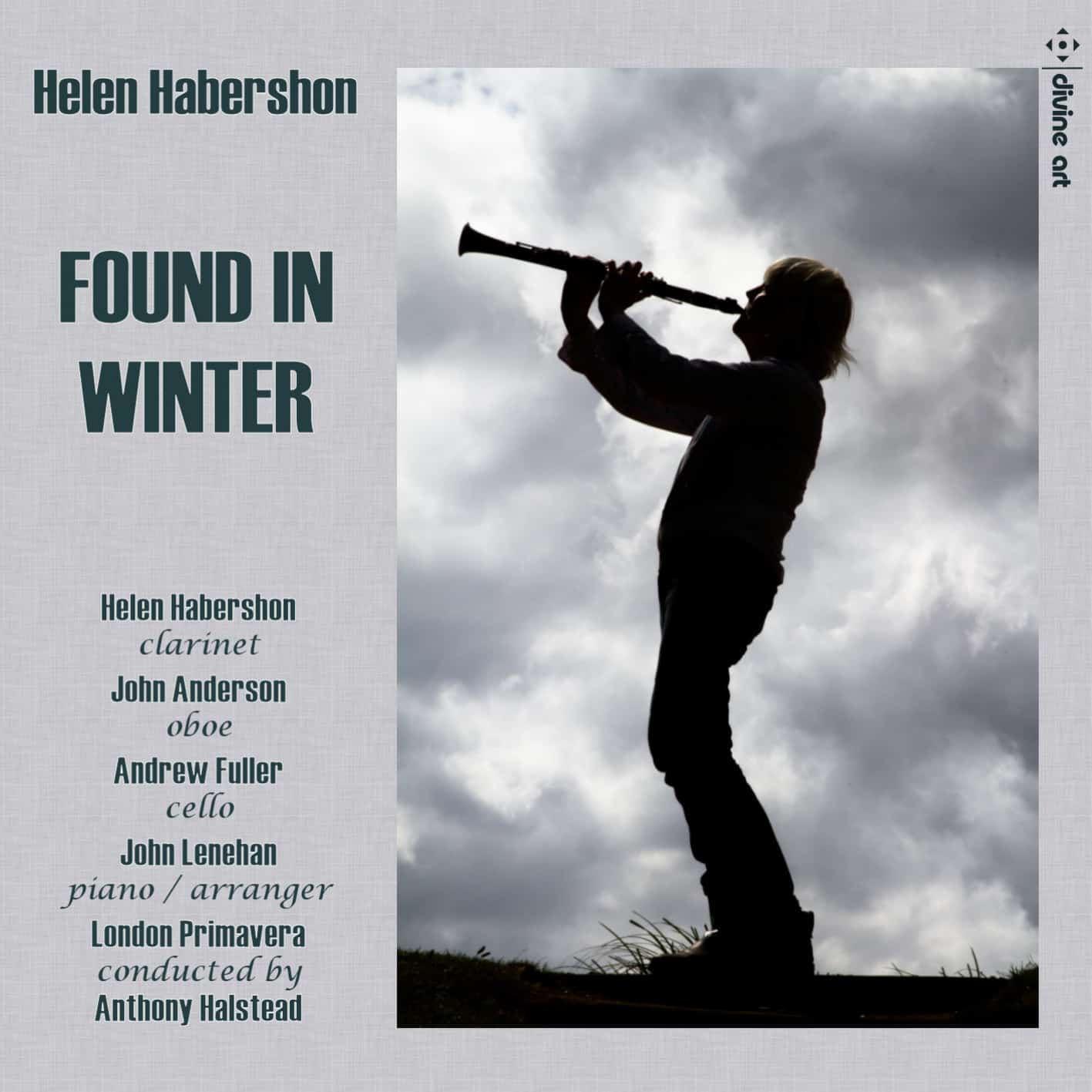
  • Found in Winter on Review Corner

    This is a very accessible collection — perhaps too much so for people who view themselves as “classical music” fans. The cd has television mini-series written all over it. Moby famously licensed every track from Play and we could see a similar thing happening here.

    Habershon is inspired by the natural world and it is the main source for her music. Found in Winter is meant to express “the many different faces of winter with its varied moods”, and the threat of climatic change, both cyclic and man-made. She is chiefly a clarinettist but after a serious injury to both wrists turned to composition, before picking up the clarinet again to record this album.

    The work is very easy on the ear. It’s got all the instrumentation of classical music but the sound of pop; two previous CDs were album of the month and album of the week on Classic FM.

    The start of opener Winter Arrives could be from Farewell To Kings era Rush, the bit before the band thunders in: expectant strings, piano, Neal Peart stroking his bells. Then, instead of guitar and drums, in comes a gentle tune somewhere between Vaughan Williams and an Irish folk air. It’s the music for a period drama’s opening scene as the heroine and her sisters run through fields playing happily, while mummy lays out the picnic. The title suggests it’s meant to evoke snowy flurries but it’s more spring and summer.

    Track two is Far Out In The Ocean and has the feel of standing on the deck with the wind in your face. The mini-series: two lovers are on separate boats going in opposite directions staring out at sea. A note of optimism suggest they will meet again. You get the drift. Enjoyable and easy to listen to.

  • Planet Hugill review of “Found in Winter”

    The album’s title seems to be intended as generically evocative rather than particularly descriptive, and whilst there are Winter themed pieces on the programme such as the engaging opener Winter Arrives, there are also pieces which Habershon describes as reflecting ‘the winter of mankind’, notably Requiem – Anna Akhmatova and the Pushkin-inspired The Bronze Horseman. But overall the album seems more a collection of recent pieces than one exploring a particular theme.

    In style the music is flowing and melodic, often with quite an open textures and works such as Winter Arrives have an attractive rhythmic impulse. You can see why the music is popular on Classic FM as it is engaging and approachable with an instinctive feel to the melodic lines. All the works on the disc have been arranged by John Lenehan, so I am not certain how much is Habershon and how much Lenahan but the results are always attractively appealing with some imaginative touches to the orchestration.

    Habershon’s inspiration seldom takes her to the darker side and even the Anna Akhmatova inspired piece rarely, if ever, plumbs the depths. Her evocation of Pushkin’s The Bronze Horseman, written for just clarinet (Habershon), cello (Fuller) and piano (Lenahan) comes closer, perhaps because it is not afraid of stripping things back and the work opens with the solo clarinet evoking the mud-flats of the Neva.

    This is perhaps an album to dip into rather than listen from beginning to end. In terms of style, I am not sure that the term cross-over is particularly helpful here, and perhaps we need to resurrect the rather neglected term light-music.

  • Found in Winter – Music by Helen Habershon

    Found in Winter – Music by Helen Habershon

    Helen Habershon’s writing is instinctive and inspired. She is passionate about ‘our incredible natural world’ and it is the main source for her music. ‘Found in Winter’ expresses the many different faces of winter with its varied moods, and the ever-present threat of climatic change both cyclic and man-made.
    The music has been wonderfully arranged for small orchestra (most tracks) by John Lenehan and is unashamedly tuneful, though never simplistic; impressionistic and almost visual in its impact. This album follows two previous CDs which were Album of the Month and Album of the Week respectively on Classic FM.

    Helen is principally a clarinettist with a distinguished international concert, radio and TV career; after a serious injury to both wrists, she turned to composition and has never looked back, though now once again able to perform – as she does on this album.

    The performers on the album have all established themselves as leading lights; John Anderson is one of the most recorded oboists in the world and professor of oboe at the Royal College of Music; Andrew Fuller left the RPO to follow a very successful career in solo and chamber performances, and John Lenehan has appeared on over 70 albums including solo recordings for Sony, receiving many plaudits. The London Primavera was formed in 1986 and consists of the foremost chamber musicians in Britain. It has appeared at many international festivals, has made two TV series, and several recordings. Anthony Halstead has made over 50 CDs all around the world with leading ensembles and is one of Britain’s most sought-after and versatile conductors