Catalogue Connection: 25221

  • Graham Lynch’s ‘Seria Ludo’ DDA 25221 – Chronicle review

    This is fine piano playing; the sound is crisp and perhaps a little dry but the cleverness is in making what is complex music sound simple; it’s both accessible and detailed, and it creates atmosphere. It’s hard to pin down what makes it so listenable; listen too hard and you get a little lost in it.

    Seria Ludo (“Serious matters treated in a playful spirit”) is the title of the first piece from White Book III, a set of five works inspired by the paintings and woodcuts of British artist Christopher Le Brun.

    In his sleeve notes, the composer says that he likes music to be clear enough to the listener that “structures can be perceived” and that “each individual idea should have a sharply defined identity,” which we guess explains the fact that there is always something obvious and melodic to listen to; he also incorporates dance rhythms, citing the example set by Purcell, Mozart, Schubert and Chopin who had “dance rhythms ghosted in the background, or leaped to centre stage in waltzes and mazurkas,” another reason the music is approachable.  Small waltz fragments are sometimes tucked away in the music, he says, bringing both familiarity and a sense of movement to the listener.

    The music is played by two American pianists: White Book II is performed by Albert Kim who gave the US premiere in 2018 and is associate professor of piano at the University of Central Missouri. The rest of the programme is presented by Paul Sánchez, a  Fulbright Fellow and New Piano Collective artist.

  • Piano Professional Review: Graham Lynch’s ‘Seria Ludo’ (DDA 25221)

    Performed by Paul Sánchez and Albert Kim Divine Art (DDA 25221) From the first note to the last, listeners to this new release are drawn into the unique and distinctive sound world of the piano music of Graham Lynch (b.1957). The broad range of influences behind these pieces are infused and distilled to create music of the highest integrity, rich in imagination and harmonic, melodic and rhythmic innovation. For the White Book series, Lynch draws together inspiration from Couperin’s Ordres and Debussy’s Préludes, and this is evident through the balance between vivid evocation and refined craftsmanship. In some respects, White Book 3, which opens this disk, has parallels with Maurice Ravel’s Miroirs, in terms of its scale and design. The five pieces depict the paintings and woodcuts of Christopher le Brun, and although it is perfectly possible to appreciate each piece in its own right, a satisfying sense of cohesive narrative runs through the whole set. Absolute Inwardness is a substantial work, through composed and improvisatory in nature, in style akin to the Baroque keyboard prelude. The performance here combines the necessary sense of freedom and spontaneity, but without ever losing direction or integrity. The intensely reflective nature of this music is at the forefront of this fine performance. The Couperin Sketchbooks, seen as a companion piece to Absolute Inwardness, is more sectional in design, moving the listener through a sequence of episodes and dances which hark back to the elegance of Baroque rhythms and melodic shapes, but through a very individual contemporary lens. The majority of the music on this disc dates from 2020, but the earlier pieces which complete the recording are no less enticing and are also infused with imagination and craft of the highest level. White Book 2 (2008) explores a range of real and imagined landscapes through a rich tapestry of musical invention. Ay!, an introverted tango dating from 2006, merges subtle dancing qualities, all the while conveying the intended sense of hopelessness and desolation. Throughout this recording, the pianism is of the highest calibre (Albert Kim in White Book 2 and Paul Sánchez in the rest), and the sound quality excellent – rich, but without obscuring transparency, and clear but never dry. This recording is a very welcome addition to the catalogue of one of the most original voices in 21st century British music.

  • Seria Ludo: Graham Lynch piano music DDA 25221 – Fanfare review

    This is not the first time Graham Lynch and Francois Couperin have collided on disc—or on Divine Art, for that matter: Harpsichordist Assi Karttunen’s disc presented a string of Couperin pieces against seven pieces by Lynch (with one overlap: the short piece Ay!, so if you own both discs you hear it on both harpsichord and piano; Fanfare 38:5). Entitled Seria Ludo (serious matters treated in a playful spirit, the title of the new Divine Art disc takes from one of the pieces in the third White Book), this recording offers a superb introduction to Lynch’s pianistic output.

    The first piece is White Book 3, a recent collection of five movements. It is an amazing achievement in that the music sounds simple, yet holds multiple mysteries; there was a lot going on to get the music to this concentrated state. The second piece, “The Hesperides,” is magnificent, the power of its harmonies emphasized by their internalization in the final measures. The music moves from loud to quiet, but somehow intensifies. The pieces of the third White Book were inspired by the abstract paintings of newly knighted (2021) Portsmouth-born artist Sir Christopher Le Brun (a master of color). It is Lynch’s aphoristic responses that are so fascinating; the sense of play in the fourth movement, “The Rhine,” for example. And what a beautiful performance that movement receives from Sanchez; grand, noble, reflective, yet shot through with internal light, something faithfully reflected by the superb recording from Divine Art. The composer himself admits a proclivity for French music and there is a delicacy here that reflects that, but also he acknowledges a more “Northern European sensibility” in “The Rhine.” That feeling of concentration, of distillation, is most pronounced in the final “Landscape with Angels,” the only movement not based on just one single Le Brun painting. Two paintings are reproduced in the booklet (“Travelers in a Landscape,” and the beautiful “The Hesperides.” Throughout, it is evident that Sanchez enjoys complete resonance with Lynch’s output; there is the most blissful sense of comprehension, of melding even, in these performances.

    The very end of White Book 3 hangs in the air. The hard touch required by the opening of Absolute Inwardness comes as a nice contrast but subsides to reveal a piece that again has one foot in the physical and another in the etheric; the composer links the atmosphere of the piece to a “world of intense feeling and subjectivity reminiscent of Novalis and Holderlin.” What is magnificent about Sanchez’s performance is his absolute lack of hurry; the music just unfolds.

    The juxtaposition of Absolute Inwardness and The Couperin Sketchbooks is inspired—chalk and cheese, but taken from the same cupboard, one might say. In the latter work, the themes are much more immediately perceptible (and that French influence is very clear, sometimes heading towards Impressionism). Lynch intersperses passages from Couperin’s own works with his own voice, avoiding the more famous of that composer’s output, and at the very end quoting from an earlier work of his own, the harpsichord Pastorale, notated in the manner of an unmeasured prelude. Sanchez’s control of his instrument at the very lowest dynamic level is highly commendable. A gripping performance of a work that is compositionally fascinating in its juxtaposition of worlds; and despite that thematic clarity, the overall envelope remains elusive. A quick word of praise is in order for Sanchez’s finger evenness, a prerequisite for this piece and heard in delicious abundance.

    The Priory disc Undiscovered Islands includes performances, by the excellent Mark Tanner, of White Books 1 and 2. Book 2 was written for Tanner and first performed at Wigmore Hall (the U.S. premiere was by Albert Kim, who plays it here). The performance of White Book 2 by Tanner is remarkable; as it is the only overlap, there is no real reason not to hear and own both discs; after all, you will have the performers who gave the UK and U.S. premieres. Tanner plays with disarming textural clarity in “Undiscovered Islands,” Lynch’s portrait of an imagined society. And here is where the swings and roundabouts begin. Kim’s performance is a fine one (if not quite as captivating as Tanner’s), but the recording on the new Divine Art disc is notably finer. The second movement, “Night Journey to Cordoba,” inspired by Lorca, is full of a sense of dread of an as yet unrealized (and possibly imaginary) outcome, and here Kim takes the laurels; his staccato repeated figure at the opening is more insistent, more foreboding, and he sustains the atmosphere, and musical argument, better than Tanner. The third movement, “Dragon,” takes its inspiration from Chinese dragon designs and so has a certain lightness. Here both pianists seem perfectly attuned to Lynch’s demands; perhaps Kim just pips the post with an extra sprinkling of draconic magic. The set has a “still centre” in Lynch’s words (and English spelling): the fourth movement, “Inner Moon,” where notes quietly disturb a prevailing silence. Kim takes all the time in the world, relishing Lynch’s sometimes ravishing harmonies; Tanner is a touch more hard-edged, a touch more objective.

    Comparison between the two is a riveting experience as, although Tanner’s center is certainly still, it is simultaneously quite disturbing, while Kim tends more towards a peace profound. The fourth movement is entitled “The Sadness of the King,” and includes a hint of melancholic tango; Kim’s is the more dolorous performance of the two, and I hear more of the tango element. Interestingly, Lynch opts to end the book in upbeat fashion, with “Toques,” an Impressionistic evocation of a guitar. Fine though Kim’s performance is, there is the odd moment that sounds just a touch studied, a little studio-bound; here it is Tanner to whom I would return. One should feel spoilt, though, to have two such remarkable artists in the service of this fine music. So, buy both discs: Mark Tanner, incidentally, is a notably underrated pianist and musicality underpins everything he does.

    The final work is the 10-minute Ay!. A tango nuevo piece in its original harpsichord guise, in Assi Karttunen’s performance it is somewhat akin to hearing a dance preserved in aspic. The 3:3:2 rhythm, so beloved of Piazzolla, is present and correct, but we are many air miles away from the dance’s origins. The title refers to a Spanish ejaculation. There is no mention of an expanded version, but the harpsichord recording lasts 3:42 and this piano one, 10:04. Sanchez’s performance is beguiling; and the performance on piano actually takes us closer to the dance’s roots given the multiplicity of tango-based pieces for piano.

    This is a remarkable, and satisfying, disc of Graham Lynch’s engrossing piano music. I did say “buy both discs” earlier in reference to the Tanner, but really, add the Karttunen for a hat-trick and enjoy that brilliant harpsichord juxtaposition of Lynch and Couperin as a bonus.
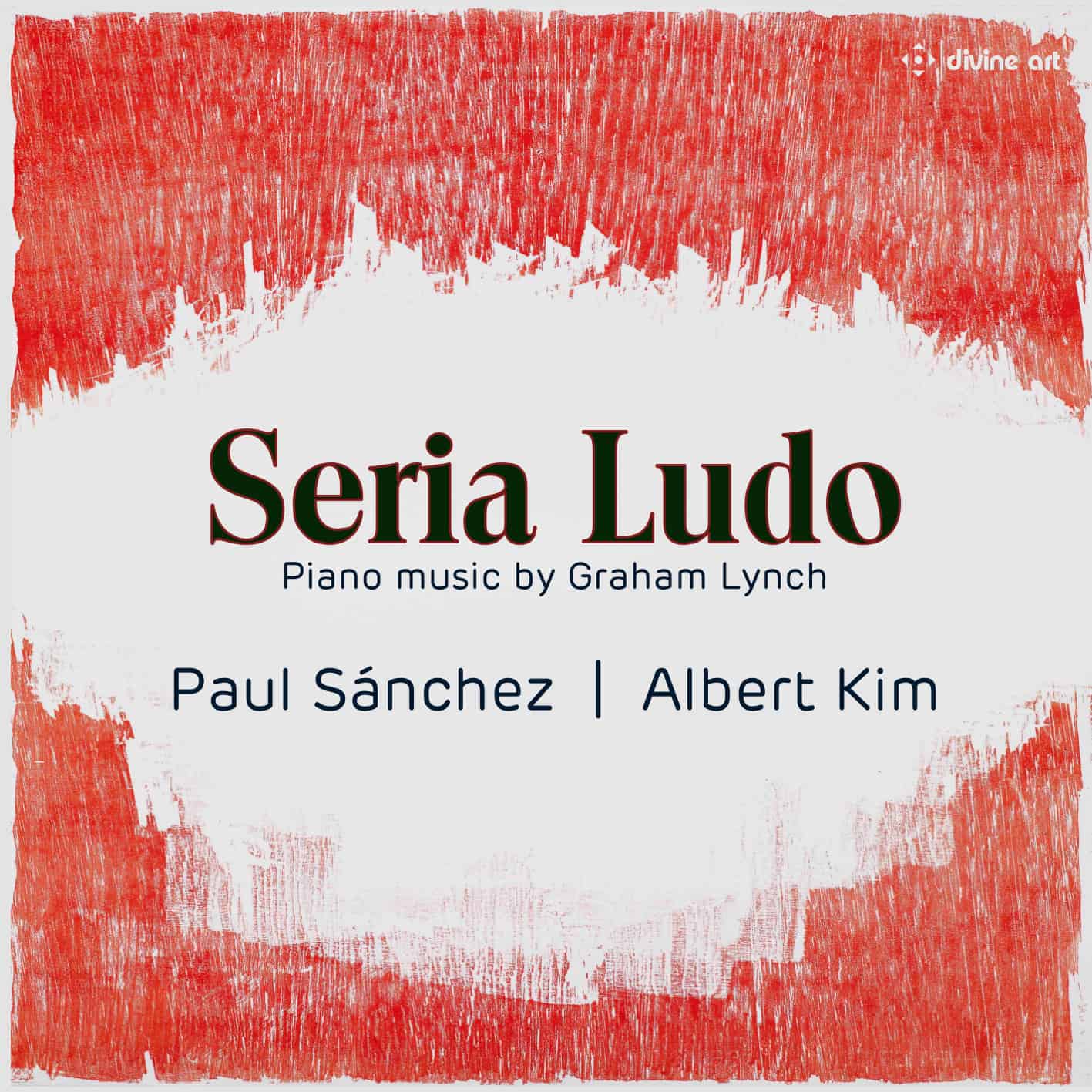
  • Graham Lynch’s ‘Seria Ludo’ piano music – MusicWeb review

    I began exploring this CD with the engaging The Couperin Sketchbooks completed in 2020. These are neither arrangements of the French master’s clavier music, nor pastiche recreations. Lynch has “juxtaposed” his own music with short fragments taken from François Couperin’s Pièces de Clavecin, a collection of twenty-seven “ordres” (or suites of dances), published in four books between 1713 and 1730. In Lynch’s Sketchbooks there are several short “movements”: The Majestic Arrival, The Graceful One, The Departure, Sylvie or the Virtuous One, The Flowering Orchids, Waltz, The Restless One, Acrobats and Aerialists, Zephyr, Light and Dark, and Pastorale. The composer has summed up the resultant effect well: it is as if two compositional worlds “coexist side by side” – or is it two planets gently colliding? Not being a cognoscenti of Couperin’s music, I did not recognise any of the “given” tunes; besides, Lynch admits that he has chosen “somewhat ordinary moments from Couperin’s pieces that have the essence of his style, rather than better known and more easily recognisable themes.” Furthermore, I would not have guessed that any form of Baroque exemplars underlay this music; if anything, it strikes me as nodding towards Romanticism. It is this eclectic mix that is so fascinating in Lynch’s Music.

    I turned to the earliest number on this disc, Ay! which I guess translates as “Oh!” (2006). Lynch states that it was “composed for harpsichord many years ago when I was writing some tango nuevo pieces, a brief diversion on my journey from atonal music through to where I am now.” It is not hard to hear the influence of Astor Piazzolla, the popular Argentine composer. This is a slow, lugubrious work which hypnotises the listener, and does not outstay its welcome.

    The last of the “character pieces” is Absolute Inwardness. This was completed in the early days of the Covid pandemic. The liner notes give the scholarly underpinnings. However, I guess that many listeners who have not engaged with the various philosophies of Georg Wilhelm Friedrich Hegel, Sir Christopher Le Brun, Georg Philipp Friedrich Freiherr von Hardenberg (Novalis) or Friedrich Hölderlin will still manage to enjoy this number. I, for one, was in places reminded of Debussy, but I am sure that this is the result of my having an overactive imagination. Whatever the intellectual ramifications, this is lovely, deeply felt and typically introspective music. The occasional emotional outburst and explosions of pianistic Romanticism, only serve to highlight the work’s pensive mood. Once again, this is mesmerising and quite beautiful music.

    The White Book 2 was completed in 2008. There are six beguiling movements. First is Undiscovered Islands. This concept has always appealed to me since being a boy; I once walked out to the tidal Rough Island in the Solway Firth and had all twenty acres to myself. I was a great explorer…

    Lynch’s take on this is to evoke the music of an imaginary culture (well within the Western musical tradition). It balances lyricism with percussive playing. Next is Night Journey to Córdoba; this evocative title takes its inspiration from a poem (Song of the Rider, perhaps?) by the Spanish author Federico Garcia Lorca. There is nothing here of the rhythmic vitality of Isaac Albeniz’s Córdoba, Op. 232, No. 4, but it majors on matters full of “foreboding and despair” and is truly haunting. Lynch takes the listener on a trip to China with Dragon, not a fire-breathing figment of the fairy-tale writer’s imagination, but the musical presentation of an image of the “light and filigree dragon designs of China,” with all their intricate twists and turns. There is no sign of what solar system the Inner Moon is found in. The composer described this static piece as “the still centre of the set; enigmatic and weightless, its harmonies defy gravity, and leave the music floating in the air.”  Once again, Lynch turns to his beloved tango, for the re-creation of The Sadness [Sorrow] of the King. This title is taken from Matisse’s last self-portrait, where he paints himself as David playing his harp before the melancholy King Saul. Lynch’s music is quite perfect but I do not think it would have cheered up old Saul. The final piece in White Book 2 is Toques, a “swirling, impressionistic fantasy of flamenco guitar playing.” The title does not refer to chefs’ hats but is Spanish for “touches.”

    François Couperin is the “impetus” behind White Book 3 (2020), a collection of miniature tone poems which echo the redolent titles given by the Frenchman to his clavecin pieces. Lynch has turned for visual inspiration to the art of Portsmouth-born painter, sculptor and printmaker, Sir Christopher Le Brun (b.1951). He writes that Le Brun’s “art is its very wide range of emotional and technical outcomes, which includes both abstract and figurative paintings, as well as sculpture and woodcuts; each artwork has a clearly defined field of operation whose possibilities can encompass landscape, nature, archetypal imagery, and much more.”

    The opening number is the extrovert Seria Ludo (Serious Play?) where movement and syncopation are ever-present. Le Brun’s eponymous painting presents “serious matters treated in a playful spirit.” This is followed by the pensive The Hesperides. The music here seems a little too “pesante” for what is after all “clear-voiced maidens who guarded the tree bearing golden apples”, but then there was a dragon, Lagon, on guard too…There is a copy of the painting which provoked this piece printed in the liner notes: it does nothing for me. Glow seems to shimmer and sparkle from end to end. The composer does not deny “his predilection for the qualities of French music” here. The Rhine is the longest movement in the set. It creates a musical picture of this long river and its multi-layered musical and literary associations. From the Lorelei to Richard Wagner, it is all here. This is a serious and contemplative work. The final number is Landscapes with Angels. Here Lynch suggests that “Angels walk among men, and the world is momentarily transformed by a heavenly presence.” The connection here with Christopher Le Brun are the sketches he made for the Parables on display in Liverpool Cathedral.

    In general Graham Lynch’s White Books remind me of Claude Debussy’s Préludes in their use of pictorial and literary imagery, and the general unity of thought juxtaposed with a diversity of style.

    It is unnecessary to include a biography of Graham Lynch as his excellent webpage will give the listener all they need to know. It is helpful to recall that the composer shows an extremely eclectic style, ranging from tangos, by way of serialism to a post-modern Romanticism.

    The liner notes feature an introductory essay by the pianist, Paul Sánchez. The notes on the music are by the composer. There are brief resumes of Lynch and the two pianists. The booklet is illustrated with three art works by Sir Christopher Le Brun as well as photos of the principals. I think a more imaginative illustration for the CD cover would have made the presentation a wee bit more attractive. I have noted before that Lynch’s prose tends to be on the esoteric side; it is assumed that all his listeners are au fait with a whole sweep of artistic, political, and literary philosophies, which might not always be helpful.

    The performance is bewitching from start to finish, although there is nothing to compare it to. The sound is ideal.

    This is an appealing CD. All the music here is accessible, well-written and musically rewarding.

  • Seria Ludo – Piano music by Graham Lynch

    Seria Ludo – Piano music by Graham Lynch

    English composer Graham Lynch (b. 1957) is a master of his craft, a composer whose writing is exceptionally detailed, with specific articulations and layerings; not designed for show, but for better expressing the subject matter of his works, many of which are highly impressionist. Much of his work also refers to the baroque French composers such as Couperin, a particular subject of Lynch’s study. The two suites from the White Book series are based on artwork by Sir Christopher Le Brun and other major artists. The music here ranges from a work derived and inspired by the baroque keyboard works of Couperin, through pictoral suites to the flamenco-tango Ay!

    The music is played by two American pianists: White Book 2 is performed by Albert Kim who gave the US premiere in 2018. He was a Carnegie Hall Rising Star and has performed widely throughout the US and China, currently Associate Professor of Piano at the University of Central Missouri.

    The rest of the program is presented by Paul Sánchez, a Fulbright Fellow (2005-2007) and New Piano Collective artist whose concerts and recordings have amassed generous praise: “one of the most beautiful discs in my collection..” – Fanfare; one of his discs reached No. 1 on the Billboard Traditional Album chart.