Catalogue Connection: 25223

  • Clarinet and Saxophone review ‘From Russia’ DDA 25223

    I’ve always found the French and Russian composers of the Romantic and early 20th century to be the finest of orchestrators, producing wonderful solos and small ensemble passages for woodwinds within large-scale symphonic, concertante and theatrical works. Despite many superb melodies for clarinet in the Russian symphonic repertoire, there is very little Russian music for solo or accompanied clarinet. Off the top of my head, I could bring just two concertos to mind, those of Rimsky-Korsakov and Stravinsky, and a search revealed very few notable additions.

    Conductor, composer and arranger Robin White had similar thoughts. A Russian Suite, the central work on this new disc From Russia on Divine Art Records, is surrounded by new arrangements of familiar works for clarinet and orchestra. Royal Ballet Sinfonia principal clarinettist Ian Scott was approached initially by White some 10 years ago, and the project finally took shape with the recording sessions taking place during 2020 and 2021 when restrictions allowed. All the arrangements are recorded here for the first time.

    White describes having written A Russian Suite ‘for the hell of it’, which is as good a reason as any. The work emerged due to a combination of factors. The awareness of a dearth of Russian clarinet repertoire and his work with many clarinettists in the past made the instrument a clear choice, while the selection of folk melodies lent themselves to a suite rather than a traditional concerto. The work had been performed before, but this was the first opportunity to place it on record.

    It consists of five movements, each reworking a traditional Russian dance or song. None have specific titles, but further details are given in the sleeve notes. Movements 1 and 5 are the dances – 1 is a dance using the melodic ‘The Little Apple’ from Gliere’s opera The Red Poppy; 5 is a gopak, the clarinet playing call and response with the orchestra and a joyous sound after the three minor-key songs before. Of the songs, 2 and 4 are slow, beautiful, sad melodies – the warm, dark sound of Scott’s low register exploited by White. Although 3 is a song, it could easily be a lively dance. All three songs were familiar, but I couldn’t recall the titles. The large orchestra – double winds minus clarinets, full brass, harp and a range of percussion – is used effectively. The percussion adds some unique colours, including subtle use of the vibraphone in movement 2. However, while orchestrating these folk songs has already and intentionally transported them away from their Russian roots, perhaps the vibes was a step too far. The beautiful dark cor anglais is a wonderful sound, and in fact, White’s ability to go from minimum soloist support to full, tutti orchestra is one of the delights of the suite. The clarinet is always heard clearly within the texture.

    The Rimsky-Korsakov Clarinet Concerto was originally written for clarinet and military band. White’s arrangement here is a thoughtful reworking, with the strings taking the original clarinet section lines. This spirited performance is perhaps representative of a more forward-looking and positive work by a Russian composer. It is a lovely concertante work, and perhaps not performed as often as it should. The remaining pieces are arrangements of already familiar tunes from Mussorgsky and Tchaikovsky.

    Mussorgsky’s Sorochinsky Fair consists of two delightful movements, a slower ‘Introduction’ and a familiar ‘Gopak’. While the clarinet has a prominent role, it feels much more orchestral with solos shared between the woodwinds.

    The four Tchaikovsky pieces are crowd-pleasers but have been orchestrated sympathetically. Andante cantabile from String Quartet No 1, originally a cello feature, comes first and is carefully performed using only strings and harp, with the low register of Scott’s clarinet again exploited. Two short works for solo piano, Humoresque from Op 10 No 2 and Valse from Album for the Young, transfer well to orchestra – a tribute to White’s orchestration as well as appreciating the quality of Tchaikovsky’s originals. I particularly enjoyed the addition of sleigh bells in the ‘Humoresque’. In between the two piano works we have None but the Lonely Heart, a song from Six Romances Op 6 for voice and piano.

    The final piece on the disc, described as ‘a visitor from Italy’, is the Czardas by Vittorio Monti. While not directly Russian, the Slavic feel is the connection required to justify its inclusion.

    White’s orchestrations are delicate at times – allowing the clarinet to come through when required – but also don’t shy away from full-bodied orchestral tuttis with a depth and resonance that complements the original composers. Scott’s beautiful clarinet sound and assured technique clearly demonstrate why he was wanted by White for the project. The Royal Ballet Sinfonia players were distanced further from each other than they would have ideally wanted due to the pandemic, but the ensemble is tight and has certainly not affected the quality.

    Sheet music for White’s arrangements will be published in due course. At the time of writing, I was able to see scores for A Russian Suite, the Rimsky-Korsakov Concerto, Tchaikovsky’s Andante Cantabile and Monti’s Czardas, and while these were in proof form, I was able to see White’s technique in closer detail. I also played through some of the clarinet lines, which were as much fun to play as to listen, so I look forward to seeing these published in the future.
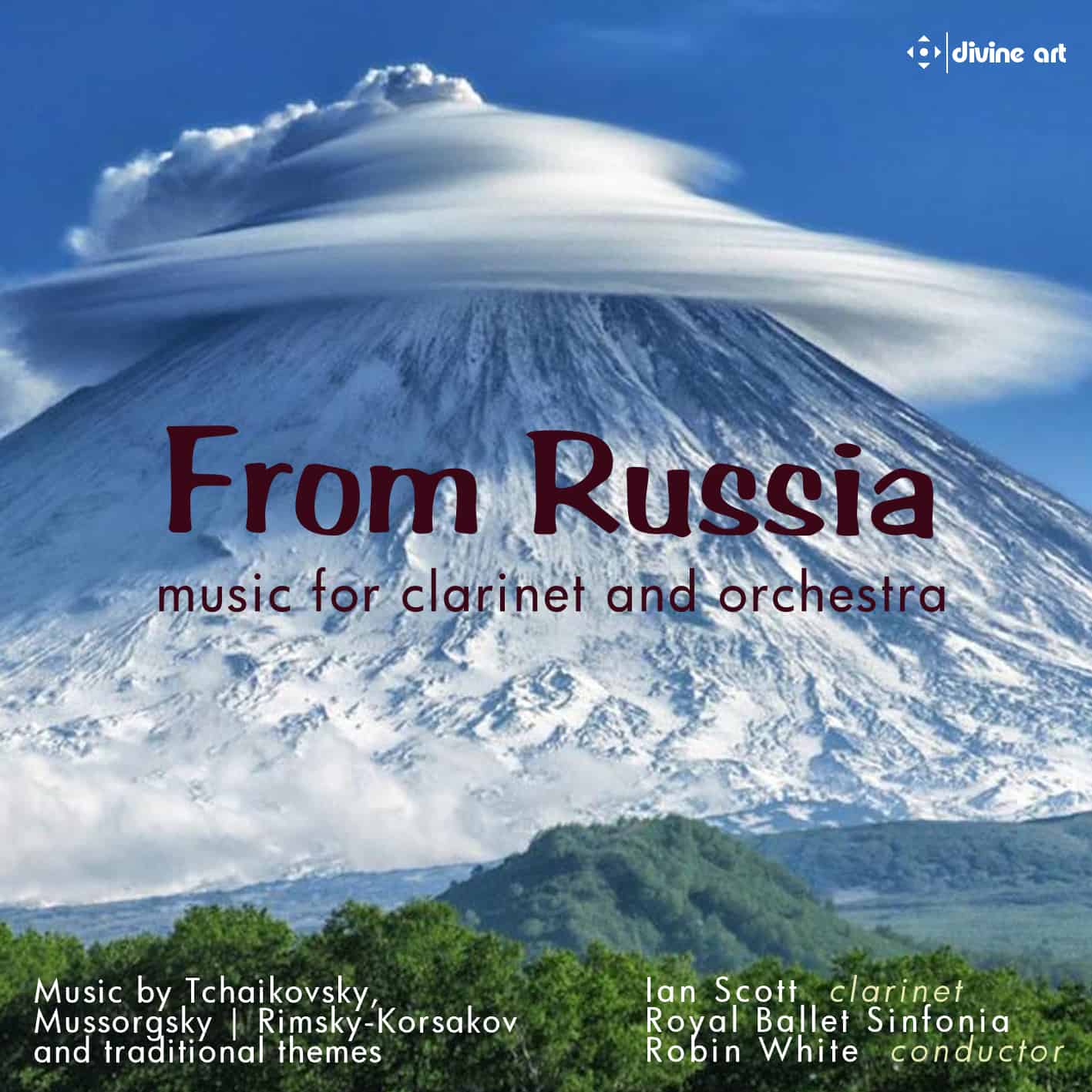
  • From Russia (DDA 25223) – Fanfare review

    This is a disc to enjoy for sheer pleasure. It can be looked upon as a somewhat higher-class pops concert. Robin White has made very attractive arrangements of a number of (mostly) Russian pieces, and clarinetist lan Scott plays them with accuracy and elan. Scott is principal clarinet of the Royal Ballet Sinfonia, the orchestra of the Birmingham Royal Ballet in the UK, and he has enlisted that orchestra for the project.

    The mood is set from the outset with two extracts from Mussorgsky’s unfinished comic opera Sorochinsky Fair, first the lovely, atmospheric Introduction, then an energetic Gopak. The longest work on the program is White’s own Russian Suite, which is a set of arrangements of traditional Russian songs. The first will resonate with anyone who remembers Glière’s ballet The Red Poppy, because the tune (“Little Apple”) is the source of the “Russian Sailors’ Dance.” After this boisterous opening, the suite’s second movement is a lovely lyrical expression of longing, and the third a more lighthearted dance that would sound at home in a family celebration. Russian gloom returns in the fourth movement, but all ends happily with an exuberant Gopak.

    Rimsky-Korsakov wrote his Konzertstück in E flat for clarinet and military band in 1878, a reflection of his time as a naval officer and civilian inspector of naval bands. It is a very attractive work in one movement, and White has orchestrated it sensitively, retaining much of the color of its band origins. The four Tchaikovsky pieces fit the mood of the recital very nicely in White’s arrangements. The familiar Andante cantabile from String Quartet No. 1 doesn’t sound overblown in this expanded arrangement, and Scott’s affectionate shaping of the melody is quite graceful.

    Crucial to the success of this disc is the variety of moods on the program, which alternates between the elegiac, the robust, the tender, and the joyful. The disc ends with a terrific arrangement of the Czardas composed in 1904 by the Italian composer Vittorio Monti. It has been arranged over the years for just about every solo instrument and ensemble. A good performance must be flexible, warm, and sound as if the performers are smiling as they play. Such is the case here, though candidly I felt that the energy level could have been even more unbuttoned. In sum, this is a highly entertaining disc that displays fine clarinet playing and colorful arrangements of some tuneful Russian music. Warm, well-balanced recorded sound and brief but informative program notes round out the production.

  • From Russia DDA 25223 – ARG review

    Scotland native Ian Scott is the Principal Clarinet of the Royal Ballet Sinfonia. Here he steps to the front of the orchestra with noted British conductor and arranger Robin White for a Russian-themed concert. The program includes four transcribed selections from Tchaikovksy’s chamber music, two from Moussorgsky’s unfinished comic opera Sorochinsky Fair,  the rarely heard Rimsky-Korsakoff Clarinet Concerto, a single-movement, eight-minute piece originally for clarinet and military band; and the famous Vittorio Monti ‘Czardas’ here transcribed for solo clarinet and orchestra. The centerpiece is White’s own Russian Suite, a collection of five folk songs and dances, the first of which, ‘Little Apple,’ is a Ukrainian tune that Soviet composer Reinhold Gliere famously used in his ballet The Red Poppy (1927). The concert is very good. White serves up colorful, sparkling, and idiomatic arrangements; and the Royal Ballet Sinfonia executes them with great aplomb and panache. Scott is solid in his soloist role, offering excellent technique and nice phrasing; yet his tubby tone spreads easily at louder volumes, and his articulation is sometimes undisciplined, almost producing a scooping sound. Even so, the album has several enjoyable moments; and clarinetists looking for solo vehicles outside the traditional concertos should hear this.

  • London Light Music Society review’From Russia’

    This year’s releases get better and better. The Divine Art label – located in “God’s own county” of Yorkshire – has recorded for our delight this attractive disc of melodic Russian/Slav music. It features the gorgeous playing of Ian Scott, who is principal clarinet with the accompanying Birmingham-based Royal Ballet Sinfonia.

    A man blessed with many talents, Robin White (b.1945) is the conductor, composer of the album’s core work: the first recording of his ‘Russian Suite’ [18:26] with its reconceptualization of some of that country’s folk music, arranger of all 13 tracks, and a major contributor to the booklet notes. Light music listeners to Radio 2 may be aware of his arrangements for BBC orchestras.

    Two pieces by the first of three Russian composers, Modest Mussorgsky: Introduction and the lively Gopak (Russian Dance) from ‘Sorochinsky Fair’ open the album and are followed by the premiere recording of the orchestral version of Nicholai Rimsky-Korsakov’s single-movement Clarinet Concerto [8:04] originally scored for military band.

    Then there is a quartet of pieces by Tchaikovsky: the lovely Andante cantabile from ‘String Quartet No.1’, “None but the Lonely Heart” – popular with a wide range of singers as well as instrumentalists – and two pieces originally written for the piano: Humoresque and Waltz in E flat from his ‘Album for the Young’.

    The Italian composer Vittorio Monti’s famous Czardas (this is the Slav connection) concludes the selection – leaving the listener after only seven minutes under an hour of pleasure-giving music wanting more.

    The bulk of the recording was made at London’s Henry Wood Hall during a September break in the 2020 Covid-19 lockdown, with five tracks added in March 2021, all under social distancing rules.

  • ‘From Russia’ – music for clarinet and orchestra

    ‘From Russia’ – music for clarinet and orchestra

    Pure enjoyment is provided by this delightful new recording of popular Russian music arranged for clarinet and orchestra by Robin White. From Rimsky-Korsakov’s Clarinet Concerto – originally scored for military band – to the Andante Cantabile from Tchaikovsky’s first string quartet (a staple for arrangers for decades) this is a beautifully played album by one of Britain’s busiest orchestras. An interloper (but a welcome one) from Italy (but of Eastern European style) provides a superb finale.

    Ian Scott is the principal clarinet of the Royal Ballet Sinfonia and has been guest principal with several top London orchestras. He has previously made premiere recordings of Clarinet Concertos for ASV and Dutton. Arranger and conductor Robin White has enjoyed a very busy and varied career; his first recording (1992, Chandos) was very popular and he has made other recordings of light music for several labels. He has managed his own orchestra and choir and appeared, with his choir, in a pivotal episode of the British TV drama series EastEnders. As an arranger of light music, his work has been broadcast by BBC orchestras many times.