Composer: Ernest John Moeran

  • Thomas Pitfield: His Friends & Contemporaries

    Thomas Pitfield: His Friends & Contemporaries

    “Thomas Pitfield: His Friends & Contemporaries” pays homage to the multifaceted talent of Thomas Baron Pitfield (1903-1999). Pitfield was not just a composer; he embodied the essence of a Renaissance man, excelling in various fields including teaching, visual arts, poetry, writing, furniture making, and ornithology. Despite his immense talents, Pitfield remained modest and unassuming, dedicating himself to nurturing the gifts of his students at the Royal Manchester College of Music, where he taught composition from 1947 onwards.

    This album sheds light on Pitfield’s contributions to the classical music landscape, showcasing his compositions alongside those of his contemporaries including John Joubert, E. J. Moeran, Ernst Hermann Meyer, John McCabe, and many more. While Pitfield’s name may not be as widely recognized as some of his peers from the “Manchester School,” such as Richard Hall, his music exudes charm, wit, and inventiveness that captivate listeners. In an era marked by the emergence of modernist compositions, Pitfield chose to traverse the middle ground, creating music that resonates with its timeless appeal.

    Throughout his tenure as a composition teacher, Pitfield played a pivotal role in shaping the careers of notable composers like John McCabe, David Ellis, and John Golland, the latter of whom also shared a close personal friendship with Pitfield. Despite being somewhat overshadowed by the achievements of his contemporaries, Pitfield’s legacy lives on through a revival of interest in his music.

    The album offers a glimpse into Pitfield’s musical world, featuring a selection of chamber and instrumental works that highlight his artistic vision and craftsmanship. Pitfield’s compositions are filled with elegance, lyricism, and emotional depth. His music not only showcases his technical skill but also reflects his genuine love for the art form and his dedication to inspiring future generations of musicians.

    Moreover, the album serves as a tribute to Pitfield’s enduring influence on his peers and students. His selfless encouragement and mentorship left an indelible mark on those he taught, fostering a sense of camaraderie among composers and musicians. Pitfield’s generosity of spirit and unwavering commitment to excellence resonate throughout the album, underscoring his legacy as both an artist and an educator.

    This double album celebrates the life and work of a remarkable individual whose contributions to the world of classical music extend far beyond his compositions. Through this album, listeners will rediscover the brilliance of Thomas Baron Pitfield and the rich music woven by his friends and contemporaries.
  • Gossiana – A Tribute to John Goss

    Gossiana – A Tribute to John Goss

    Subtitled, “A 1920s anthology of song” this album is not filled only by music composed during the 1920s, but is made in tribute to one of Britain’s greatest, and now almost forgotten, singers: John Goss. At the height of his career in the 1920s, Goss was a close friend of Warlock, Moeran and other composers, and ahead of his time in giving mixed recitals, including all types of song from lieder to sea shanties. This is reflected in this CD. Giles Davies played Goss in a recent film directed by Tony Britten.

  • Moeran: The collected 78rpm recordings

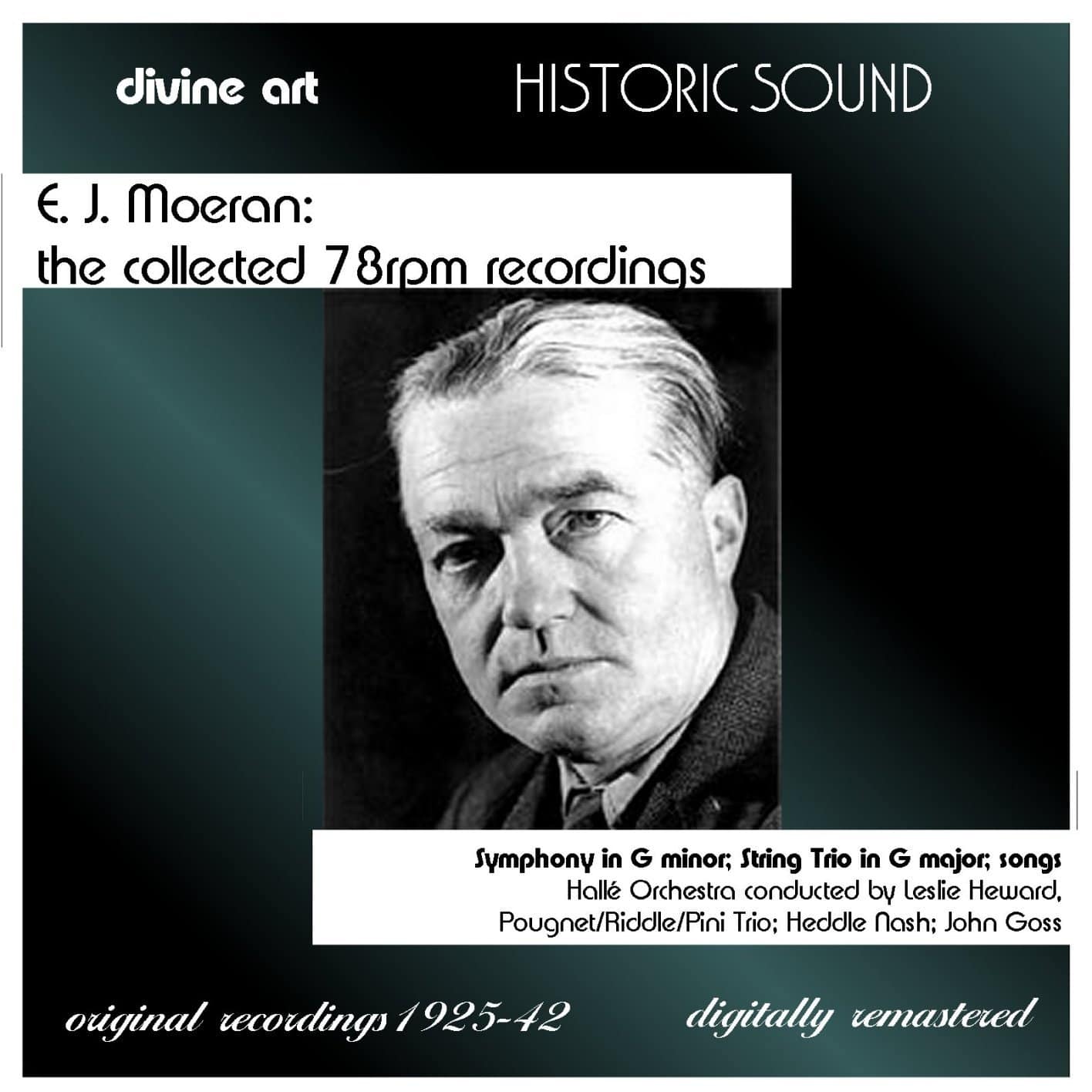
    Moeran: The collected 78rpm recordings

    Though E.J. Moeran is one of the leading British composers of the 20th century,very little of his music was commercially recorded during his lifetime – this is all of it!
    This performance of the Symphony from 1942 is still widely regarded as the best version ever recorded.
    CD contains:
    String Trio in G major (recorded 1941)
    Jean Pougnet, Frederick Riddle, Anthony Pini
    Symphony in G minor (recorded 1942)
    The Halle Orchestra, conducted by Leslie Heward
    Songs:
    Diaphenia and The Sweet o’ the Year (recorded 1945)

    Heddle Nash (tenor)
    O Sweet fa’s the Eve (recorded 1925)
    Can’t you Dance the Polka? (recorded 1925)
    Sheep Shearing (recorded 1926)
    John Goss (baritone) & Cathedral Male Voice Quartet

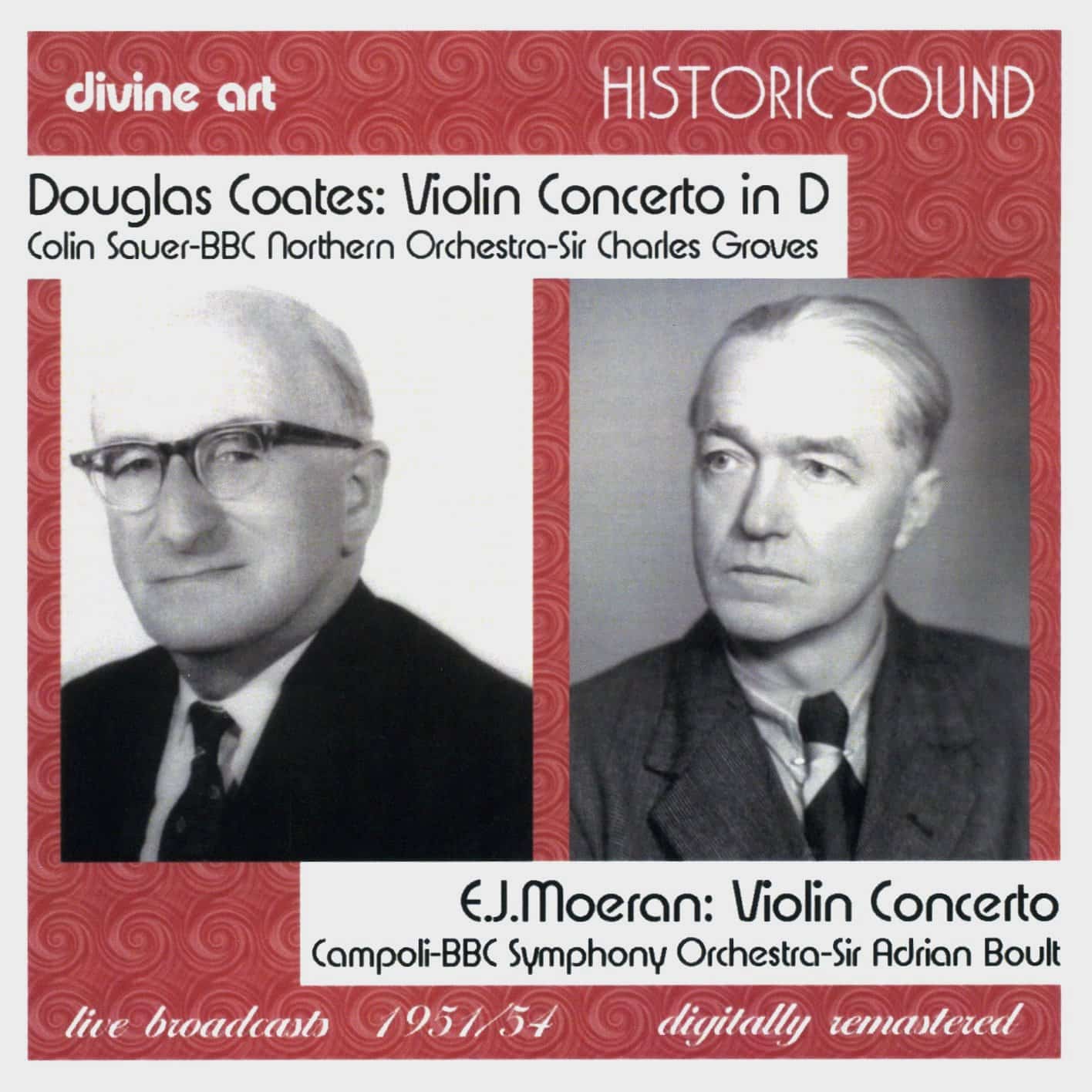
  • Coates and Moeran: Violin Concertos

    Coates and Moeran: Violin Concertos

    RARE BRITISH MUSIC!!
    Runner-up, Concerto category, Classic Record Collector Awards 2006

    Colin Sauer (violin) with the BBC Northern Orchestra* conducted by Sir Charles Groves:
    VIOLIN CONCERTO in D (1934) by Douglas Coates

    (live broadcast performance 1951)

    Alfredo Campoli (violin) with the BBC Symphony Orchestra, conducted by Sir Adrian Boult:
    VIOLIN CONCERTO (1937-41) by E J Moeran
    (live broadcast performance 1954)

    * now the BBC Philharmonic

    A ONE AND ONLY…
    In 1951, the BBC was under the spell of modernism and the Second Viennese School and was awfully dismissive of anything approaching tonality as many veteran composers can attest. So it was that after recording a live broadcast of the unashamedly tuneful and Romantic Violin Concerto by English composer Douglas Coates, the harsh comments about ‘obsolete and meaningless music’ from conductor Charles Groves and the program producers so upset the composer that on his way home he disposed of score and parts (the only copies) into the Thames. As the BBC did not record the concert, the work was totally lost to posterity. Until by a trillion-to-one chance, a collector came across a set of studio acetate discs in a junk shop marked only ‘Coates Concerto’. Long story short – after two years of research and audio restoration of the discs (again the sole copy in existence), producer Stephen Sutton at Divine Art Records was able to release the recording on his Historic Sound label also including a 1950 Adrian Boult performance of the Moeran concerto.

    The one and only performance in remarkable though of course ‘vintage’ sound. End of story and a very popular album. Except that a music fan has been in touch with some news: he was born in Coates’ home town; his wife was actually present at the performance (in Manchester), spent time with the composer and conductor, and (having just discovered the said recording) 69 years later, these wonderful people intend to have the score reconstructed (an expert has been identified..) so that this vibrant work can once again see the light of the concert hall. If the reconstruction is successful the plan is for it to be published by Divine Art and hopefully a gala performance will take place in London at some point.