Genre: Chamber Music

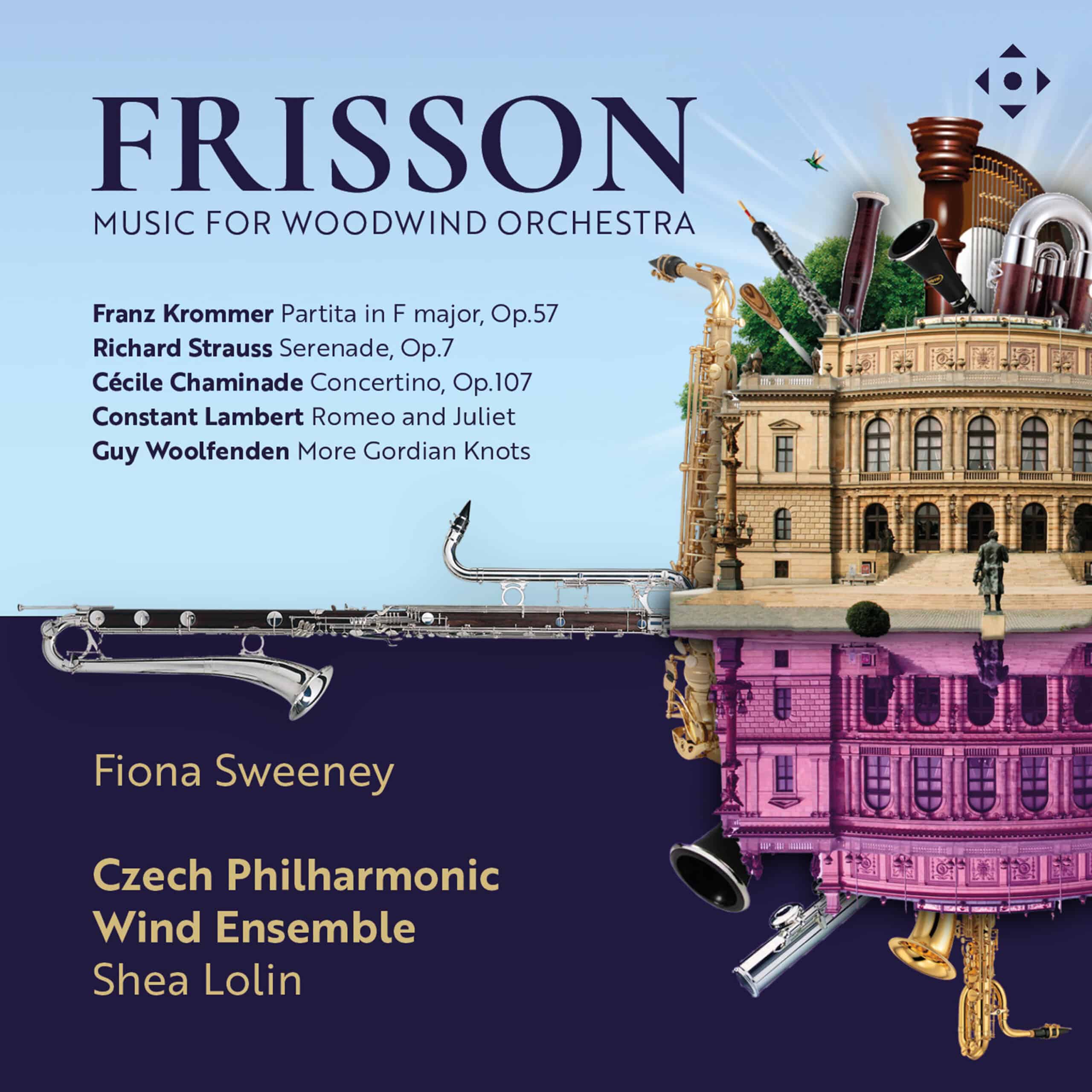
  • Frisson

    Frisson

    On 9 January 2026, conductor Shea Lolin presents Frisson, an exciting new album of music for woodwind orchestra and his third recording with the principal woodwind players of the Czech Philharmonic (Gramophone’s Orchestra of the Year 2024). Frisson follows the release of the ground-breaking Twisted Skyscape, the first album devoted entirely to new music for woodwind orchestra, and Chromosphere, which focused on contemporary repertoire.

    Frisson marks Shea Lolin’s 20-year involvement with the woodwind orchestra and celebrates its evolution from the early eighteenth-century genre of Harmoniemusik – formal ensemble music for pairs of winds – to its modern form.

    The album features a superb programme of arrangements for woodwind orchestra by Shea Lolin, all originally commissioned by the Bloomsbury Woodwind Ensemble. He expands Franz Krommer’s exquisite Octet – Partita in F major, Op. 57 and Richard Strauss’s youthful Serenade, Op. 7, creating a broader sonic landscape while maintaining their essence. Also included is Cécile Chaminade’s beloved Concertino, Op. 107, arranged for woodwind orchestra and featuring young Glaswegian flautist Fiona Sweeney, who makes her debut with the Czech Philharmonic on this release. Completing the album is More Gordian Knots by Guy Woolfenden OBE, a spirited reimagining of Purcell’s music for The Gordian Knot Unty’d, written during Woolfenden’s remarkable 40-year association with the Royal Shakespeare Company.

    “Through the collection of works on this album, I hope to demonstrate the rich potential and unique character of the modern woodwind orchestra, highlighting its distinct identity in the world of ensemble music…The album’s title Frisson refers to my feelings towards this recording and the milestone it represents. It also reflects the amazing playing from the Czech Philharmonic Wind Ensemble.” – Shea Lolin

    “Splendidly mellifluous performances by the Czech Philharmonic Wind Ensemble conducted by Shea Lolin… Lolin and the players… show off their virtuosity, flawless intonation, and ensemble. Recommended.” – Guy Rickards, Gramophone review of Chromosphere.

    Shea Lolin has been involved in nearly every aspect of the classical music industry, including performance, conducting, and management. Over the past two decades, his notable achievements include contributing to the regeneration of east London ahead of the 2012 Olympics and collaborating with prominent Czech orchestras, including the Czech Philharmonic. His work in Czechia was acknowledged by the Czech Centre in London in 2024, the same year the Czech Philharmonic was awarded Orchestra of the Year by Gramophone. In 2025, he was elected the Chair of BASBWE (British Association of Symphonic Bands and Wind Ensembles). shealolin.co.uk
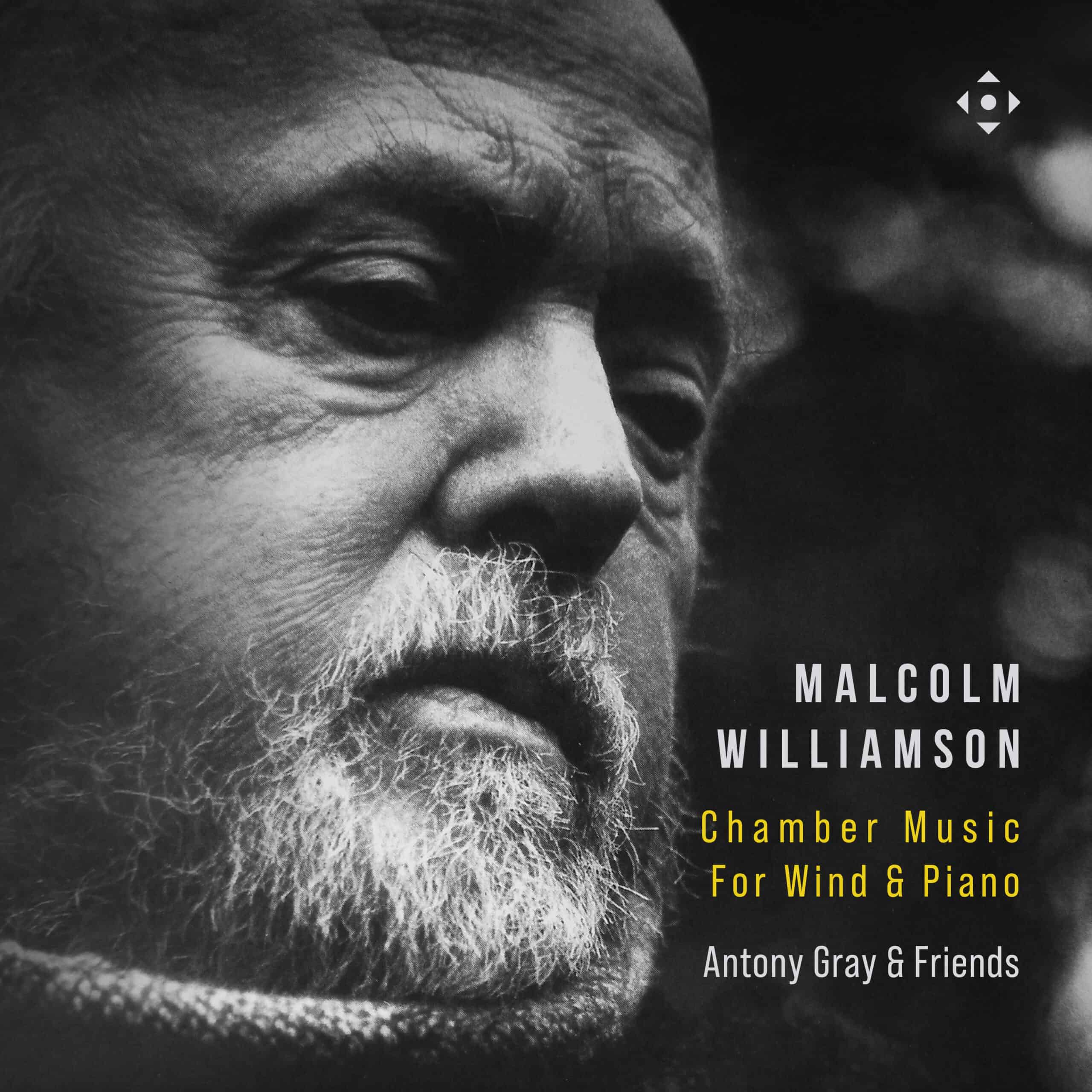
  • Malcolm Williamson: Chamber Music for Wind & Piano

    Malcolm Williamson: Chamber Music for Wind & Piano

    MALCOLM WILLIAMSON: The uncompromising and divisive Master of the Queen’s Music

    Once one of the most widely performed composers of his generation, Malcolm Williamson’s music has since fallen into obscurity. This new recording – featuring 16 world premieres — seeks to redress that balance, offering a fresh perspective on a composer whose work defied easy categorization.

    Williamson’s output ranged from bold serial explorations to tuneful lyricism, often within the same piece. His music was lauded for its ingenuity yet suffered from the composer’s refusal to conform to prevailing academic tastes. As Master of the Queen’s Music, he occupied a prestigious position but remained a divisive figure—uncompromising in his artistic voice and unpredictable in both temperament and style.

    Drawn from recently uncovered archives, this collection spans nearly five decades of Williamson’s career, from early student works to some of his final compositions. The album includes the Clarinet Trio (1958), a strikingly assured work praised for its “forthright tunefulness” and loose application of serial technique, and the Concerto for Wind Quintet and Two Pianos, Eight Hands (1966), an intricate, often densely chromatic score performed by an extraordinary ensemble of composer-pianists. Other highlights include the ballet-inspired Pas de Quatre (1967), the haunting Pietà (1973) for mezzo-soprano and ensemble—setting texts by Swedish poet Pär Lagerkvist—and the enigmatic Gallery (1966), a set of miniature pieces likely composed for an unknown television project.

    These performances, led by pianist and producer Antony Gray, bring Williamson’s music vividly to life, illuminating its rhythmic dynamism, harmonic inventiveness, and sheer expressive range. With the discovery of the Williamson archive in 2023, this recording marks an important step in reintroducing a composer whose legacy deserves reappraisal.

  • Ian Stephens: Chamber Music

    Ian Stephens: Chamber Music

    In this thoughtful collection of chamber music, Ian Stephens’ work reveals a rare balance of melodic clarity and inventive disruption, qualities that have drawn artists like Cate Le Bon, Ian Broudie, and OMD to his arranging talents. Here, Stephens’ signature rhythmic vigour, theatrical subtlety, and knack for weaving unexpected moments define each piece, creating a body of work that intrigues as much as it soothes.

    Celtic Elegy for clarinet and cello sets the tone with a gentle homage to Celtic traditions. Initially inspired by the Irish air She Moved Through the Fair, the piece unfolds its own melody through understated layers, mirroring the drones and ornamentation of Scottish bagpipes. This composition showcases Stephens’ sensitivity to the soul of folk music while remaining efficient in form.

    Springhead Echoes and the Clarinet Quintet, two works linked by memory and place, extend Stephens’ nuanced approach to melody and rhythm. Commissioned in memory of Rosalind and Brian Richards, they explore themes rooted in friendship and place. Springhead Echoes for string quartet channels Brahms with themes that emerge in delicate counterpoint, invoking the charm of Rosalind’s lifelong connection to her home in Dorset. Meanwhile, the Clarinet Quintet subtly references Beethoven’s opera Fidelio, blending nostalgic elements with Stephens’ penchant for inventive structure.

    In North Country for string quartet, Stephens deftly reinterprets the folk tune The Oak and the Ash, transforming it across three movements: Lilting, Heartfelt, and With Abandon. The tune surfaces and recedes, guiding listeners through a series of evolving textures. From the reflective openness of the first movement to the vibrant, Latin-inspired rhythms of the finale, Stephens showcases his ability to shift seamlessly between tradition and innovation.

    Finally, the Oboe Quintet offers a poignant tribute to two amateur musicians of the Liverpool music scene. Here, Stephens emphasizes the oboe’s natural expressiveness through long phrases and joyful rhythmic interjections, balancing lyrical intimacy with structured dance-like sequences. The Passacaglia, inspired by Bach, builds through symmetrical chords and shifting time signatures, adding depth to the piece’s intricate framework.

    These chamber works not only illustrate Ian Stephens’ gift for melody and recontextualization but also his acute attention to instrumental character. Each piece encourages reflection, embodying both the intellect and spontaneity that mark Stephens as a contemporary voice with a profound respect for musical lineage.

    Ian Stephens, composer:

    Raised in Devon as a cellist and singer, Stephens studied at the University of Bristol and later worked with the Royal Liverpool Philharmonic Orchestra. He now teaches at Chetham’s School of Music in Manchester. His works, including Ella’s Big Chance: A Jazz Age Cinderella and Pinocchio, demonstrate his skill in elevating melody with strong rhythmic profiles and theatrical clarity. His Celtic Elegy showcases his ability to blend soul and efficiency, earning him work as an arranger for artists like Cate Le Bon and Ian Broudie.

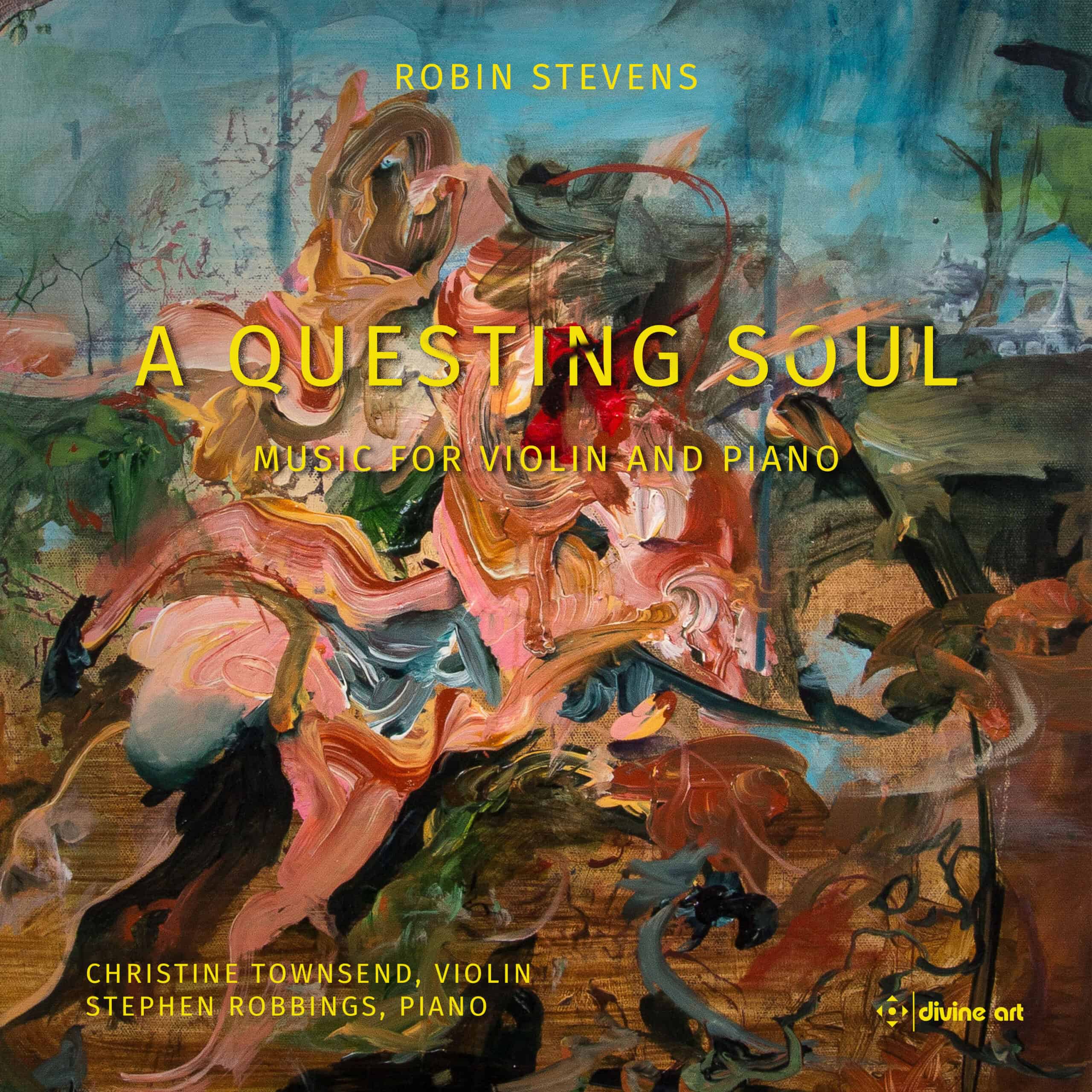
  • Robin Stevens: A Questing Soul

    Robin Stevens: A Questing Soul

    American Record Guide 2025 Critic’s Choice

    Robin Stevens’ A Questing Soul, his fifth album with Divine Art, offers a compelling portrait of a composer whose work has evolved over nearly three decades. This collection spans a broad stylistic spectrum, charting Stevens’ progression from the lush Late Romanticism of his early works to the more dissonant and experimental idioms of his later compositions. Throughout, Stevens balances technical innovation with an underlying sense of lyricism, humour, and tonal clarity, making this album a rich listening experience for those who appreciate the depth and variety of contemporary chamber music.

    The two most substantial works on the album—Fantasy Sonata and Sonata Tempesta—were composed during Stevens’ late twenties and represent key milestones in his early output. The Fantasy Sonata, written for violinist Christine Townsend and pianist Stephen Robbings, presents an intensely focused sound world built around the octatonic scale. Its single-movement structure moves from a soulful, lamenting introduction to more turbulent, faster sections, culminating in a joyfully intense peroration. Sonata Tempesta, in contrast, is a large-scale, four-movement work whose expansive form allows Stevens to weave together moments of lyrical beauty and stormy intensity. Both pieces showcase Stevens’ ability to combine complexity and accessibility, creating compositions that are intellectually stimulating yet emotionally resonant.

    The album also includes a number of shorter works, or “miniatures,” which offer Stevens the opportunity to explore new compositional ideas on a smaller scale. Pieces like Stratospheric! for solo violin and Toccata for solo piano demonstrate his flair for virtuosity and dynamic contrasts, while others, such as Cri de Coeur, evoke more contemplative, intimate soundscapes. These miniatures are fascinating in their own right, offering a glimpse into the composer’s more experimental tendencies.

    One of the album’s more unusual works, Scherzo in Blue, brings jazz influences into Stevens’ instrumental music—a rarity in his oeuvre. The piece is infused with “blue notes” and jazzy piano chords, creating a playful yet sophisticated contrast to the more classical structures found elsewhere on the album.

    The title track, A Questing Soul, reflects the essence of the album: a compact tone poem for solo piano that alternates between dreamy lyricism and muscular, assertive themes. The piece encapsulates Stevens’ ability to juxtapose contrasting musical ideas, leaving listeners with as many questions as answers—an approach that defines much of his work.

    With its blend of large-scale sonatas, experimental miniatures, and the intriguing title track, A Questing Soul offers a comprehensive view of Robin Stevens’ compositional range. This album will appeal to those with an interest in the intersections of modernism, Romanticism, and contemporary chamber music.

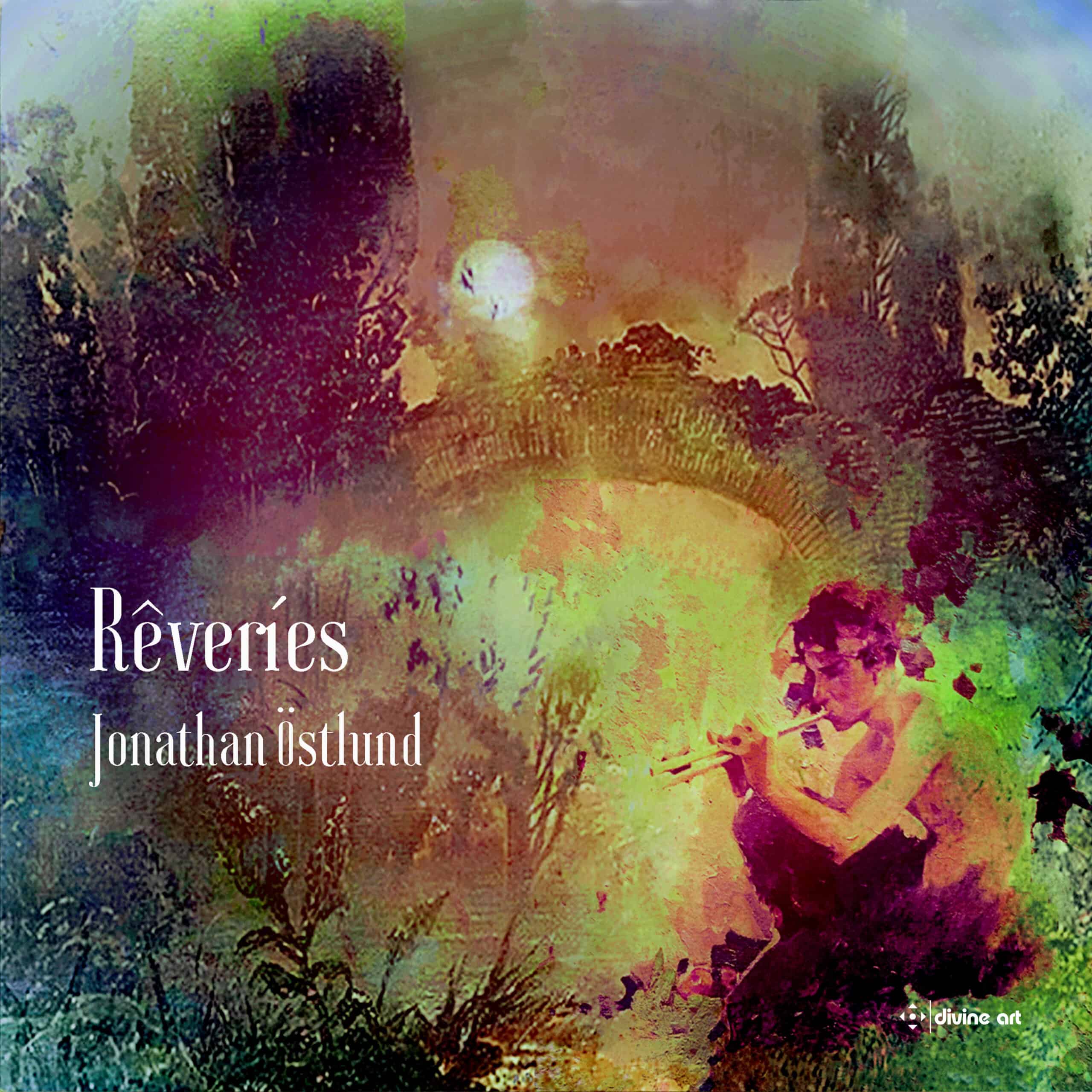
  • Jonathan Östlund: Rêveries

    Jonathan Östlund: Rêveries

    Rêveries is the highly anticipated new album from acclaimed composer Jonathan Östlund. Renowned for his evocative and cinematic compositions, Östlund weaves together classical elegance with contemporary innovation.

    Reveries showcases Östlund’s ability to craft immersive soundscapes and ignite the imagination. Each track on the album is a masterful blend of intricate orchestration and emotive melodies, reflecting Östlund’s deep understanding of both the power and subtlety of music. From the sweeping, majestic passages to the intimate, delicate moments, the album captures a spectrum of emotions.

    Collaborating with world-class musicians, Östlund has created an album that is not just heard, but felt. 

    “It was a moving moment for me to record Jonathan Östlund’s poetic, highly musical, and flutistic work” – Myriam Hidber-Dickinson, flute

    ”Jonathan Östlund’s music has this rare emotional freshness, which I really appreciate in music. His style gives us, performers, a lot of ways for searching colors, timbres, images, all that we call ‘interpretation’.” – Evgheny Brakhman, piano

    Jonathan Östlund, a Swedish composer with a BA and MA in Composition from LTU, has completed nearly 200 works, including orchestral pieces and violin concertos. His music, performed by renowned musicians like Einar Steen-Nokleberg and Yuri Revich, is released under Divine Art Records, with acclaimed albums such as “Lunaris,” “Voyages,” “Mistral,” “Imago,” and 2023’s “Elysian”. Östlund’s achievements include premieres and CD releases with the London Schubert Players, awards like the Public Choice Award for his Cello Sonata and the Leicester Symphony Orchestra’s 1st Prize for “Celebration Fanfare.” His works have been performed across Europe, the UK, and the USA.

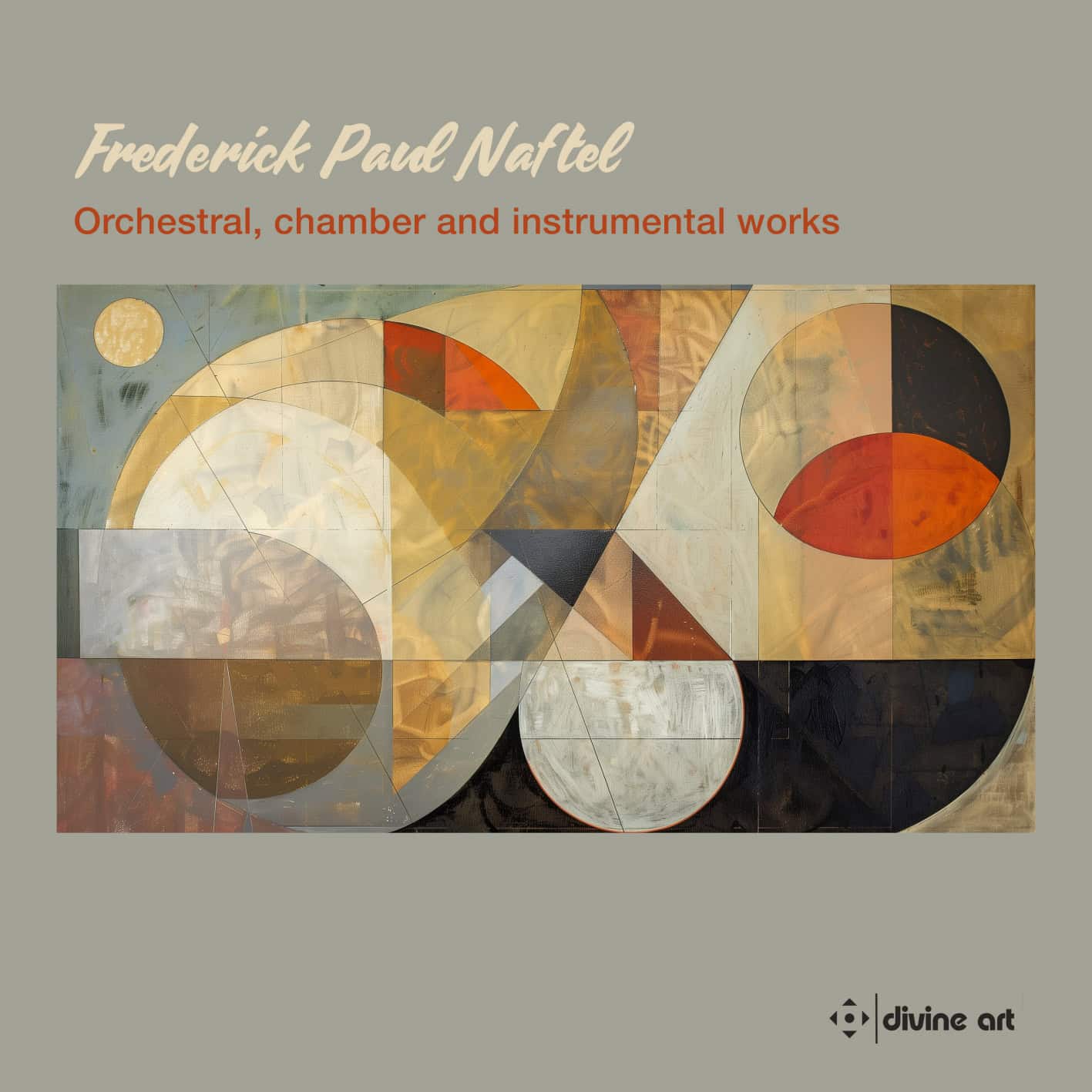
  • Frederick Paul Naftel: Orchestral, chamber and instrumental works

    Frederick Paul Naftel: Orchestral, chamber and instrumental works

    Frederick Paul Naftel’s new album showcases his eclectic compositional style through a diverse collection of works. 

    3 Premiere Recordings:

    Aphoristic Impressions, composed in 2023 for American pianist Haley Myles, captures the essence of various landscapes through five short piano pieces. These pieces evoke images of the underwater church at Dunwich, Suffolk, the eruption of an Icelandic geyser, the indigenous wildlife of the Australian outback and Uluru/Ayers Rock, a peaceful night-time portrait of a Japanese garden, and Whirlpool Rapids Gorge on the Niagara River.

    Naftel’s String Quartet No.2, composed during the initial Coronavirus pandemic, reflects the era’s tumultuous nature. Unlike his first quartet, this single-movement piece is divided into five sections with an epilogue. The music oscillates between tranquil static passages and furious, violent sections, marked by intervals of a major 7th and minor 2nd. The Lento opening flows serenely but mysteriously, evolving through a relentless Allegro feroce, transitioning to an Adagio Sostenuto reminiscent of plainsong, and culminating in a powerful and enigmatic epilogue featuring recorded cello pizzicato.

    The Folksong Suite for String Orchestra and Timpani draws on six English and Scottish folksongs, including John Peel, Early One Morning, Ca’ the Yowes, Loch Lomond, Dashing Away With The Smoothing Iron, and Lincolnshire Poacher.

    Legacy Recordings:

    Pascal’s Victim for Tuba Quartet, composed for the North West-based Tubalaté, features three movements based on the Gregorian Chant Victamae Paschali. Each movement uniquely fragments the theme, particularly in the slow second movement, where a short melodic motive is varied by gently shifting harmonies.

    Song of Songs: Rhapsody for String Orchestra and Harp is an ethnic-flavoured rhapsody based on Hebraic chants and original material, featuring melodies like “Yigdal” and “Hatikvah.” This piece evokes imagery suited for films set in Biblical times or perhaps documentaries about the Middle East.

    Villancico for Guitar and Small Orchestra bridges the music of the Spanish Renaissance and Joaquin Rodrigo in a charming and lyrical Rondo form, while Aubade Pastorale for String Orchestra is a short tone poem depicting a hazy day in the English countryside, using original themes inspired by the English Pastoral School, particularly Ralph Vaughan Williams.

    Frederick Paul Naftel, born in Manchester in 1956, is an eclectic composer drawing inspiration from diverse sources such as landscapes, nature, and historical events. His compositions span various styles and formats, creating distinct moods and atmospheres. His repertoire includes Concerti for Orchestra, Symphonies, chamber music, and vocal works. Notable works include the Double Concerto for Bass Tuba and Contrabass Tuba, the Bass Clarinet Concerto, Aubade Pastorale, and the Sanctus for female voices, strings, and piano. He received an award from the Paul Hamlyn Foundation in 2020 and was runner-up in the King Lear Arts Competition. Naftel is currently working on his Third Symphony, dedicated to Sir James MacMillan, and future orchestral works. Naftel’s music has been praised for its eccentricity, individuality and distinctive voice in contemporary music.

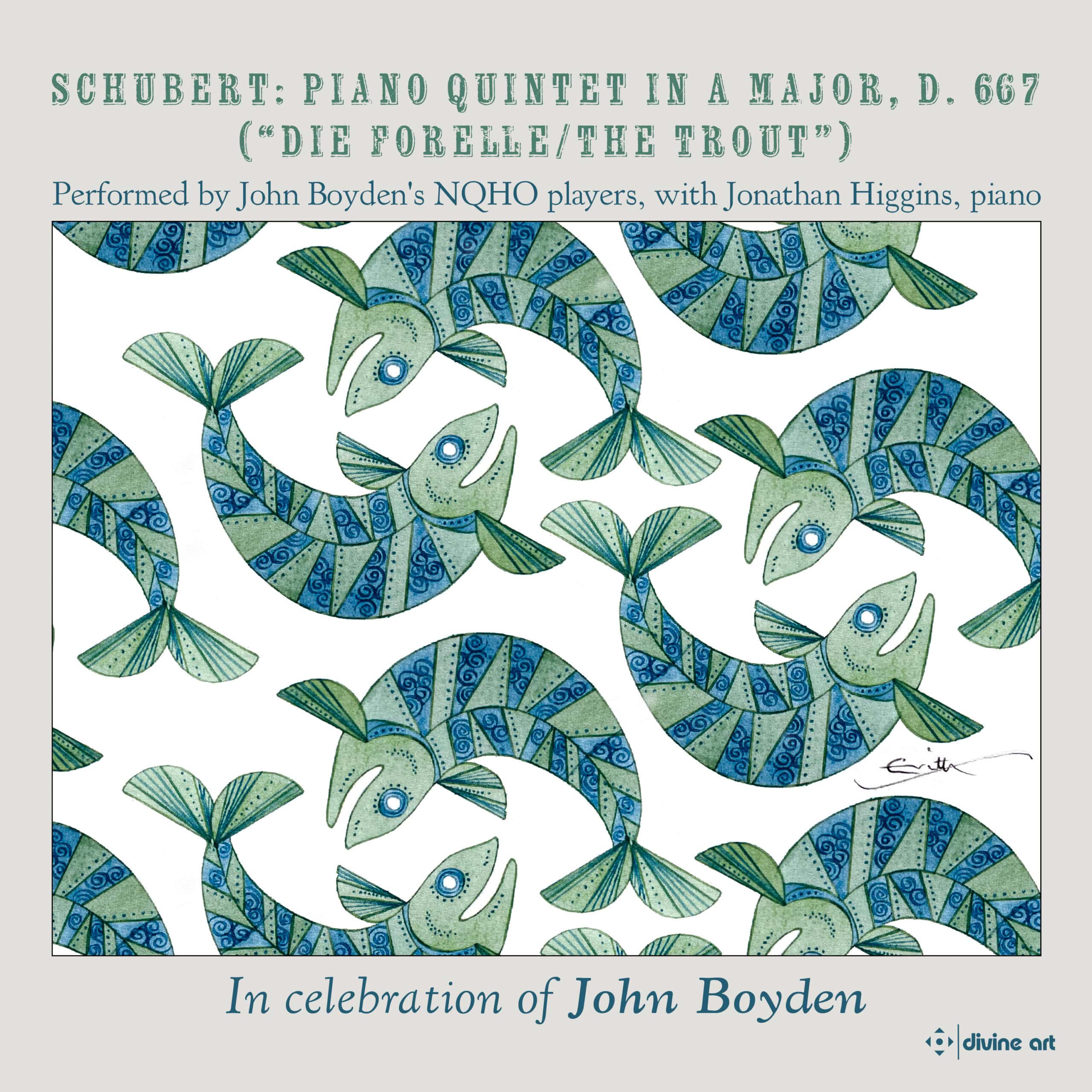
  • Schubert: Piano Quintet in A Major, D. 667 (“The Trout”)

    Schubert: Piano Quintet in A Major, D. 667 (“The Trout”)

    This digital release is a companion to “John Boyden: A Celebration” and presents a new recording of Schubert’s Piano Quintet in A major, D. 667 (“Die Forelle/The Trout”), performed by Jonathan Higgins and the New Queen’s Hall Orchestra. John Boyden, a luminary in the British music industry, is honored with this tribute, marking his exceptional contributions to classical music.

    John Boyden’s illustrious career began with the founding of Classics for Pleasure, achieving the remarkable feat of selling four million classical recordings in four years. As the first Managing Director of the London Symphony Orchestra, he navigated a tumultuous period with visionary leadership. Boyden’s innovative spirit also led to the creation of several independent classical record companies and the New Queen’s Hall Orchestra, dedicated to reviving early 20th-century performance styles.

    Boyden championed a return to the classic Double Cube or Shoebox concert hall design and criticized the modern orchestra’s growing volume. His belief in the human pulse over the metronome’s tyranny reflected his commitment to authentic musical expression.

    Born on 14 September 1936 in Woolwich, London, Boyden’s journey in music was predestined. His entrepreneurial ventures, including Philharmonic Records and John Boyden Recordings, showcased his dedication to bringing classical music closer to enthusiasts. Collaborating with Paul Hamlyn, he launched Classics for Pleasure, resonating with global audiences.

    Boyden’s tenure as the inaugural Managing Director of the London Symphony Orchestra was marked by significant artistic developments. Despite facing challenges, his influence was profound. His subsequent roles as a writer for Private Eye and the launch of Enigma Classics demonstrated his versatility and commitment to the industry.

    Disillusioned by contemporary orchestral recording practices, Boyden revived the New Queen’s Hall Orchestra in 1992, preserving the traditions of the original orchestra and championing a more organic approach to music-making.

    John Boyden’s legacy transcends his numerous achievements; it lives on in the hearts of those inspired by his unwavering pursuit of artistic integrity. This exquisite recording of Schubert’s masterpiece celebrates his enduring impact.

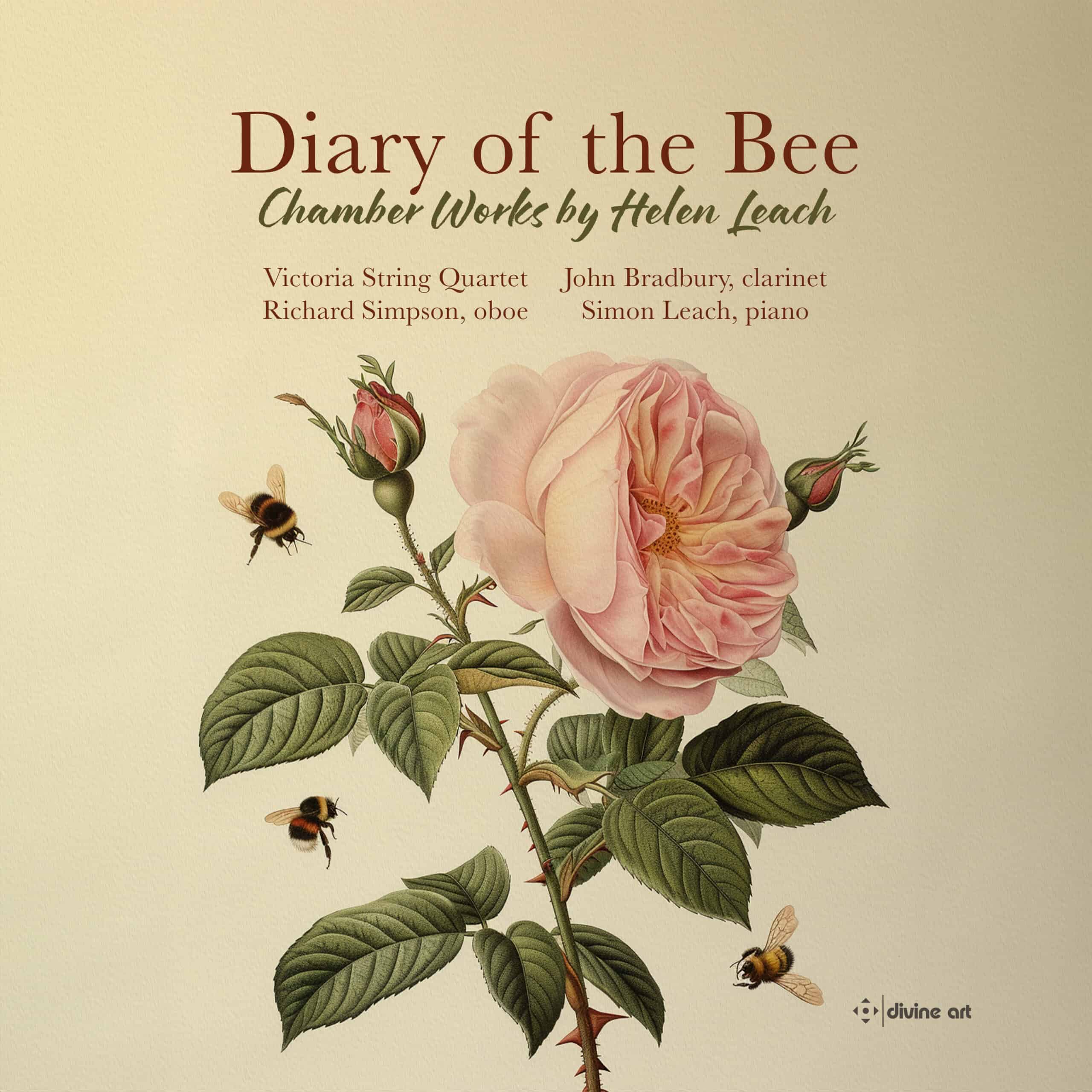
  • Diary of the Bee: Chamber Music by Helen Leach

    Diary of the Bee: Chamber Music by Helen Leach

    A Masterpiece Recorded at Historic Marchmont House

    Composer Helen Leach, known for her enchanting compositions that evoke rich landscapes and deep emotions, releases her album titled “Diary of the Bee.” This new collection features a series of rich, tonally traditional compositions. With all tracks being world premiere recordings, the album showcases Leach’s remarkable ability to blend lyrical melodies with profound storytelling.
    “Diary of the Bee” marks a significant addition to the classical repertoire, offering listeners an absorbing journey through Leach’s musical landscapes. Each piece on the album unveils a unique narrative, beautifully performed by leading instrumental soloists alongside the esteemed Victoria String Quartet. Reflecting on the inspiration behind her compositions, Leach shares, “Every piece in this album holds a special place in my heart, drawing from personal experiences and the beauty of nature that surrounds me.” Indeed, each composition in “Diary of the Bee” tells a story, from the evocative tribute to Prince Philip in “An Edinburgh Farewell” to the introspective musings captured in “Letters from the Owl House.”

    Among the highlights of the album is “Cup of Kindness,” a poignant ode to the universal warmth and blessings symbolised by Robert Burns’ iconic line, “we’ll tak’ a cup o’ kindness yet.” With its tender melodies and thoughtful arrangements, the piece resonates with a sense of harmony and peace.

    Another standout track, “Tenera Caritate,” showcases Leach’s mastery in crafting expressive rhapsodies, as she explores themes of love, hope, and healing through the emotive interplay of clarinet and string quartet.

    Listeners will also be enchanted by “Where Hope Was Sown,” a commissioned piece dedicated to Mr. Oliver Burge, of Marchmont Farms, which beautifully captures the essence of the Lapwing bird and its pastoral habitat through delicate musical motifs.
    From the haunting melodies of “The Black Rood of Scotland” to the elegant conversations of “A Song Without Words,” “Diary of the Bee” offers a tapestry of sound that is instantly appealing.

    Recorded at the historic Marchmont House in Scotland, where Leach is Composer-in-Residence, “Diary of the Bee” not only captures the essence of Leach’s compositions but also the timeless beauty of its surroundings. With its richly layered compositions and superb performances, “Diary of the Bee” stands as a testament to Helen Leach’s extraordinary talent and her ability to weave intricate musical narratives.

    The digital edition includes 2 extra tracks:
    Letters from the Owl House: Syzygy (Prelude)
    Letters from the Owl House: Touch of Heaven (Courante)

    Customers purchasing the CD from this website will receive the extra tracks as downloads. Download link is provided via email upon completion of CD purchase.

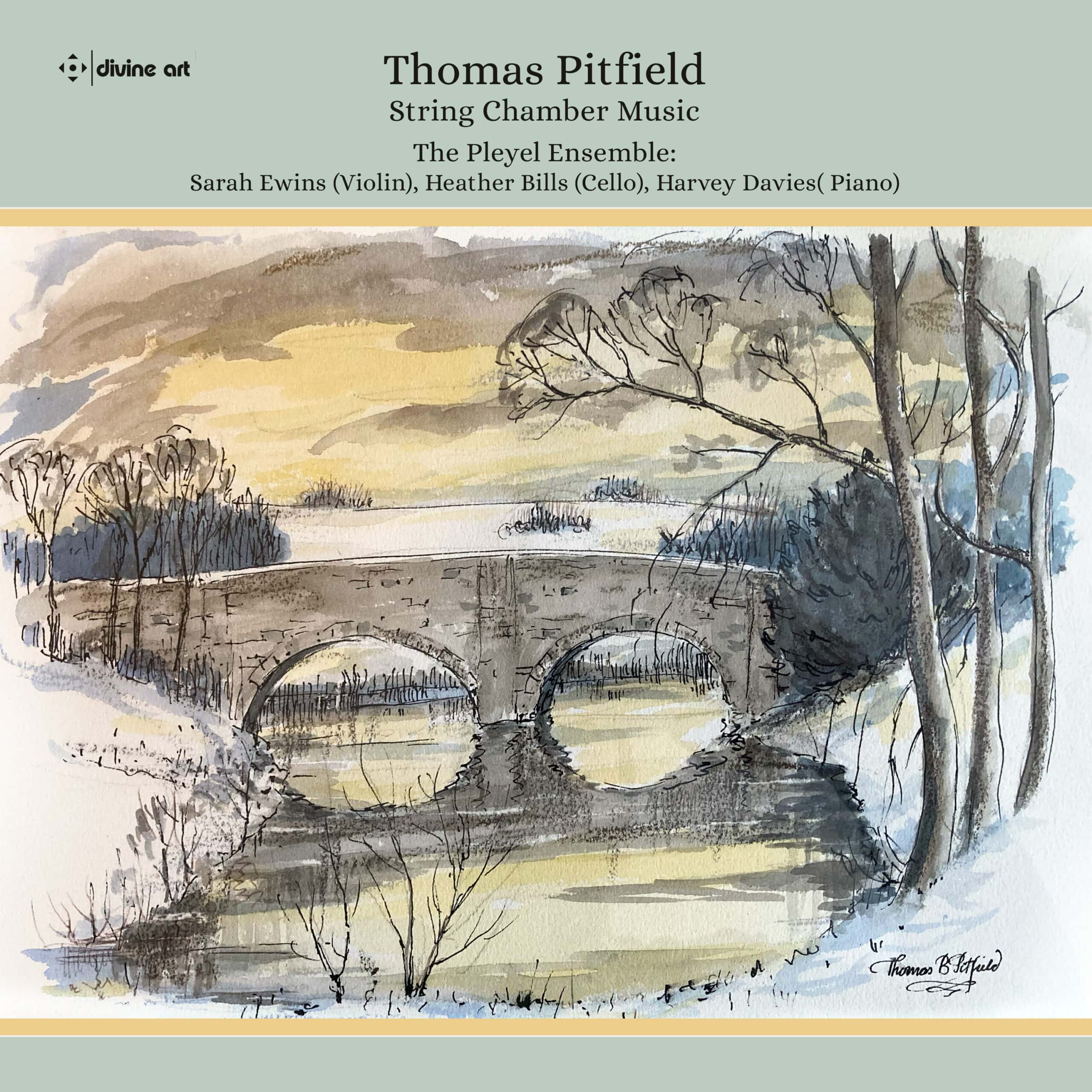
  • Thomas Pitfield: String Chamber Music

    Thomas Pitfield: String Chamber Music

    This is a remarkable collection of 5 compositions for strings by Thomas Pitfield, performed with thoughtful skill by members of the Pleyel Ensemble. This album of Pitfield’s string chamber music is accompanied by two further Divine Art releases – The Songs of Thomas Pitfield performed by tenor James Gilchrist and pianist Nathan Williamson and Thomas Pitfield (DDX 21119): His Friends & Contemporaries, including works from a fine collection of composers (DDX 21246)

    These albums serve to shed light on Thomas Pifield’s considerable contribution to British music. Throughout his tenure as a composition teacher, Pitfield played a pivotal role in shaping the careers of notable composers like John McCabe, David Ellis, and John Golland, the latter of whom also shared a close personal friendship with Pitfield. Despite being somewhat overshadowed by the achievements of his contemporaries, Pitfield’s legacy lives on through a revival of interest in his music.
    This album offers a glimpse into Pitfield’s artistic vision and craftsmanship. Pitfield’s compositions are filled with elegance, lyricism, and emotional depth. His music not only showcases his technical skill but also reflects his genuine love for the art form and his dedication to inspiring future generations of musicians.

    The Pleyel Ensemble was formed in Manchester in January 2011. They are friends and colleagues who draw on a wealth of experience gained through many years of music-making. Since forming, they have given over 200 concerts, and have an enormous and varied repertoire of chamber music. The Pleyel Ensemble was delighted to be chosen as Making Music Recommended Artists for the 2016/17 and 2019/20 seasons and has appeared at Music Societies and Festivals all over the UK.

    The ensemble takes its name from the Classical composer Ignaz Pleyel (1757-1831), a brilliant musician and businessman, who, in addition to writing a large body of accessible chamber music, helped increase the popularity of this wonderful kind of music-making amongst amateurs and professionals as both music publisher and piano manufacturer in the early nineteenth century.

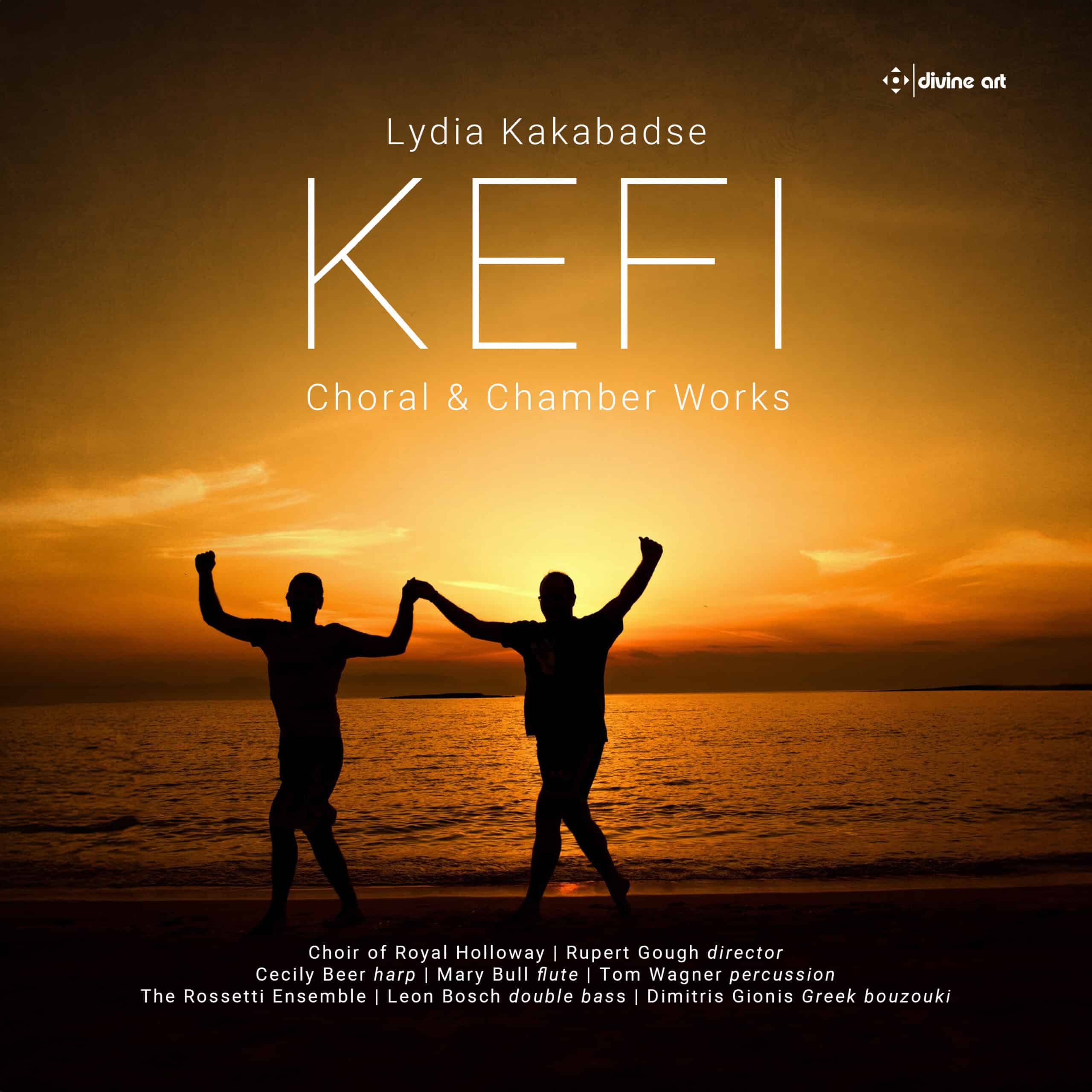
  • Kefi: Choral & Chamber Works by Lydia Kakabadse

    Kefi: Choral & Chamber Works by Lydia Kakabadse

    British born composer Lydia Kakabadse enjoys a multi-cultural heritage (Greek/Austrian mother and Georgian/Russian father) which deeply informs her musical output. Her new album, recorded in London, features an even more diverse range of music than her previous albums, incorporating ethnic instruments into Western music. Making much use of the ‘alternative string quartet’ (violin viola, cello and double bass), the title track Kefi also introduces the Greek Bouzouki. While demonstrating a wide diversity of textures and styles, overall the music is coloured by use of the double harmonic scale. As well as a number of chamber works the highlight of the album is the choral work Thirty Steps commissioned by the Hellenic Institute at Royal Holloway whose choir, widely regarded as among the best mixed-voice choirs in Britain today, perform the work here. The other performers here are all experienced and very well regarded in their own fields.

    Lydia Kakabadse, celebrated for her diverse music, specialises in choral, chamber, and vocal compositions. Influenced by her multicultural background and upbringing in Greek and Russian Orthodox traditions, she draws inspiration from Orthodox Church music, medieval melodies, and Greek and Middle Eastern dance. Trained in piano and double bass from a young age, she pursued music studies at Royal Holloway, University of London. Her works, including string quartets, choral pieces, and concert requiems, have garnered critical acclaim and have been featured on recordings by labels such as Naxos and Divine Art. Notable commissions include “I Remember” for Forest Preparatory School and “Odyssey” for The Hellenic Institute. Her compositions have been performed internationally at festivals and by esteemed ensembles, and her string quartet “Russian Tableaux” has been broadcast on BBC Radio 3. Currently pursuing a PhD in ethnomusicology, Lydia continues to enrich the musical landscape with her distinctive and vibrant creations.

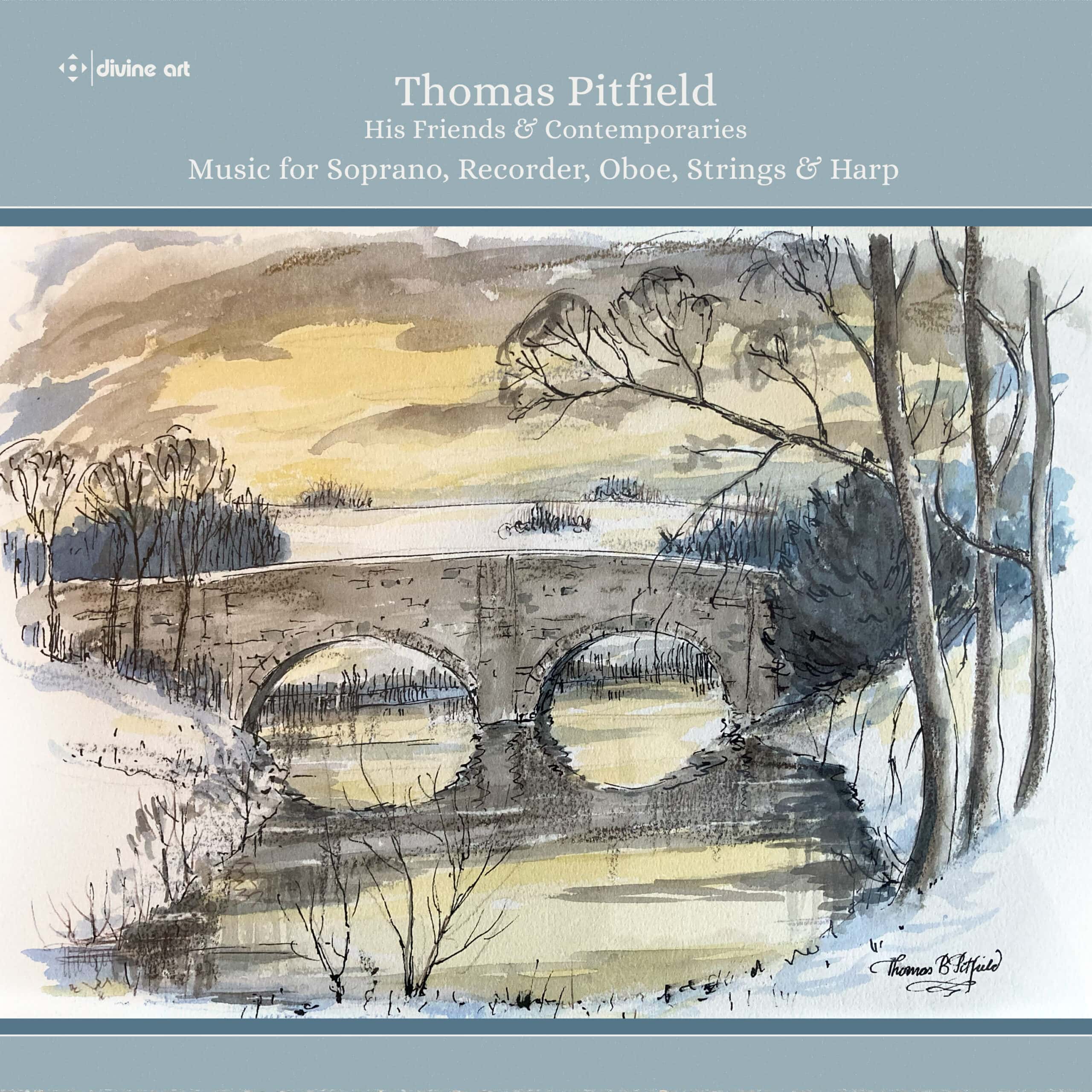
  • Thomas Pitfield: His Friends & Contemporaries

    Thomas Pitfield: His Friends & Contemporaries

    “Thomas Pitfield: His Friends & Contemporaries” pays homage to the multifaceted talent of Thomas Baron Pitfield (1903-1999). Pitfield was not just a composer; he embodied the essence of a Renaissance man, excelling in various fields including teaching, visual arts, poetry, writing, furniture making, and ornithology. Despite his immense talents, Pitfield remained modest and unassuming, dedicating himself to nurturing the gifts of his students at the Royal Manchester College of Music, where he taught composition from 1947 onwards.

    This album sheds light on Pitfield’s contributions to the classical music landscape, showcasing his compositions alongside those of his contemporaries including John Joubert, E. J. Moeran, Ernst Hermann Meyer, John McCabe, and many more. While Pitfield’s name may not be as widely recognized as some of his peers from the “Manchester School,” such as Richard Hall, his music exudes charm, wit, and inventiveness that captivate listeners. In an era marked by the emergence of modernist compositions, Pitfield chose to traverse the middle ground, creating music that resonates with its timeless appeal.

    Throughout his tenure as a composition teacher, Pitfield played a pivotal role in shaping the careers of notable composers like John McCabe, David Ellis, and John Golland, the latter of whom also shared a close personal friendship with Pitfield. Despite being somewhat overshadowed by the achievements of his contemporaries, Pitfield’s legacy lives on through a revival of interest in his music.

    The album offers a glimpse into Pitfield’s musical world, featuring a selection of chamber and instrumental works that highlight his artistic vision and craftsmanship. Pitfield’s compositions are filled with elegance, lyricism, and emotional depth. His music not only showcases his technical skill but also reflects his genuine love for the art form and his dedication to inspiring future generations of musicians.

    Moreover, the album serves as a tribute to Pitfield’s enduring influence on his peers and students. His selfless encouragement and mentorship left an indelible mark on those he taught, fostering a sense of camaraderie among composers and musicians. Pitfield’s generosity of spirit and unwavering commitment to excellence resonate throughout the album, underscoring his legacy as both an artist and an educator.

    This double album celebrates the life and work of a remarkable individual whose contributions to the world of classical music extend far beyond his compositions. Through this album, listeners will rediscover the brilliance of Thomas Baron Pitfield and the rich music woven by his friends and contemporaries.

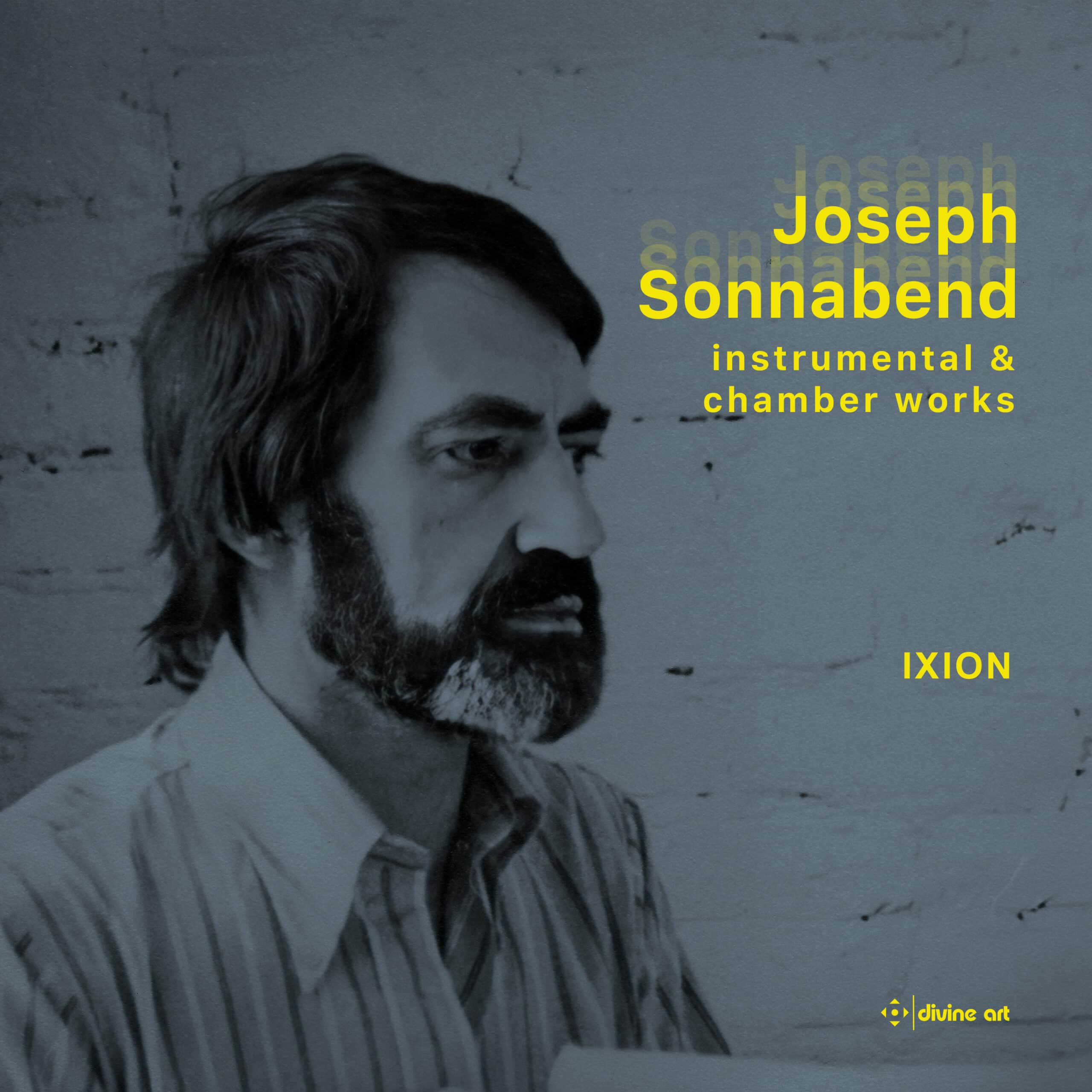
  • Joseph Sonnabend: Instrumental and Chamber Works

    Joseph Sonnabend: Instrumental and Chamber Works

    2025 Contemporary Music International Classical Music Award Nominee

    Dr. Joseph Sonnabend: A Musical Journey Reflecting a Life of Compassion and Innovation

    Renowned AIDS researcher and clinician Dr. Joseph Sonnabend, who was known for his groundbreaking work in HIV/AIDS research, had a hidden facet of his extraordinary life – as a composer. Despite his illustrious medical career, Joseph Sonnabend’s passion for composition remained largely concealed from the public eye. However, with this album, we are invited into his world of instrumental and chamber works, showcasing his exceptional talent and profound musical sensibility.

    The collection of pieces featured on offers a glimpse into Dr. Sonnabend’s rich musical landscape. From piano solos to chamber works, each composition bears the mark of his deep appreciation for chromatic melodies and harmony, influenced by composers such as Alban Berg and Arnold Schoenberg.

    Collaborator Dr Andrew Toovey, who played a pivotal role in bringing Dr. Sonnabend’s compositions to life, reflects on the process: “Working with Joseph on his compositions was certainly a fascinating journey for both of us.” Together, they meticulously curated a selection of works, refining unfinished pieces and even commissioning new ones, resulting in a cohesive representation of the Sonnabend soundworld.

    Listeners can expect to be delighted by the diverse range of compositions, each offering a unique musical experience. Highlights include the Piano Trio, which weaves a chromatic melodic line throughout its entirety, and “Fluctuations,” a mesmerizing solo violin piece that oscillates between reflective and virtuosic passages.

    In addition to instrumental works, the album features poignant vocal pieces such as the Three Songs for soprano and piano accompaniment, which set a collection of haiku poetry to melodic and emotive music, creating a deeply resonant listening experience.

    Reflecting on his late-in-life debut as a composer, Dr. Sonnabend’s journey comes full circle, encompassing a lifetime of compassion, innovation, and artistic expression. His compositions serve not only as a testament to his musical talent but also as a poignant reminder of his profound response to the HIV/AIDS pandemic, which he tirelessly battled throughout his career.

    This album is not only a celebration of Dr. Sonnabend’s musical legacy but also a tribute to his unwavering commitment to humanity. As listeners embark on discovering this music, they are invited to experience the depth of emotion and the enduring legacy of a remarkable individual.

    Dr. Joseph Sonnabend (1933-2021) was a pioneering AIDS researcher and clinician, widely respected for his compassionate approach to patient care and his groundbreaking contributions to HIV/AIDS research. In addition to his medical career, Dr. Sonnabend was a prolific composer, whose debut album, “Thoughts and Programme Notes,” offers a glimpse into his remarkable musical talent and creative vision.