Label: Divine Art

  • Marian Sawa: Music for Organ

    Marian Sawa: Music for Organ

    Marian Sawa (1937-2005) began serious studies at the age of 14 at the Salesian Organ School, Przemyšl, Poland. He toured actively as an organ performer and from 1966 taught organ at several prestigious schools. As a composer he wrote about 800 pieces in various genres, centred round his music for organ. His music builds on the Polish post-Romantic tradition, knitting fragments from folk tunes and hymns into his work, drawing strongly on Gregorian chant and traditional Polish material.

    Sawa’s personal and individual voice makes his music very recognizable and though little known outside Poland to date, he can be considered perhaps the greatest Eastern European organ composer of the 20th century.

    The pieces on this album, composed between 1971 and 2005, demonstrate vividly the range, variety and often enormous power of his compositions. This recording of the exquisite Fleiter organ (2014) at St. Ludgerus, Billerbeck, was made using the Hauptwerk remote digital access system.
  • Antiphonies (Carson Cooman Organ Music vol. 14)

    Antiphonies (Carson Cooman Organ Music vol. 14)

    Carson Cooman is many things musical – organist and Composer in Residence at the Memorial Church, Harvard University; writer, critic and consultant, concert organist, and above all a highly prolific composer of music in a wide variety of genres, from orchestral to song. Recent counts show over 3000 tracks of his music available online with over 300 compositions written for him by more than 100 composers.

    His organ compositions come in many styles, from liturgical models, to substantial secular pieces such as his organ symphonies, preludes and fugues. On this album a range of works, most composed between 2013 and 2020, wonderfully realized on a fabulous instrument.

    Erik Simmons is a superb organist, making his 14th Cooman organ album for Divine Art. We hear the gorgeous voices of the organ of Propsteikirche St. Ludgerus in Billerbeck, Germany, recorded through the Hauptwerk system.

  • Marius Constant: Orchestral Works

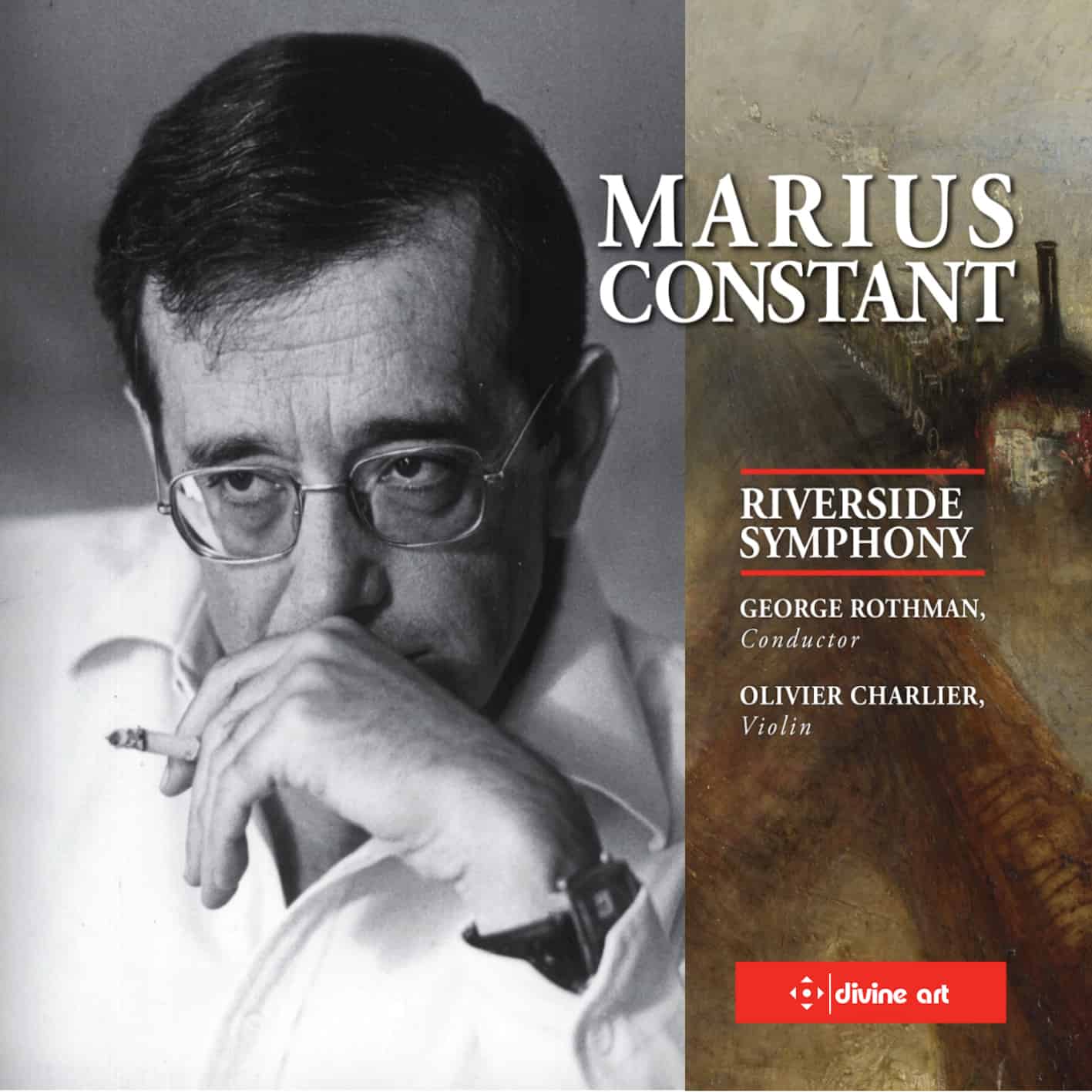
    Marius Constant: Orchestral Works

    Marius Constant (1925-2004) was born in Romania and began formal music education at the Royal Bucharest Conservatory at the age of 11, also being enrolled in the Lycée Français: he later moved to France where he developed his remarkable career. Best known in musical circles for his ballets, and by the general public for the Twilight Zone theme, he is truly one of the 20th century’s most gifted and inspired composers, and one of the most cruelly overlooked. His orchestral works here are inspired by nature and art and encompass beauty and emotional power in a unique contemporary style.

    The Riverside Symphony was founded in 1981 and comprises many of the best of New York’s finest musicians. Acclaimed for its devoted championing of unfamiliar and new works, its annual concert series at Lincoln Center have brought much praise for their innovative programming. Olivier Charlier, soloist in 103 Regards dans l’eau, has been recognised internationally for his superlative playing; he has played with over 50 French orchestras as well as orchestras from around the world.

    This album was originally released by Riverside in 2014 but in the USA only. It includes a video with archival clips of the composer and discussions with the orchestra directors (formatted for computer playback).

  • 1847: Liszt in Istanbul

    1847: Liszt in Istanbul

    In 1847 Franz Liszt visited Istanbul (then Constantinople) and performed several recitals on an Erard piano specially shipped for him to play. He spent a month there and gave several concerts including two in the Sultan’s palace. He was fêted and praised highly; at that time the city was a hub of Western culture and a frequent destination of Italian and French opera companies, so Liszt’s operatic transcriptions found a receptive audience.

    Turkish-American pianist Zeynep Ucbasaran created a selection of works from Liszt’s program which were broadcast throughout Europe in 2011 and performed live to great acclaim. Now this recital is committed to a recording which celebrates not only great music but also what was Liszt’s final year as a virtuoso performer.

    Zeynep Ucbasaran began music studies in Istanbul at the age of four, then in Hungary and Germany before moving to the USA to obtain her degrees in Piano Performance. She has won multiple awards and performed in many parts of the world. She naturally has an affinity with the musical culture and heritage of her native Turkey.

  • Babadjanian, Chebotaryan & Piazzolla: Piano Trios

    Babadjanian, Chebotaryan & Piazzolla: Piano Trios

    2021 MusicWeb International Recording of the Year

    This is the debut album from Quebec-based Trio de l’Île, a young ensemble of exceptional talent, comprising Uliana Drugova (violin), Dominique Beauséjour-Ostiguy (cello) and Patil Harboyan (piano). The group was founded in 2015, and the three members have all enjoyed success in their careers to date, as performers and teachers.

    The Piano Trio in F sharp minor (1952) by Armenian composer Arno Babadjanian (1921-1983) is widely considered one of the greatest masterpieces of the genre; the Andante a particularly beautiful and much-loved melody.. The work is joined by another Armenian piece, the trio (1945) by Gayané Chebotaryan (1918-1998), which has stronger inspiration from the Armenian folk inflections familiar in the music of Khachaturian as well as the Russian classical tradition.

    As a contrast we have the ‘Four Seasons of Buenos Aires’ from 1960 by Argentinian legend Astor Piazzolla, the composer who revolutionized the tango, turning it from a steamy dance into a true art form. Lively, exotic and highly rhythmic, these pieces embody the Latin spirit totally. The arrangement for piano trio is by cellist José Bragato, a member of Piazzolla’s own Octet.


  • 20th Century Polish Chamber Music

    20th Century Polish Chamber Music

    Three works by Polish composers of great stature: the music of Karol Szymanowski is now very well known; he was responsible for the first real flowering of Polish music after Chopin, developing from the Romantic to expressionism to modernism. His Op. 9 violin sonata is his earliest chamber composition, written when he was 22 and found immediate success with audiences, if not all of the critics at the time.

    The Piano Trio of Andrzej Panufnik, who later became a British citizen, is also an early work and as his Op. 1 (he did not give opus numbers to any other composition) symbolises the beginning of his great career. Elements of modernism, Romanticism and jazz inspire this superb piece. It is heard here in the composer’s revised version from 1977.

    For Grażyna Bacewicz, chamber music played a very important role alongside concert works; she summed up the 200 year era from Chopin to Rachmaninoff as a great virtuoso composer and performer – on both violin and piano. The fourth piano sonata is generally considered her greatest – described by one critic as ‘contemporary Brahms’.

    The members of the Huberman Trio, based in Czestochowa, Poland, are all first class musicians with successful solo and orchestral careers:
    Magadalena Ziarkowska-Kołacka (violin);
    Sergei Rysanov (cello); Barbara Karaśkiewicz (piano)

    Chosen by Peter Burwasser of Fanfare in his 2021 Want List (top 5 albums of the year)

  • La Mer bleue

    La Mer bleue

    This album is built around Messiaen, birdsong and impressionism. First we have book 1 of Messiaen’s Catalogue d’oiseaux, together with two newly written interludes and a postlude for two violins, transferring the song to the strings. Messiaen’s work is a journey towards sunlight, colour and company, from mountain to coastline, together with three feathered songsters.

    English composer David Gorton is best known for his uncompromising modernity but in his Ondine, he has produced a work much more accessible and although not specifically based on birdsong, it has many resonances with the Messiaen, and is an ideal partner to the earlier work; this is its first recording.

    With Szymanowski we reach the mainstream of 20th century writing, Romanticism hardening in light of the Great War and the October Revolution. This work, one of his greatest, is imbued with passion, longing, and in the words of Sorabji, ”an elevated ecstasy of expression”.

    Roderick Chadwick, as both soloist and collaborator, has performed some of the most challenging works for piano; his recent Stockhausen disc was highly praised. He is a particular expert on Messiaen and in 2018 co-authored and published a book on the Catalogue d’oiseaux.

  • The 3-Piano Project

    The 3-Piano Project

    While music for two pianos is encountered frequently, larger groups of pianos are rare, so this is an excellent opportunity to explore new and recent music for three pianos by composers from Turkey, Brazil, Spain and Italy. While exploring modern techniques the music is predominantly tonal, and remarkably light and clear-textured much of the time, though never facile or shallow. The composers have used the three keyboards to explore richer melodic lines and counterpoints while avoiding the temptation to create overwhelming walls of sound. The piece by Dallapicolla in particular is open-textured and quite traditional, predating his adoption of serialism. The album includes the world premiere recording of Saygun’s major work ‘Poem’.

    The three pianists are also international – Ucbasaran and Gallo now both live and teach in the USA and Chavaldas works in Spain. They met when students at the Franz Liszt Academy of Music in Budapest, Hungary. They all have highly praised recordings and concert appearances to their credit and came together for this special album of unique works.

  • Liszt to Milhaud – A Journey with Piano Four Hands

    Liszt to Milhaud – A Journey with Piano Four Hands

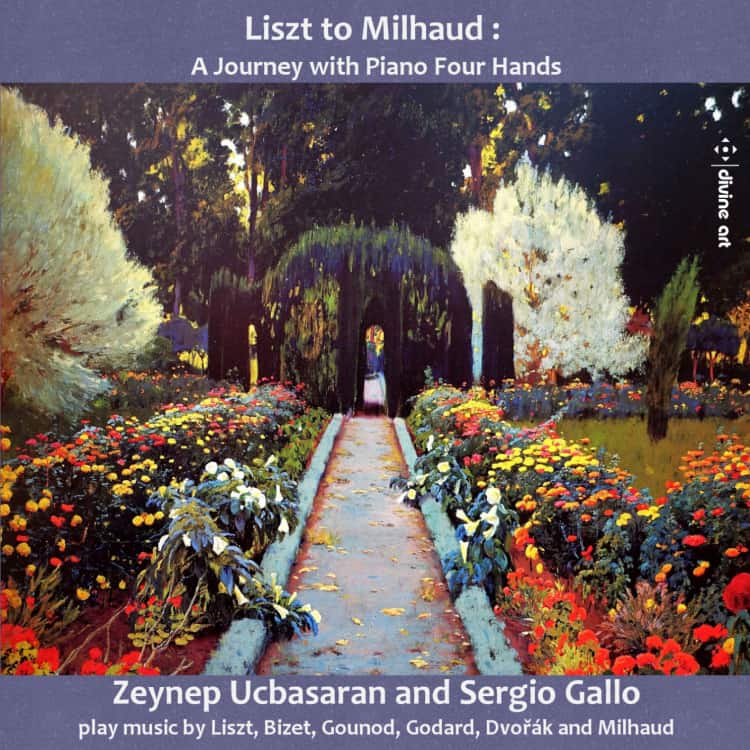
    The Divine Art label has long been associated with music for piano duo – whether at two pianos or one – through the sterling and brilliant work of Goldstone and Clemmow and more recently Piano-à-Deux. The label is delighted to welcome a new duo with this program which contains several very popular and well-loved miniatures and transcriptions, bookended by major works from Liszt and Milhaud. They need no introduction save to say that from the dances, to the jazz-inflected pieces, each work is a joy to hear.

    These are sparkling performances of well known pieces and form a light counterpoint to the artists’ new 3-piano album of contemporary works. The pianists met when both students at the Franz Liszt Academy in Budapest. Zeynep Ucbarasan is from Turkey but moved to the USA for her postgraduate studies and now lives in California. Her previous recordings and concert appearances have drawn unalloyed praise. Sergio Gallo is a Steinway artist who specialises in music of the Romantic period. He has made several acclaimed recordings for Eroica and is currently recording for Naxos and Quartz. He has won many awards and currently is professor of Piano Performance at the Georgia State University in Atlanta.

  • Songs for Sir John – A tribute to Sir John Manduell

    Songs for Sir John – A tribute to Sir John Manduell

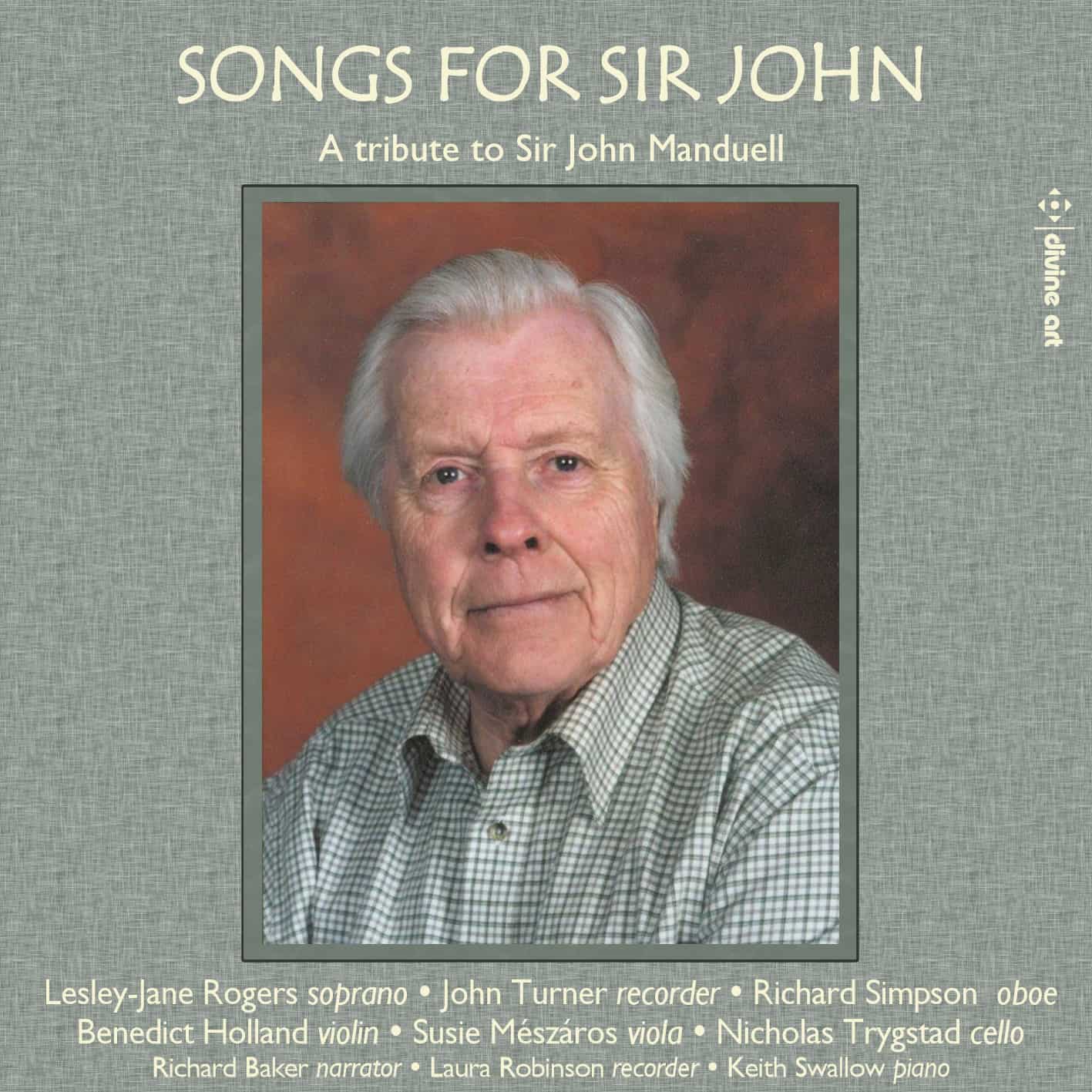
    Sir John Manduell was a pivotal figure in British music – as composer, teacher, BBC producer, first principal of the Northern Royal College of Music and founder of the European Opera Centre. Beloved and revered by musicians, yet someone whose name is shamefully little known outside the music profession.

    This album in tribute presents works by 16 composers from more than one generation, centred around settings of W.B. Yeats and principally songs with oboe, recorder, violin and cello. The music is varied, rich and wonderfully set to the texts, and yet the textures are always transparent and clear; there is nothing inherently ‘difficult’ for the listener. The performers are among the cream of the Music world of Northern England, and also, in the Robin Walker Nursery Rhymes (the only work not specially recorded for the album), feature the iconic veteran BBC presenter Richard Baker. Many of these artists have starred in several other Divine Art and Metier albums – click their names above for details.

    Even without the Manduell connection this is a wonderfully constructed program of new chamber music. In the track list below, the non-vocal works are marked *.

  • Malcolm Lipkin – Recollections

    Malcolm Lipkin – Recollections

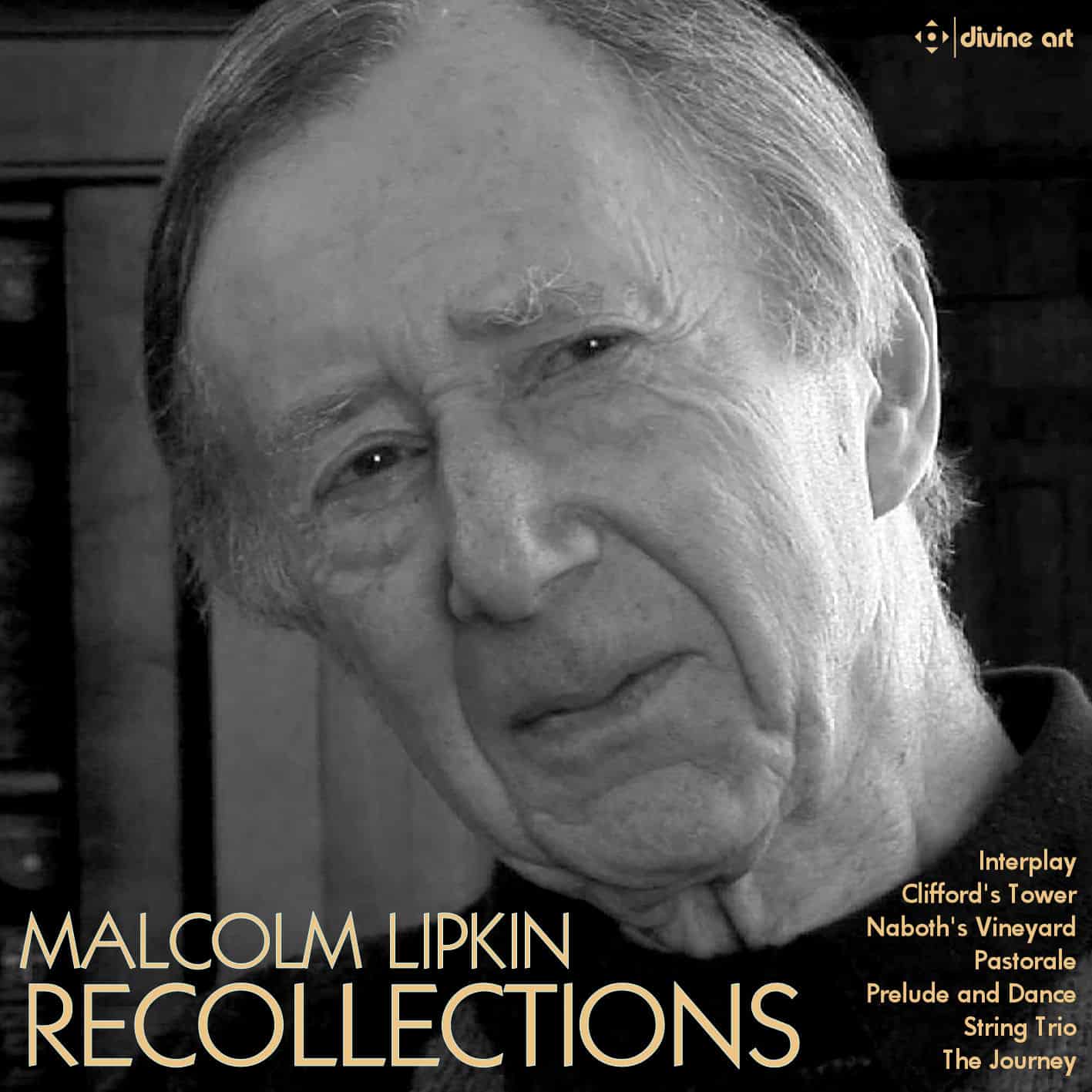
    This album celebrates 50 years of the composing career of Malcolm Lipkin (1932-2017) and represents a fitting tribute to a long established and highly respected composer whose music at times was dismissed as old-fashioned for daring to employ real tunes; now it can be appreciated as thoroughly individual, proving that new music can be accessible without losing integrity. He produced a considerable collection of distinctive, finely crafted works in many genres, including two symphonies and an Oboe Concerto, six Sonatas and eight Nocturnes for piano, and chamber, vocal and choral pieces, several commissioned by leading performers.

    Three tracks here (Clifford’s Tower, Pastorale and String Trio) were recorded in 1984 by the Nash Ensemble, then as now among the cream of chamber groups; issued by Hyperion in 1986 on vinyl only, these recordings have been excellently remastered from LP for this new issue. Adding to the mix are new recordings by premier instrumentalists each of whom is celebrated in their own field as a musician of the highest calibre. Lipkin’s music whether sombre or witty is never short of interest and innovation.

  • Invocazione brillante: Organ music by Carson Cooman

    Invocazione brillante: Organ music by Carson Cooman

    Carson Cooman is many things musical – organist and Composer in Residence at the Memorial Church, Harvard University; writer, critic and consultant, concert organist, and above all a highly prolific composer of music in a wide variety of genres, from orchestral to song. His organ music ranges from the delicate and mystical, liturgical and devotional pieces to dynamic concert works including a majestic set of Preludes and Fugues and so far) three Organ Symphonies.

    Alongside the series of recordings made by Erik Simmons for Divine Art, we are delighted to offer this new recording by top German organist Philip Hartmann, which includes some pieces previously recorded by Simmons and some new premieres. Hartmann has been organist at Ulm Cathedral, Germany since 1999 and in 2005 was appointed as district Cantor for Ulm deanery. He has played more than 600 recitals throughout Europe. He specializes in American and British organ music and has had 40 new works dedicated to him. Here he plays the magnificent 2013 Link-Gaida organ at Pauluskirche, Ulm.